Data center backlash is about electricity, MIT analysis finds
On 9 November 2026, MIT Technology Review argued that opposition to data centers is driven by electricity, not culture war, as the US Senate rejected a bill on bills.
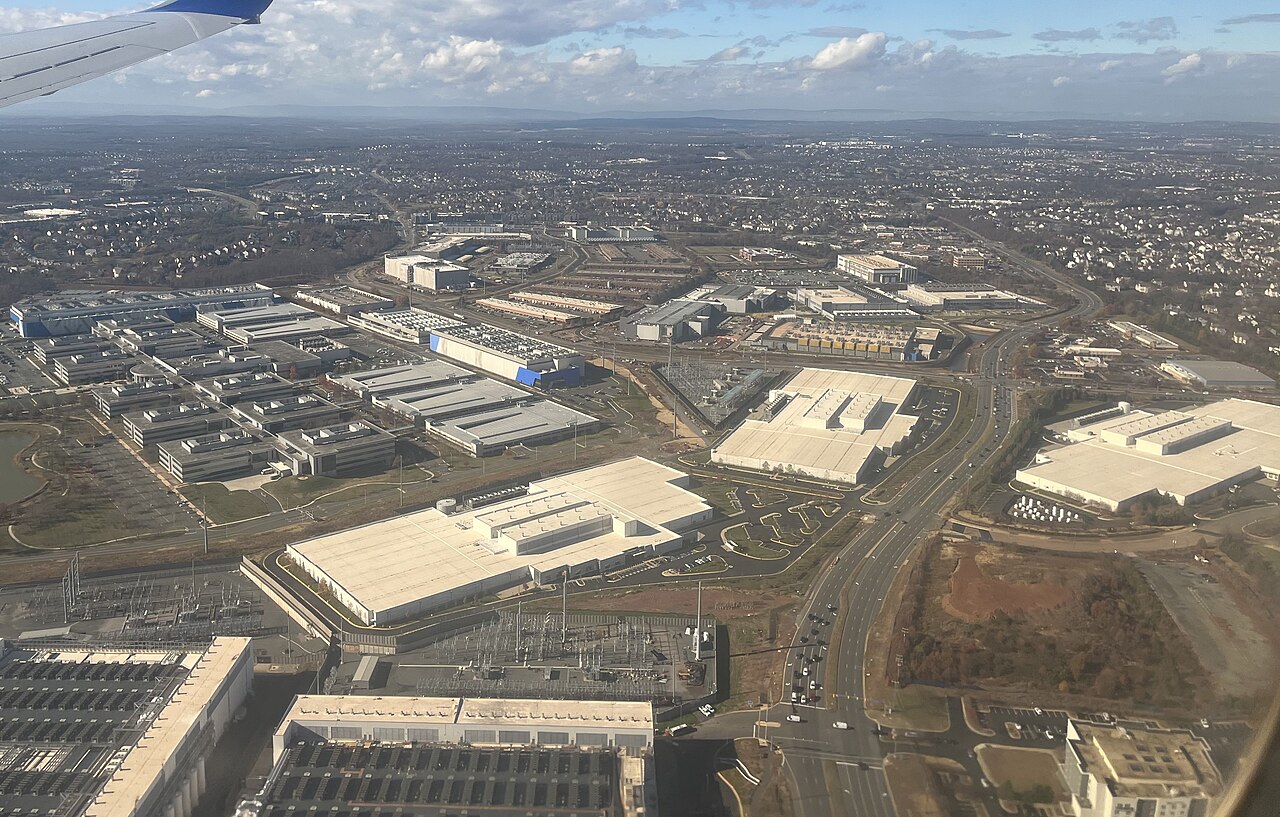
A week after the US midterm elections, MIT Technology Review argues that the backlash against data centers owes less to a culture war than to electricity. In an analysis published on 9 November 2026, the magazine's reporter, who spent several days in Ashburn, Virginia, in the heart of the world's largest data center hub known as Data Center Alley, concludes that the industry can improve its image but cannot escape the physical consequences of its enormous appetite for power. The thesis contradicts the explanation favored by Big Tech.
Is the backlash a culture war or a power problem?
Two days after the midterms, OpenAI's chief global affairs officer, Chris Lehane, wrote that data centers "have become a proxy for public unease about affordability, corporate power, and people losing control over their futures", according to MIT Technology Review. The reporter came away unconvinced. Elena Schlossberg, a prominent anti-data-center activist in Virginia, said she is "always banging my head against the wall" when the industry paints the fight as a culture war: "It was always about power." The article concedes that some Virginia protesters are driven by a broader anti-tech populism, and that fears of job losses, existential risks and concentrated corporate power also feed the backlash, as does misinformation: most facilities use far less water than many people think.
A data center is a building packed with servers whose electricity demand rivals that of a heavy industrial site. In Loudoun County, Virginia, where data centers have been built at a steadier pace than the breakneck expansion elsewhere in the country, most are connected to the existing grid. The average data center operating in that part of Virginia has a power capacity of 54 megawatts, more than the power draw of Denver International Airport, according to the article. The Equinix facility the reporter visited keeps diesel generators onsite for backup only and takes its power from the utility Dominion Energy, much of whose electricity comes from natural gas.
The grid route already has political consequences. After the protests, Virginia adopted rules requiring data centers to pay fully for the cost of new transmission lines, so that the bill is not spread among all other customers, MIT Technology Review reports. Developers told the reporter they are preparing for further rules that would cut them off from grid power during peak demand. Schlossberg also worries about the knock-on effects of a strained grid: more diesel generators running, or Dominion Energy expanding fossil fuel inputs rather than renewables to meet demand.
Behind-the-meter power moves the problem to the countryside
Most AI data centers being built elsewhere in the country are not designed that way, the article says. The scale AI companies want is so large that they set up in rural areas with virtually no grid infrastructure and bring their own power, known as behind-the-meter generation, mostly with natural-gas turbines, plus diesel generators for backup. Anthropic, for example, has reportedly agreed to pay 3.4 billion dollars for gas turbines, described as the largest power generation purchase by an AI company; the figure is reported by the magazine, not detailed further. Even with a grid nearby, supply would struggle: the smallest data centers attractive for AI training reach 300 megawatts, and the ideal facilities are closer to 6,000 megawatts, the estimated draw of the city of Chicago, which is served by more than 20 power plants within the city alone.
Self-generation does not remove the local impact. Natural-gas turbines of any size release air pollutants, and diesel generators are worse. The article recalls that Elon Musk violated air quality laws when he set up dozens of turbines to power a data center in Memphis, according to the US Environmental Protection Agency. Its conclusion: if a small town is asked to welcome the equivalent of a Walt Disney World, an international airport, a steel plant and the power plants to run them all, its trepidation should not be a surprise. Communities have traditionally expected a say when public utilities build infrastructure on that scale; now private companies are undertaking projects of similar size.
- 54 megawatts: average capacity of a data center in that part of Virginia, per MIT Technology Review.
- 300 megawatts: size of the smallest data centers attractive for AI training; about 6,000 megawatts for the ideal ones.
- 57 to 43: Senate vote on 30 September on the Ratepayer Protection Act, short of the 60 votes required (Al Jazeera).
- 417 to 3: House vote on the same bill earlier in September.
- 53 percent: share of Americans "extremely" or "very" concerned about data centers' effect on electricity prices or water in their communities, in a September poll cited by Al Jazeera.
Washington has so far struggled to answer the cost question. Al Jazeera reported on 30 September that the US Senate rejected the Ratepayer Protection Act, a bill that would have required state regulators to consider making data centers and other major electricity users bear the cost of the infrastructure built to serve them. The vote was 57 to 43, short of the 60 needed to overcome a filibuster, after the House had passed the text 417 to 3 earlier in September. Only four Democrats, Maggie Hassan, Amy Klobuchar, Jon Ossoff and Raphael Warnock, joined Republicans. Chuck Schumer called the bill "toothless" and "totally optional", and other critics described it as a last-ditch Republican effort to win a legislative victory before the midterms.
What Congress is weighing, and what it has not passed
According to the law firm Thompson Coburn, dozens of data center bills have been introduced in both chambers but none has reached the floor. They pull in opposite directions. The DATA Act, by Senator Tom Cotton and Representative Nick Begich, would let qualifying data centers build fully off-grid power systems under fewer federal requirements. The GRID Centers Act, by Senators Josh Hawley and Richard Blumenthal, would bar operators from passing energy costs on to consumers. The PRICE Act would require data centers to generate their own electricity, and the AI Data Center Moratorium Act would pause new construction. House Energy and Commerce chairman Brett Guthrie wants to amend a 1978 law, PURPA, so that large users cover the full cost of the infrastructure serving them, but the firm considers it very unlikely to reach the President's desk in an election year.
Where the next data centers could go
MIT Technology Review expects data centers that need their own power to go where the fewest people can resist them. That could mean the Permian Basin, where a network of gas pipelines is easy to connect to and populations are sparse, or abroad: Google announced the day after the elections that it will spend 15 billion dollars on data center projects in Malaysia. Elon Musk posted hours after the results that "data centers in space looking pretty appealing right now". One developer told the reporter that industry insiders see their ambitions as constrained less by public opposition than by a lack of electricity. The article adds that newly elected politicians' actual stances may be less negative than the ones they campaigned on; that remains to be seen.
For a company that buys cloud and AI capacity, the practical lesson is that the price and availability of electricity, more than public image, is becoming the binding constraint on compute supply. Clauses tied to power, such as curtailment during peak demand or who pays for grid upgrades, are likely to shape where capacity gets built and what it costs, so it is worth asking providers where their power comes from. This is our inference from the sources, not a reported fact.
Sources
- The backlash about data centers might really just be about electricityMIT Technology Review · November 9, 2026
- US Senate rejects bill targeting AI data centre electricity costsAl Jazeera · September 30, 2026
- Congress Struggles with Data Center PolicyThompson Coburn LLP