Crusoe Secures $3.9 B Series F to Deploy Modular AI Factories and Expand Data Centers
Crusoe announced a $3.9 billion Series F round on 17 September 2026, valuing the company at $30.9 billion and earmarking the cash for its Spark modular data‑center factories and existing AI‑infrastructure projects such as the Texas campus used by OpenAI.

On 17 September 2026 Crusoe disclosed a Series F financing of $3.9 billion, lifting its post‑money valuation to $30.9 billion. The round is co‑led by Atreides Management, Mubadala Capital and Valor Equity Partners, with participation from Founders Fund, GIC, Nvidia, Qatar Investment Authority, Radical Ventures and TPG.
The capital infusion is slated to fund both existing projects and a new line of modular AI factories branded Spark. Existing projects include the large‑scale campus in Abilene, Texas, which currently hosts OpenAI workloads and will receive upgrades funded by the new money.
What Spark Promises
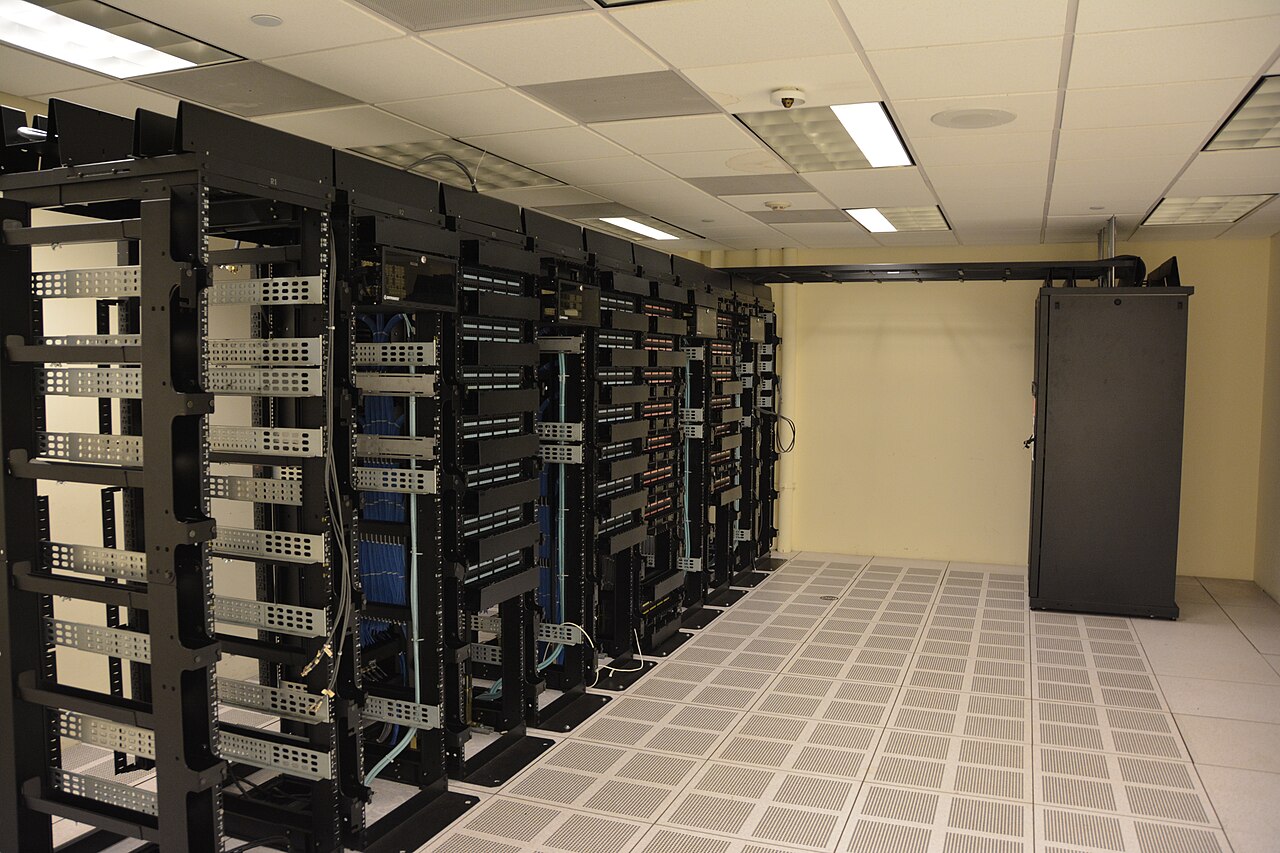
Spark is described by Crusoe as a series of factory‑built data‑center modules that can be loaded onto standard trucks, shipped to a site and hooked up to high‑capacity power grids. The modular approach is intended to shorten deployment timelines, reduce on‑site construction labor and allow customers to scale capacity in smaller footprints than traditional brick‑and‑mortar facilities.
According to the company, each Spark unit is engineered to accept a range of power inputs, from renewable sources to grid power, and can be linked together to form a larger compute cluster. The design emphasizes plug‑and‑play connectivity, minimizing the need for extensive civil engineering work.
Business Model and Recent Wins
Crusoe operates a hybrid leasing model. Clients may bring their own GPUs and rent rack space, lease GPUs directly from Crusoe, or purchase inference capacity as a service. This flexibility is aimed at serving a broad spectrum of AI workloads, from training large language models to real‑time inference.
A notable contract announced earlier this year involves Jane Street, which signed a five‑year cloud agreement worth $13 billion, according to Bloomberg reporting cited by TechCrunch. The deal underscores the market’s appetite for scalable, high‑performance AI infrastructure.
Investor Landscape
The investor consortium reflects a blend of technology, sovereign wealth, and venture capital expertise. Nvidia’s participation signals confidence in Crusoe’s hardware‑agnostic approach, while sovereign investors such as Mubadala Capital and Qatar Investment Authority bring deep experience in large‑scale energy‑intensive projects.
- Atreides Management (co‑lead)
- Mubadala Capital (co‑lead)
- Valor Equity Partners (co‑lead)
- Founders Fund
- GIC
- Nvidia
Crusoe’s origins trace back to 2018 when the firm built cryptocurrency mining rigs powered by flared natural gas. The pivot to AI infrastructure leveraged the same expertise in high‑density, low‑cost compute, but shifted the revenue model from mining rewards to enterprise AI services.
While the company projects rapid rollout of Spark factories, it acknowledges that each deployment will require site‑specific assessments of energy availability, local permitting and community acceptance. These variables are not covered by the financing and will be evaluated on a case‑by‑case basis.
The Series F capital also supports expansion of Crusoe’s existing data‑center footprint, enabling the firm to meet growing demand from AI developers who need both raw compute power and flexible consumption models.
Speed to Market
For English‑speaking organizations, the combination of modular Spark factories and a versatile leasing model means faster access to AI compute without the long lead times typical of traditional data‑center builds. Companies can order a Spark unit, have it delivered within weeks, and begin running workloads while retaining the option to scale out or upgrade hardware as needs evolve, reducing both capital expenditure and operational risk.
Crusoe expects the first batch of Spark units to be operational by early 2027, targeting regions with abundant renewable energy and existing transmission capacity. Early adopters are slated to include research institutions and fintech firms looking for on‑demand scaling.
The Texas campus, already home to OpenAI’s inference workloads, will serve as a testbed for integrating Spark modules with legacy infrastructure, allowing Crusoe to refine its plug‑and‑play interfaces and power‑management software.
Beyond the United States, Crusoe is scouting sites in Europe and Asia where grid constraints are less severe and government incentives for green compute are stronger. These markets could benefit from the same rapid‑deployment model.
In summary, the $3.9 billion Series F round equips Crusoe with the financial muscle to accelerate its modular AI factory vision, deepen its partnership ecosystem, and expand its data‑center portfolio at a pace that matches the soaring demand for AI compute worldwide.
Localised note: The Abilene, Texas campus will see a $200 million upgrade in power infrastructure this quarter, funded directly by the Series F proceeds, ensuring uninterrupted service for OpenAI and other high‑profile tenants.
Sources
- Crusoe Raises $3.9B Series F at a $30.9B ValuationCrusoe · September 17, 2026
- Crusoe raises $3.9B to build massive data centers and modular AI factoriesTechCrunch · September 17, 2026