Google sends its first Suncatcher TPU satellite to orbit on October 1
Google will launch MVP, a fridge-sized satellite carrying four of its TPU AI chips, on a SpaceX rideshare on October 1. The months-long test is the first real step of Project Suncatcher, its plan for solar-powered AI data centres in orbit.
Google is moving Project Suncatcher from paper to orbit. The company will launch its first experimental satellite, called MVP, on October 1 aboard the Transporter-18 rideshare mission on a SpaceX Falcon 9 rocket, Ars Technica and Golem report. According to The New York Times, cited by The Decoder, the rocket will lift off from Vandenberg Space Force Base in California.
Suncatcher is Google's long-shot project to run AI computing in space. An orbital data centre, in this context, is a constellation of satellites that carry AI accelerators, draw their power from solar panels and exchange data with each other, instead of a building connected to a terrestrial power grid. Google first presented the idea in November 2025, according to Golem.
What the MVP satellite carries
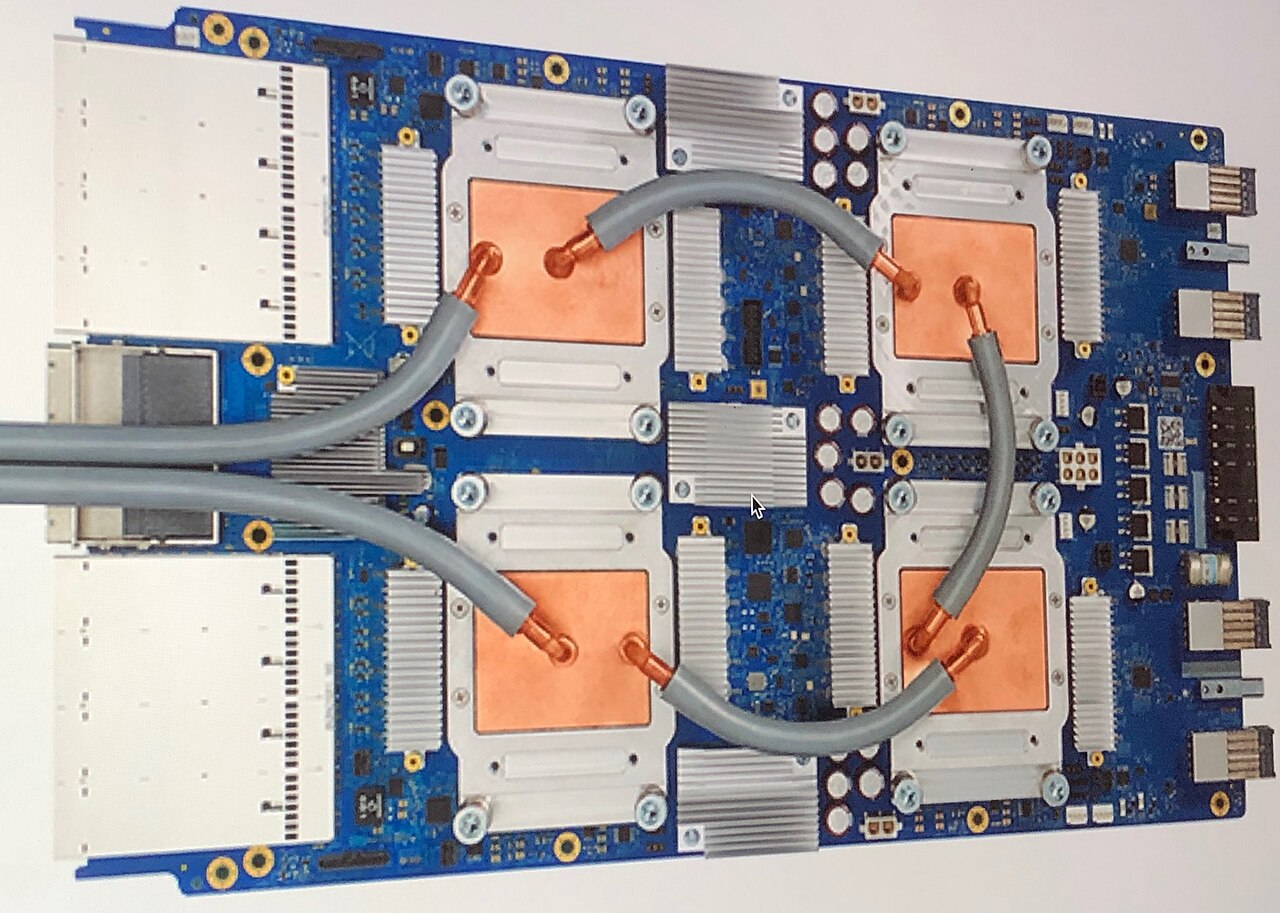
The satellite is about the size of a refrigerator and contains four of Google's Tensor Processing Units, the custom chips the company uses to train and run its AI models, Ars Technica reports. These are not radiation-hardened space parts: they are the same TPUs that Google installs in its servers on the ground.
Google did not build the spacecraft itself. The platform comes from the satellite imaging company Planet Labs, which built and tested it in its San Francisco laboratory, according to The Decoder. Ars Technica explains that the original plan foresaw two custom satellites in 2027, but Google wanted to move faster and chose to integrate its chips into a satellite Planet had already built for an early test.
The power budget is deliberately modest. The solar panels supply about one kilowatt, roughly what a microwave oven or a hair dryer draws, according to figures from The New York Times reported by Ars Technica. Google vice-president James Manyika says the satellite will have enough computing power to answer simple AI queries from space, The Decoder writes. The mission is planned to last only a few months.
Launch loads, radiation and heat: the three tests that matter
The first test is surviving the ride. During the roughly ten-minute ascent, the satellite is exposed to accelerations of up to 10 g, and individual components such as the TPUs can face forces of 50 to 100 g, Golem reports, citing Google. The company says it ran vibration tests on all three axes and that the hardware withstood the simulated loads.
The second is radiation, which can flip individual bits and corrupt calculations. Google irradiated its Trillium TPUs with protons while they were running AI workloads, and says they tolerated a higher total ionising dose than a five-year mission is expected to deliver, according to Golem. Whether the laboratory results hold in orbit is precisely what the flight is meant to show.
The third, and probably the hardest, is heat. In a vacuum there is no air to carry heat away. Google's design uses a layer of malleable thermal interface material that connects the chips to aluminium and copper heat pipes, which lead to a radiator that emits the heat into space, Ars Technica explains. The system cannot yet keep up with continuous work: Google will run Gemini models on the TPUs in bursts of about 15 minutes, after which the chips must shut down so the radiators can catch up.
- Launch: October 1, Transporter-18 rideshare on a SpaceX Falcon 9, from Vandenberg (California).
- Payload: four Google TPUs in a Planet Labs satellite the size of a refrigerator.
- Power: about 1 kW from solar panels.
- Operation: Gemini inference in bursts of about 15 minutes, for a mission of a few months.
- Not tested on this flight: laser links between satellites, planned for 2027 with two satellites.
Why the industry wants data centres in space
The argument is energy. In low Earth orbit, solar panels could produce up to eight times as much electricity as on the ground, according to Google figures cited by Golem, because sunlight is almost continuous. Supporters also say orbital computing would relieve power grids and water resources on Earth, at a time when new data centres face growing local opposition: 60 per cent of Americans surveyed by the Pew Research Center said they would be uncomfortable with a new data centre near them, Golem notes.
Google is not alone. SpaceX has asked the US Federal Communications Commission for permission to operate up to one million satellites designed as AI data centres, according to Golem, and Blue Origin is also working on orbital computing, The Decoder reports.
What remains far from proven
The numbers show how early this is. Google manager Travis Beals estimates that around 10,000 satellites would be needed to replace a single one-gigawatt data centre on Earth, and launch costs would have to fall to about 200 dollars per kilogram for the concept to be economical, The Decoder reports. Jeff Bezos has said it could take up to 20 years before orbital data centres are cheaper than terrestrial ones.
Future Suncatcher satellites are supposed to carry dozens of TPUs each and exchange data by laser, which requires transmitters to stay precisely aligned while the satellites move, according to Golem. None of this will be tested on October 1. Google says the 2027 launches remain on the agenda, but its own team expects it will take years before Suncatcher moves from project to product, Ars Technica writes.
What this changes for companies
For now, nothing in an IT budget: no company will rent computing power in orbit in the coming years, and the MVP satellite runs only in short bursts. The test is still worth following, because the constraints it addresses, electricity supply, cooling and local acceptance of data centres, are the same ones that already drive up the price and delay the availability of AI capacity on the ground. If the chips survive radiation and the cooling holds, the 2027 flights will tell whether space becomes a credible alternative or remains a long-term bet.
Sources
- Google's first Suncatcher orbital data center test launches October 1Ars Technica · September 24, 2026
- KI-Chips im Orbit: Google kündigt ersten Test anGolem.de · September 25, 2026
- Google will mit Projekt Suncatcher KI-Rechenzentren ins Weltall bringenThe Decoder · September 24, 2026