Ricursive pitches co-evolving AI models and chip design
Ricursive says tighter links between AI models and chip design could ease compute pressure. The startup is promising faster, more customized hardware, but key industrial questions remain open.
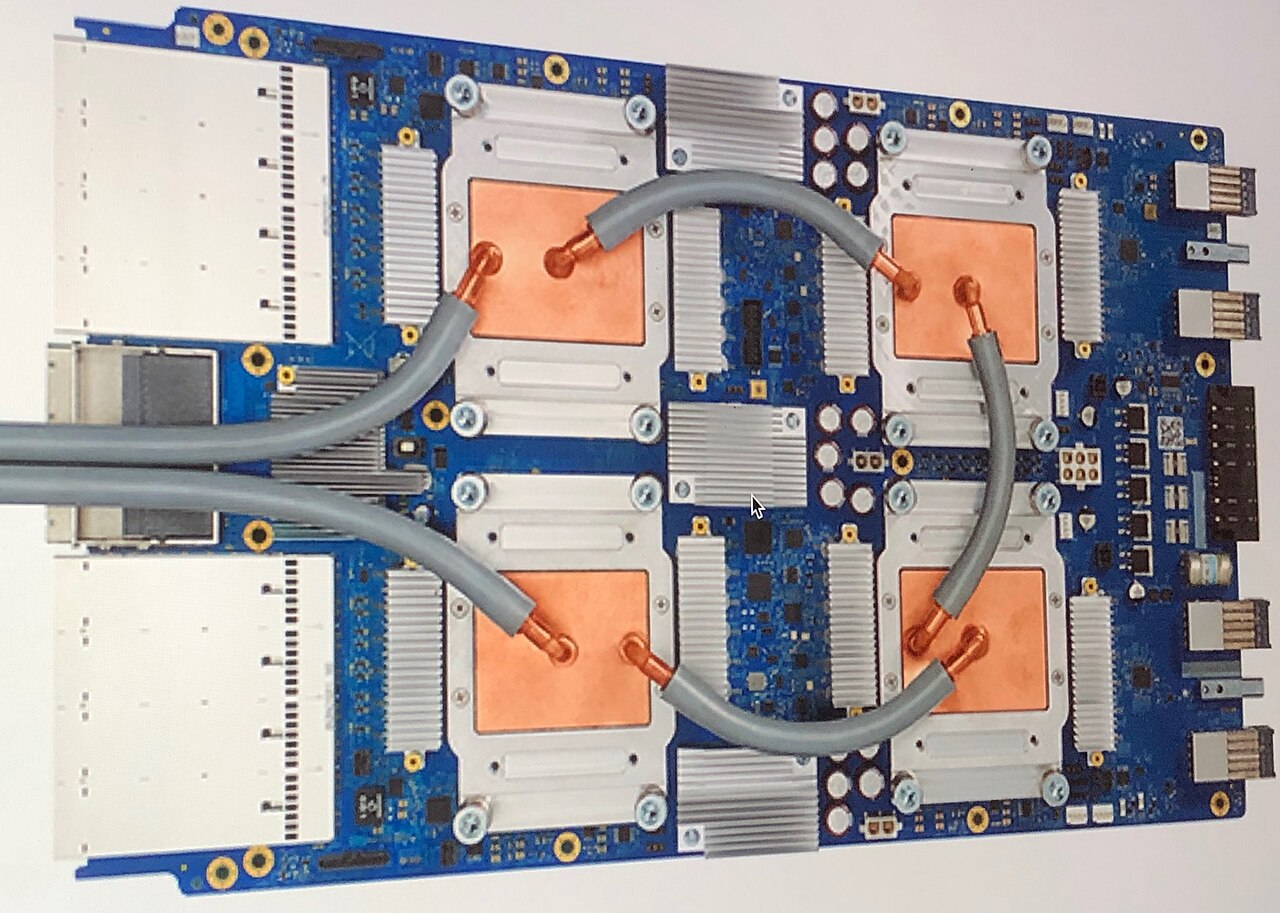
Ricursive Intelligence is presenting itself as a company that wants to reduce the growing strain on computing resources by changing how chips are designed. Rather than treating chip development as a slow, segmented engineering process, the startup says it is building AI systems that can design chips, learn from each design iteration, and improve the next round. Its longer-term ambition, according to the company, is to go further still: co-evolve AI models and the hardware they run on so that each informs the other.
That vision comes from founders Anna Goldie and Azalia Mirhoseini, who previously led work on Google’s AlphaChip project. According to EE Times, Ricursive was founded by the two leads from AlphaChip and has raised $335 million. TechCrunch, citing the founders on stage at TechCrunch Disrupt, describes the company as betting that more efficient chip design can help address what Goldie called a coming compute crisis. The reported motivation is straightforward: demand for compute is expected to rise sharply, while simply multiplying data center capacity may not be a practical answer.
From AlphaChip to a broader design thesis
The founders’ credibility in this area rests heavily on their previous work. EE Times says AlphaChip, developed in 2018, was one of the first reinforcement learning approaches used to solve a real-world engineering problem. It was used for macro placement across four generations of Google TPUs and, according to the same source, was also adopted externally by companies including MediaTek. TechCrunch adds an example often cited by the founders: a circular, "donut-shaped" arrangement of chip components that initially surprised engineers but was later presented as successful.
Ricursive says its current effort goes beyond that earlier project. EE Times reports that Goldie said the company’s work extends further than AlphaChip in the breadth of the chip design flow it is addressing, in the performance improvements it believes it can achieve, and in speed. The same report also says Goldie confirmed Ricursive will not license or use Google intellectual property. That distinction matters because the company is trying to position itself as an independent platform that can work across the industry, not as an extension of Alphabet.
The two sources broadly align on the company’s core argument: AI can challenge traditional chip design methods by searching design spaces that human teams or standard workflows may not explore as easily. TechCrunch says the founders are optimizing entire chips rather than partitioning them into dozens of smaller blocks, which they argue allows AI to produce more intricate layouts, including wave-like patterns. That is presented as a departure from conventional methods, although the sources do not provide independent benchmarks for the claimed gains.
A staged rollout, from services to end-to-end automation
EE Times provides the most detailed description of Ricursive’s roadmap, framing it as a three-phase rollout. In phase one, the company says it will take on portions of chip design for chip companies, with a focus on speeding up physical design and design verification. The stated objective is to shorten the path from architecture to GDSII, the format used for manufacturing-ready layouts.
- Phase one: help third parties with selected parts of chip design, especially physical design and verification.
- Phase two: build an end-to-end model that can ingest workloads and produce GDSII files for manufacturing.
- Phase three: co-design or co-evolve models, workloads, and hardware, potentially including Ricursive’s own chips and models.
In phase two, according to EE Times, Ricursive wants to combine these stages into an end-to-end model that takes workloads as input and outputs manufacturing-ready chip designs. The company argues that this could make fast, workload-specific chip creation practical, particularly for AI accelerators but also for other uses. TechCrunch echoes this idea in simpler terms: if chip design can move from many months to roughly a week, then more specialized chips could become financially plausible for applications such as space, AR, VR, or biological computing. That timeline, however, is presented by the founders as an aspiration; the sources do not show that Ricursive has already demonstrated end-to-end chip creation at that speed.
Ricursive is also trying to define itself against the established electronic design automation sector. EE Times says the founders stressed that the startup is not an EDA company, will not compete with EDA companies, and will not use standard EDA toolchains. Instead, they describe their work as end-to-end chip design. That is an ambitious framing, because it implies not just optimizing a subproblem but reworking the overall process by which chips move from workload requirements to manufacturable layouts.
The co-evolution idea at the center of the pitch
The company’s most distinctive claim may be its phase-three vision. EE Times says Ricursive ultimately wants models, workloads, and hardware to be tightly co-designed. The thesis is that if compute architecture is customized to model architecture, large performance gains may be possible, but only if the implementation cycle is fast enough that the hardware does not become obsolete before it is built. In that account, custom chips are not just a product outcome; they are part of a feedback loop intended to accelerate model development itself.
This is where Ricursive moves from a chip-design startup narrative toward a frontier-AI narrative. EE Times reports that Mirhoseini said, "this is not an AI for chip design, this is just AI," and described a long-term goal of making a frontier AI system. The company says it is training its model on generally available web data, open-source chip data, and synthetic data. It is also reportedly working with chip companies on real designs to test early results and gather feedback, with the founders acknowledging that open-source chip data is not representative of commercial designs.
At the heart of the argument is a bottleneck that the founders describe as a deadlock. AI researchers, in their view, design models around the limits of current hardware, while chip makers try to anticipate future workloads years ahead. Ricursive’s answer is to "tighten that loop dramatically," in Goldie’s words as quoted by EE Times. If that loop can be shortened, the company argues, both chip architectures and neural architectures could move away from what it sees as a local optimum toward very different designs.
What is known, and what remains uncertain
The announced strategy is clear, but several industrial unknowns remain. First, both sources largely relay the founders’ account of what Ricursive aims to do; neither provides independent evidence that the full end-to-end approach has already been proven in production. Second, while the company says it is working with chip companies and foundry relationships to help customers get custom chips made, the sources do not name manufacturing partners, tape-outs, or customers.
Third, Ricursive’s decision to position itself outside standard EDA toolchains raises practical questions that the available reporting does not resolve. If the company is not using standard toolchains, it will still need to fit into the realities of verification, manufacturability, and customer trust. The founders argue independence should make other chip makers more comfortable sharing data, according to EE Times, but whether the market accepts that proposition is not yet shown in the sources.
There is also a gap between promising unusual layouts and delivering broadly manufacturable products. TechCrunch reports claims about unconventional chip patterns and whole-chip optimization, but the article says the founders plan to share more in the future, suggesting some technical evidence has not yet been made public. In other words, the approach is announced with confidence, but some of its most important proof points still appear to be pending.
For English-speaking companies, the practical takeaway is not that AI-designed chips are suddenly ready to replace existing procurement or engineering plans. Based on these sources, what changes is that a startup is proposing a new option: if a company has a workload running at scale but lacks an in-house chip team, Ricursive says it eventually wants to help turn that workload into custom hardware more quickly than traditional processes allow. If it works, that could widen access to specialized chips and shorten the path from software needs to hardware implementation; for now, businesses should view it as an emerging industrial proposition rather than an established new standard.
Sources
- Ricursive Intelligence is betting on AI-designed chips to help solve the compute crisisTechCrunch · October 15, 2026
- Ricursive to Create an End-to-End AI Model for Chip DesignEE Times · June 10, 2026