
FAA expands SMART AI to all US airspace before a ground stop
The FAA extended its $875 million SMART AI advisory tool to all 22 centers on November 10; three days later a nationwide ground stop had no known cause.
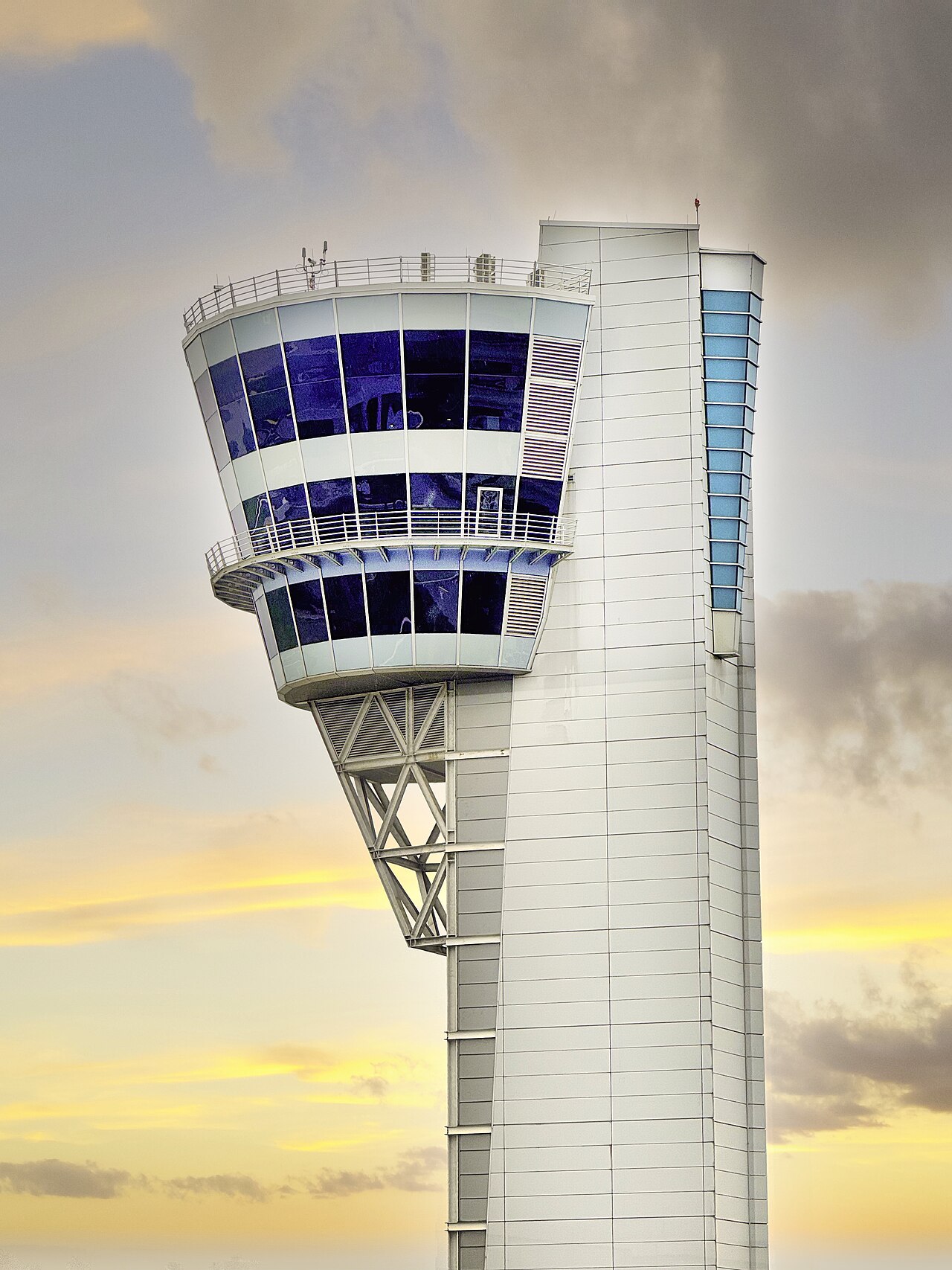
The Federal Aviation Administration (FAA) has extended SMART, an AI tool that advises air traffic controllers, to the whole US national airspace system. Just days after that announcement, on Friday, November 13, departures were halted at airports across the country for more than four hours, and officials said on Saturday they still could not name the root cause. This article sets out what each source establishes, and where the sources stop. No source we read links the two events.
What is SMART and what does it do?
SMART stands for Strategic Management of Airspace, Routes, and Trajectories. According to Ars Technica, which cites the FAA fact sheet, it is a cloud-based system, worth $875 million, that combines information about weather patterns, flight paths, traffic flow and controller staffing metrics to predict air traffic patterns. It is designed to make scheduling recommendations, identify optimal flight routes and determine the best order of arrivals. In short, it is an advisory layer: it proposes, humans decide.
The FAA says a human team of specialists based in Washington, DC is ultimately responsible for validating SMART recommendations before passing them to air traffic control facilities across the country, according to Ars Technica. In its September 21 announcement of the first deployment, the agency added that the system cannot be used to replace the role of air traffic controllers or take over control of an aircraft. Local controllers can decide whether or not to accept its recommendations.
What results does the FAA claim, and for how many flights?
The FAA says SMART has helped reroute 180 flights since it went live in the airspace over Washington, DC, on September 21, according to Ars Technica. The agency claims an average saving of 10 minutes and almost 80 gallons of fuel per flight; the French outlet Next converts the fuel figure to about 300 liters. These are the agency's own figures and the sources we read do not report an independent check.
On November 10 the FAA announced that it would now use SMART in the airspace of all 22 centers across the country to reduce delays, reduce fuel consumption and improve the travel experience, according to the agency statement quoted by Ars Technica. Ars also reports, citing The Dallas Morning News, that coverage had already been extended to the centers in Atlanta, Jacksonville and Miami. The FAA gave that newspaper an example of a shorter route recommended for a cargo flight into Dallas-Fort Worth, but did not identify the flight or say how SMART helped passenger traffic.
Who supports the tool and who was not consulted?
The September announcement carried supportive statements from Delta Air Lines CEO Ed Bastian and American Airlines CEO Robert Isom, according to Ars Technica. The National Air Traffic Controllers Association, which represents more than 15,000 members, told Flying magazine that it was not consulted or involved in the design, testing or implementation of SMART and therefore cannot speak to its effect on the controller workforce. That gap between airlines and controllers is a governance question in its own right.
What happened on November 13?
According to Next, US authorities ordered departures suspended at every airport in the country because of a communication problem affecting air traffic control; the FAA said the measure was taken for exceptional circumstances and for safety reasons. Next reports that clearance to resume came on Friday evening on the East Coast. CNBC describes it as the longest halt in departures to US airports since the September 11 attacks. Next adds that the previous comparable stoppage dates from 2023, when the FAA's NOTAM system, the notices that carry safety-critical information to pilots, failed.
On the cause, the sources show an evolving picture. Next reports that Transportation Secretary Sean Duffy first pointed to inconsistencies between the data sent by terminal approach radars and the data sent by aircraft, which he attributed to overloaded equipment in control towers. Next quotes him as saying: "This is analog telecommunications. Our switches and our routers were overloaded with data and went down." Next also reports that the FBI ruled out a cyberattack or criminal act at that stage and that a software update was one lead considered.
At a press conference on Saturday, however, officials said no definitive cause had been established, according to CNBC. Routers and networking equipment appeared to be involved, and officials cited products and services from Cisco and L3Harris Technologies. FAA Administrator Bryan Bedford said that, because the agency could not pinpoint the cause, it was "unwilling to take any risk" that the instability could propagate and leave a sensor unable to connect with aircraft. "What we saw was instability. We couldn't explain the instability," he added, per CNBC.
Is there a link between the outage and the AI tool?
No source we read establishes one. Next states that the timing of the SMART expansion and the ground stop is, until proven otherwise, a coincidence, and that nothing at this stage links the deployment to the communication problem. Air Space Intelligence, the company that develops SMART for the FAA, said, according to Next, that the departure suspension is not linked to SMART, to any of its products, or to its integration with FAA and air traffic systems. That is the company's statement, not an independent finding. The Ars Technica piece, published before the outage, does not discuss it.
What the sources do show is a different kind of fragility. Whatever the cause turns out to be, officials pointed at networking equipment, not at an AI model. Duffy told reporters: "Until I can build [the new architecture], I'm stuck with L3Harris, who owns this network," according to CNBC. L3Harris said it has completed more than 70% of the planned conversion of airspace communications from legacy copper wires to fiber optics, and that it is supporting the FAA investigation.
What does it cost, and who pays?
- Duffy asked Congress for $50 billion to overhaul air travel, according to CNBC and Next, calling it emergency, bipartisan funding.
- Bedford said replacing routers, for example swapping 2,000 Cisco 600 routers for Juniper routers, is ordinary business and distinct from the FAA's $12.5 billion modernization effort, per CNBC.
- SMART itself is an $875 million system, according to Ars Technica.
What does this change for a US business?
For airlines, cargo operators, travel companies and any firm that depends on air freight, the lesson is practical rather than dramatic. First, an AI advisory layer sits on top of ordinary networks, so its value depends on the reliability of the infrastructure beneath it; a contingency plan for a multi-hour national stoppage is a reasonable precaution. Second, the SMART model keeps a human validating recommendations, and the controllers' union says it was not consulted: companies deploying AI advice in their own operations should involve the people who act on it early. Third, vendors should be asked what they claim and what has been independently checked, since the time and fuel savings above come from the agency itself. Finally, until the FAA publishes its investigation, treat any claim about the cause of the outage as unconfirmed.
Sources
- FAA expands AI advice to manage air traffic congestion across entire US airspaceArs Technica · November 13, 2026
- 'Root cause' of nationwide ground stop is unknown, FAA saysCNBC · November 14, 2026
- Une alerte rarissime a cloué tous les avions au sol aux États-UnisNext · November 14, 2026