
AI and Class Actions: What Changes for Businesses in Europe
A popular action in Lisbon against Anthropic and new EU rules show how AI can fuel more collective litigation, in Portugal and beyond.
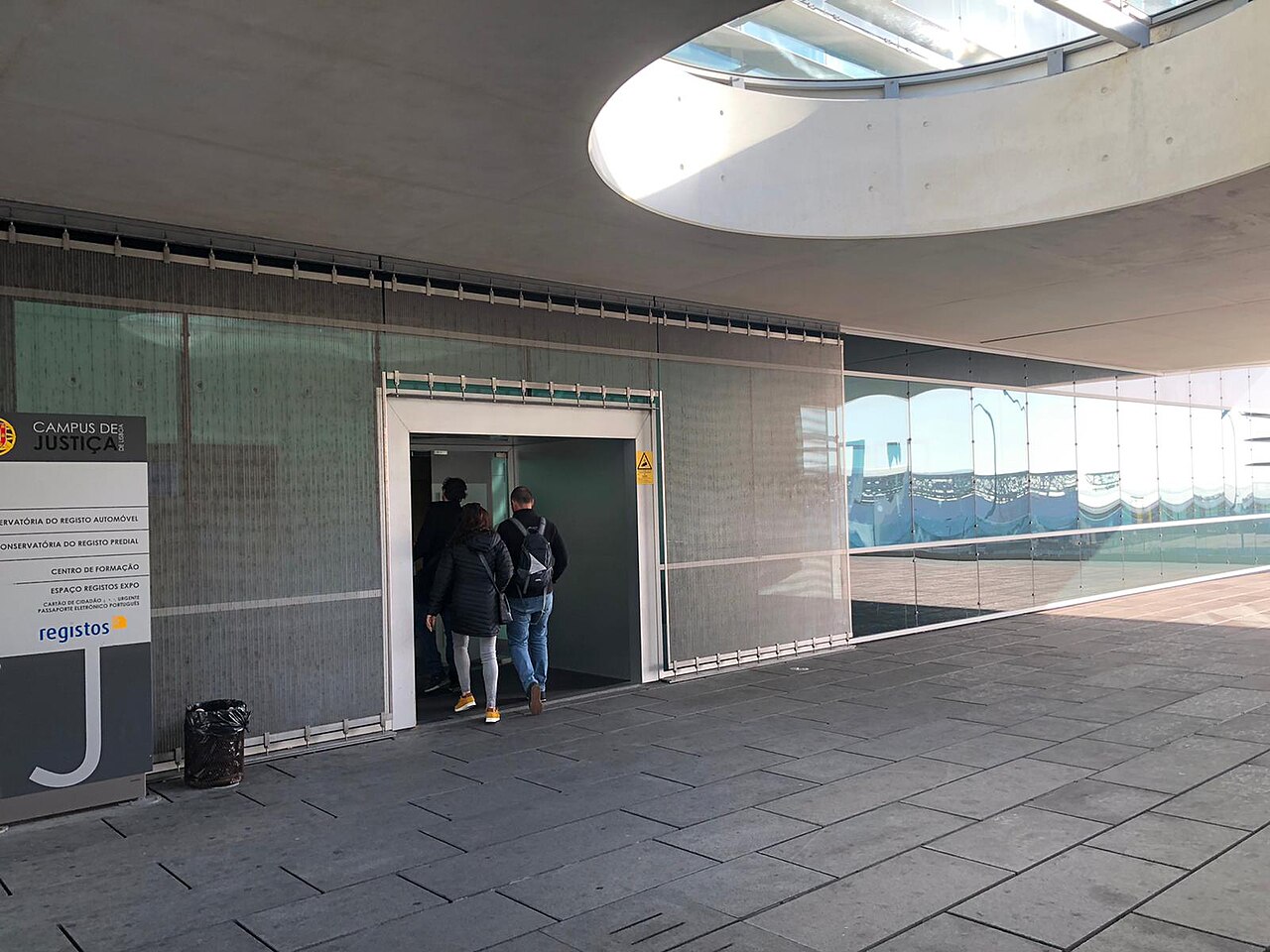
In July 2026, the association Citizens' Voice filed a popular action against Anthropic at the Lisbon district court, according to ECO on 7 July 2026. The case is small in subject matter, but it shows something bigger: class actions and artificial intelligence (AI) are starting to intersect, and the legal framework taking shape in the European Union reaches well beyond Portugal.
A class action, or representative action, is a proceeding in which an authorised entity defends a group of consumers' interests in court, instead of each person suing alone. The facts below come from five sources and, for court cases, they are allegations by the parties, with no final ruling.
What is happening in the case against Anthropic?
According to ECO, the action was filed in the Lisbon district court and is based on Anthropic's alleged lack of an electronic complaints book, even though the company sells its services in Portugal. Since 2005, Decree-Law No. 156/2005 has required suppliers of goods and services in contact with the public to provide such a book, the newspaper notes.
The case started with a consumer who, according to the association, was charged for two separate services: he had subscribed only to the API, a prepaid-credit service separate from the monthly Claude subscription, but was allegedly also charged for Claude. Citizens' Voice told ECO it is still looking into that situation and that the consumer found no channel to complain.
The action makes two requests, according to ECO:
- that Anthropic be ordered to provide an electronic complaints book to consumers resident in Portugal, with a penalty payment of no less than 20,000 euros per day of delay;
- that it pay daily compensation, to be set by the court, of no less than 500 euros for each day without a complaints book, counted from the date it is served with the claim.
On the Citius portal, the case is listed at a value of 60,000 euros, but the association's president, Octávio Viana, told ECO that this figure does not match the amount claimed, because in a popular action it is not known how many people are harmed. ECO contacted Anthropic and, by the time the article closed, had not received a reply. Citizens' Voice, founded in 2021, has reportedly filed more than a hundred collective actions against companies such as Ryanair, Vodafone and Galp, according to the same newspaper.
How do class actions work in Portugal and the EU?
Directive (EU) 2020/1828 requires every Member State to have a representative action mechanism. According to Baker McKenzie, the transposition deadline expired on 25 June 2023, but not every country has transposed it and, to date, only a limited number of claims have been brought under it. Actions are brought by qualified entities, which can seek injunctive measures and financial redress, and each state chooses between opt-in (the consumer signs up), opt-out (the consumer is represented unless they decline) or a combination.
In Portugal, Decree-Law No. 114-A/2023 of 5 December transposed the directive in line with the Popular Action Law (Law No. 83/95), according to Garrigues. The text keeps the opt-out mechanism of the popular action law, but requires consumers without habitual residence in Portugal to express their wish to be represented. It also provides for a two-week prior consultation with the trader before a final injunction can be sought, and requires claimants to disclose third-party funding.
Why does AI raise the risk of collective litigation?
Three European developments push in the same direction. The first is the AI Act, the EU regulation on AI: according to Baker McKenzie, it comes within the scope of the representative actions directive from 2 August 2026, which lets qualified entities invoke its breaches.
The second is the new Directive (EU) 2024/2853 on liability for defective products. According to Gibson Dunn, it extends strict liability to software and AI, eases the burden of proof and creates a mechanism for disclosure of evidence between the parties. Member States must transpose it by 9 December 2026.
The third is compensation for non-material damage in data protection. Gibson Dunn recalls that, on 8 January 2025, the EU General Court (case T-354/22) ordered the European Commission to pay 400 euros to an individual over a data transfer to the United States, and that Germany's Federal Court of Justice set 100 euros on 18 November 2024, without proof of concrete harm, in a case of unlawful data scraping from a social network. Small amounts per person make mass claims more attractive to qualified entities and litigation funders.
What gaps remain unresolved?
In a research paper dated 25 November 2025, publicised by Private Law Theory on 13 January 2026, Liubomir Nikiforov identifies a gap in EU collective redress for algorithmic harms. According to the author, GDPR remedies are tied to identifiable data subjects, the directive ties redress to consumers, and the AI Act, although it speaks of persons or groups of persons, leaves collective enforcement to the directive.
The least protected would be inferred groups, built by a model from anonymised data. The author proposes, among other measures, favouring opt-out models and creating a representation right specific to AI. These are academic proposals: none is in force.
What does this change for a business?
For a Portuguese company, or a foreign one selling to consumers in Portugal, the practical risk is higher than the small number of cases would suggest. Some starting points:
- check that an electronic complaints book and an accessible, visible complaint channel exist;
- review billing and the clarity of subscriptions, to avoid charges disputed en masse;
- document GDPR and AI Act compliance before AI Act rules can be invoked in representative actions;
- follow the transposition of the product liability directive, which covers software and AI;
- have a response plan for a prior consultation, which leaves only two weeks to end a contested practice.
In short, AI did not create the right to bring collective actions, but it widens the rules that can be invoked and lowers the barrier of proof. Whatever the outcome of the Lisbon case, companies selling AI services in Europe would do well to treat collective litigation as a compliance risk and not as a legal curiosity.
Sources
- Anthropic processada em Portugal por não ter livro de reclamaçõesECO · July 7, 2026
- Portugal transpõe a Diretiva relativa a ações coletivas para proteção dos interesses dos consumidoresGarrigues · December 6, 2023
- Collective Redress / Class ActionsBaker McKenzie · November 1, 2025
- International Class Action Update – March 2025Gibson Dunn · March 6, 2025
- Closing the EU Collective Redress Gap: GDPR, RAD and the AI Act for Algorithmic Harms and Digital FairnessPrivate Law Theory · January 13, 2026