
Nvidia Told Congress It Can Track Chips, Despite Industry Doubt
Nvidia privately told Rep. Bill Foster it could implement anti-smuggling chip tracking, while an industry group called such rules potentially infeasible.
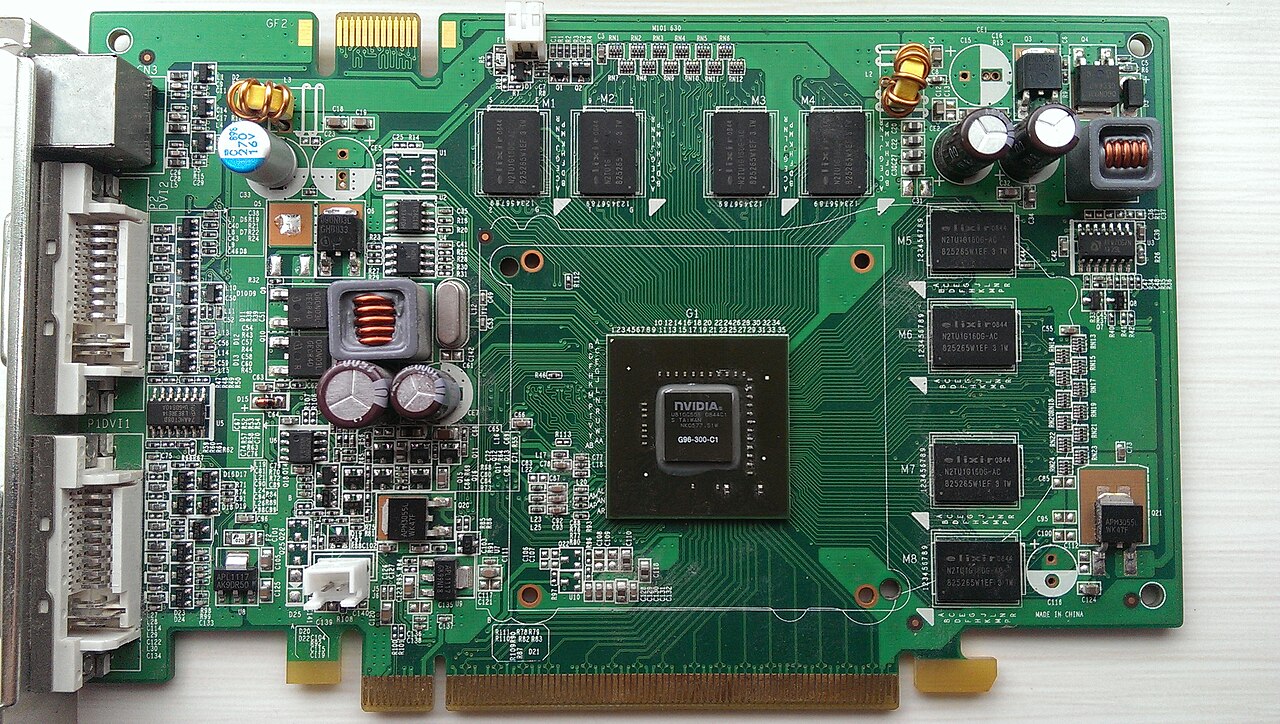
Nvidia representatives told Illinois Representative Bill Foster that it would be technically possible to implement the anti-smuggling measures called for in the Chip Security Act, Foster told MIT Technology Review in an interview on Thursday, November 12, 2026. At the same time, an industry group had claimed those measures were “potentially infeasible.” Foster, a Democrat who serves on the House Committee on Science, Space, and Technology, is a cosponsor of the act. According to MIT Technology Review, Nvidia did not respond to requests for comment or confirmation of Foster’s characterization, so the account rests on the lawmaker’s word alone.
What does the Chip Security Act actually require?
The act would introduce geotracking requirements, meaning checks on the physical location of advanced AI chips, in order to prevent their smuggling to China, according to MIT Technology Review. It was introduced in May 2025, and lawmakers said at the time that the technology to implement it existed. Nvidia had not publicly confirmed that. The bill is now one of three chip-security bills under consideration for inclusion in the Senate’s National Defense Authorization Act, the annual defense policy law, according to the same publication.
As drafted, the act would require a mechanism to track chip locations. MIT Technology Review lists three possible approaches:
- inspections of facilities where the chips are installed;
- attestations by companies about where their chips are;
- ping-based location mechanisms, in which the GPU sends a signal of its location when it comes online.
The ping-based technique is the hardest option to circumvent, according to MIT Technology Review. In September 2026, the Center for Security and Emerging Technology found it would also be the most cost-effective option, the same source reports.
What did Nvidia and its industry say in public?
In March 2026, the Semiconductor Industry Association, of which Nvidia is a member, explicitly opposed the bill. It wrote that the mandates for chip tracking were “new, untested, and potentially infeasible,” according to MIT Technology Review. In private, the picture was different. “They never put anything in writing,” Foster says, but during technical discussions about such safeguards, the reaction of Nvidia’s representatives was “yeah, of course we can do this.” MIT Technology Review notes that this private acknowledgment goes further than anything Nvidia has previously made public.
Other Nvidia products point the same way. In December 2025, Nvidia announced a tool called Fleet Intelligence that lets customers monitor how its advanced chips perform across different data center locations, according to MIT Technology Review. The tool could indicate which country chips were in, Nvidia confirmed to Reuters, but the company would not say whether the technology could be used to prevent smuggling. Asked in early October whether Fleet Intelligence could serve that purpose, Nvidia declined to answer directly and sent a statement instead.
Governments and media have found insignificant diversion of controlled US products—a drop in the bucket compared to the ocean of domestic compute China already has.
Why is the pressure on Washington growing now?
MIT Technology Review says all three chip-security bills are drawing renewed attention after Nvidia CEO Jensen Huang’s resignation and a reported affair with an alleged Chinese spy. The publication reports that Alice Huang, with whom Jensen Huang reportedly had the affair, runs Megaspeed, a Singaporean firm now under investigation for smuggling advanced GPUs to China. A US Commerce Department inquiry into the company was reportedly halted after intervention by Nvidia. Megaspeed reportedly bought chips from Supermicro, a company that packages Nvidia’s chips into servers. These points are reported allegations and have not been proven; this article does not cover the governance side of the Huang story, which is treated separately.
Foster said he did not ask Nvidia’s representatives why the company was not voluntarily adopting such tools if it could technically do so. He expects the controversy to change behavior anyway. “There will be a lot of political pressure, in the wake of everything that’s happened, on the companies to actually do a very good job of the geographic validation of where the chip actually is,” he told MIT Technology Review.
Would tracking be enough to stop smuggling?
Not on its own. If the bill’s requirements pass as part of the Senate defense bill, the new mechanisms would only tell investigators where the chips are, not offer a way to disconnect them once they are found to have been smuggled, according to MIT Technology Review. Foster told the publication he intends to introduce new, stricter legislation in the new year. The rule would require licenses to operate advanced GPUs, and a valid license would have to be verified before a GPU could connect.
How does the CXMT letter fit into export controls?
Pressure on Commerce Secretary Howard Lutnick also comes from memory chips. On Thursday, Senator Tom Cotton, a Republican from Arkansas, sent Lutnick a letter, first obtained by CNBC, urging him to add the Chinese memory maker ChangXin Memory Technologies (CXMT) to the Bureau of Industry and Security’s Entity List. An Entity List designation means US companies are not allowed to do business with the listed company and that it does not get access to US technology, Kyle Chan, a Brookings Institution fellow, told CNBC. Cotton wrote that CXMT “poses a growing risk to our economic prosperity and military superiority.”
CXMT is the world’s fourth-largest producer of DRAM, the memory that powers many basic functions of computers and smartphones, according to CNBC. Its share of the DRAM market rose from 4% to 10% by revenue between the second quarter of 2025 and the second quarter of 2026, according to Counterpoint. The company went public in July. Its capability in HBM, the high-bandwidth memory used in AI chips, is nascent, according to Counterpoint, and Reuters reported yields of only 20% to 30%. CXMT is already on the Pentagon’s “1260H” list of Chinese companies with ties to Beijing’s military, but Chan said that list does not carry much in the way of restrictions. CNBC adds that The Wall Street Journal reported on August 9 that Apple was considering CXMT memory for iPhones and Macs. The Commerce Department and CXMT did not immediately respond to CNBC.
What does this change for a US company buying AI hardware?
Nothing is law yet: the tracking provisions are only under consideration for the Senate defense bill, and Foster’s license-to-operate idea is a plan for next year. Still, a US company that buys or hosts advanced GPUs can already prepare. It can ask its server and cloud suppliers whether location attestation or ping-based verification is available, and document where each accelerator sits in its data centers. It can also check its supply chain for integrators that resell chips abroad, and for memory sourced from Chinese vendors, since an Entity List decision on CXMT would bar US firms from dealing with it. The direction is clear: proving where chips are will become part of doing business.
Sources
- Nvidia privately confirmed it could track chips to fight smuggling, even as industry publicly questioned feasibilityMIT Technology Review · November 12, 2026
- Lutnick should ban Chinese memory maker CXMT from U.S., Cotton saysCNBC · November 12, 2026