Apple reports distributed AI inference from employees’ idle Macs
Apple says it has built a distributed internal GPU cloud from idle Apple Silicon Macs. The reported design targets AI inference when centralized GPU capacity is constrained, with clear limits.
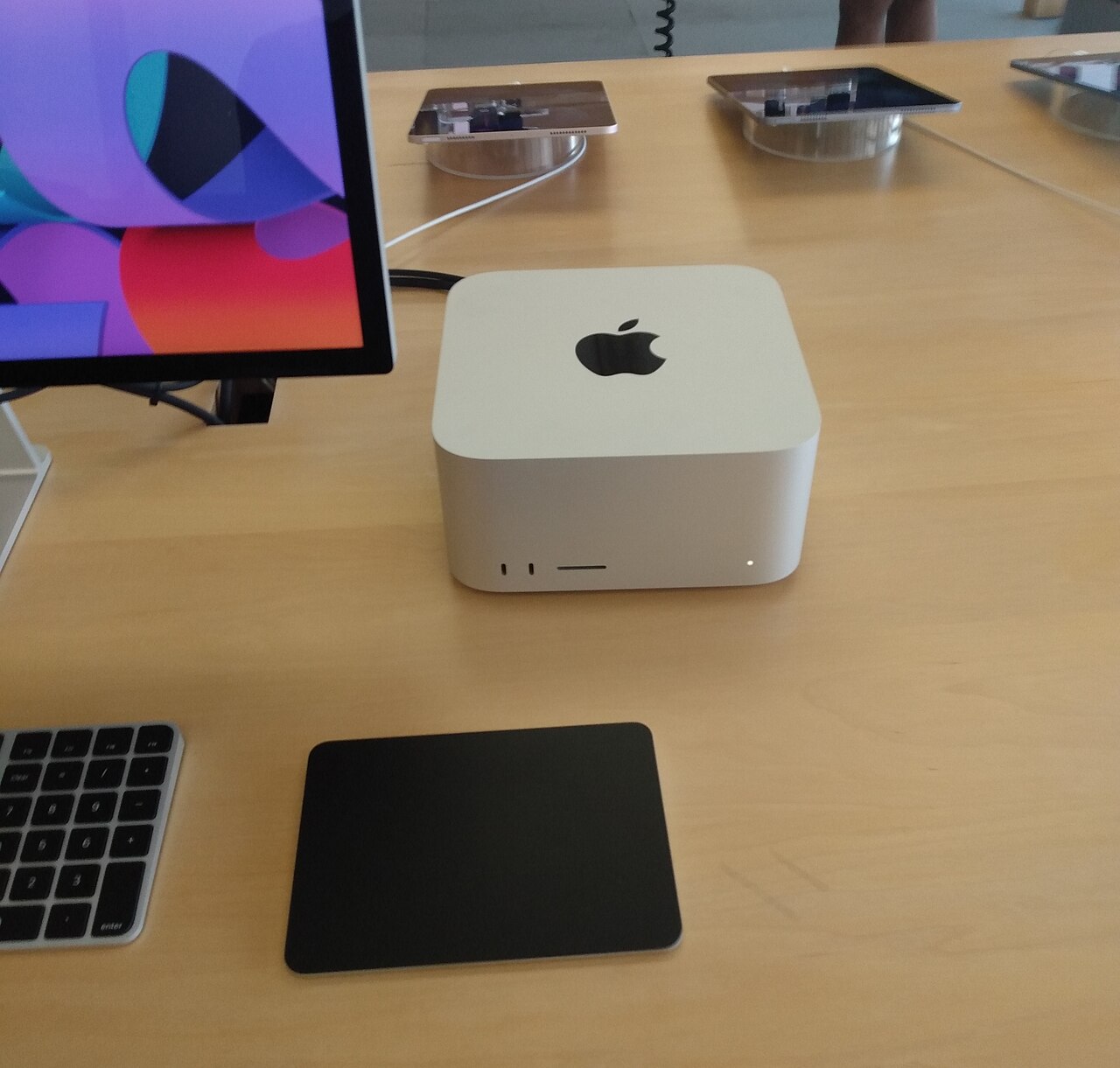
Apple has described an internal system called Minions that pools unused GPUs from Apple Silicon macOS devices and turns them into a distributed compute resource for machine learning inference. In a research summary published by Apple Machine Learning Research, the company presents Minions as “a dynamic and distributed virtual GPU cloud” that aggregates idle GPUs across Macs to run large-scale inference workloads. The stated goal is practical: use hardware that already exists inside the company rather than procure additional GPUs when centralized capacity is tight.
The paper summary is cautious in scope. It frames the problem as one of growing demand for GPU-accelerated inference, alongside the limits of centralized GPU infrastructure, including cost, restricted elasticity and long waits when resources are scarce. Apple’s researchers argue that modern Apple Silicon Macs already contain powerful GPUs that are often largely idle during normal use. Their claim is that these dormant resources can be organized into a useful inference platform for teams that need compute but cannot always get timely access to a central cluster.
A virtual GPU cloud built from office Macs
According to Apple’s research page, Minions is designed for inference rather than for general-purpose AI training. That distinction matters. Inference workloads can often be divided and scheduled more flexibly than large-scale model training, and Apple says the system offers flexible GPU inference task execution, fault tolerance and efficient resource utilization. The company’s summary does not provide detailed benchmark tables in the source text provided here, but it does say its experience shows idle macOS devices can become a practical distributed GPU inference platform where centralized GPU resources are constrained.
A separate report from French outlet 01net adds architectural details and operational claims that are not spelled out in Apple’s short summary. Because these specifics come from a secondary report, they should be treated as reported descriptions rather than as details independently confirmed here from the Apple summary itself. 01net says some internal AI jobs previously waited for hours in queue because centralized GPUs were unavailable, and that Minions reduced startup time for many of those tasks to minutes. That is a notable claim, but it remains a claim from the report unless verified directly in the underlying paper.
Reported architecture: four moving parts
01net describes Minions as resting on four main components. In that account, a central Minion Server receives requests from teams and splits them into sub-tasks. Their state is reportedly tracked in a PostgreSQL database. Each enrolled Mac then runs a Minion Executor, which processes its assigned portion on the local GPU, uploads results to S3 storage and reports status back to the server. A separate Minion Watchdog supervises the fleet and reassigns work if a machine stops responding. Dashboards reportedly provide real-time visibility into the state of the system.
- A central Minion Server that accepts jobs and breaks them into sub-tasks
- A PostgreSQL database used to track task state, according to 01net
- A Minion Executor on each enrolled Mac that runs GPU work locally
- A Minion Watchdog that detects failures and reallocates interrupted tasks
If accurate, that architecture suggests Apple chose a fairly classic control-plane pattern for a highly heterogeneous and unstable pool of devices. Office Macs are not dedicated servers: they can disconnect, sleep, be reclaimed by employees or become unavailable without warning. In that context, task splitting, persistent state tracking and a watchdog process are not optional extras but core requirements. The architecture also implies that Minions is optimized for distributed availability and fault handling before it is optimized for maximum raw throughput.
What Minions appears to optimize for
Both sources point in the same direction on strategy. Minions is not presented as an attempt to rival centralized Nvidia-style GPU clusters for the largest frontier models. Instead, the emphasis is on recovering underused resources already sitting on desks and making them available for inference jobs inside the company. 01net explicitly says the objective is availability rather than brute power, and that the system is meant to redistribute capacity already present on the internal network to teams that lack it.
That positioning fits the limited but clear wording in Apple’s own summary. The company highlights the ability to leverage existing hardware without additional GPU procurement and repeatedly anchors the system in environments where centralized GPU resources are constrained. In other words, the value proposition is less about beating a purpose-built datacenter cluster on performance and more about reducing idle hardware waste while smoothing access to compute for internal users.
The constraints are part of the story
The same sources also make clear that this architecture comes with meaningful constraints. First, Minions is discussed in the context of inference workloads, not full-scale training. Second, it depends on idle Apple Silicon macOS devices, which means supply fluctuates with employee behavior and device usage. A distributed pool built from user machines is dynamic by nature: nodes can disappear, performance can vary across different Mac models and the system must tolerate failures as a normal operating condition.
Third, storage and orchestration overheads are likely central to the design. The reported use of a central server, a database and S3-style result storage indicates that job coordination and data movement are significant considerations. Distributed inference can benefit from many GPUs, but not every model or task divides cleanly. That helps explain why fault tolerance and scheduling flexibility are emphasized in Apple’s summary, while claims about extreme performance are not.
01net also reports that recent Mac mini and Mac Studio systems can be associated via RDMA over Thunderbolt 5, combining memory and compute to load a model too large for a single machine. This is a striking detail, but in the sources provided here it appears only in the 01net article, not in the short Apple summary quoted above. It should therefore be read as a reported capability rather than a point established by both sources. If implemented as described, it would address one of the most obvious bottlenecks in single-device inference on Macs: model size versus local memory limits.
What Apple is saying — and what it is not
Apple’s own research summary is notable for its restraint. It says Minions can transform idle Macs into a practical distributed GPU inference platform and that the system provides flexible task execution, fault tolerance and efficient resource use. It does not, in the source text available here, claim that this approach replaces centralized clusters, that it supports giant models broadly, or that it is suited to every AI workload. Those omissions are informative. They suggest Minions is a targeted internal answer to a specific bottleneck: scarce shared GPU access for inference tasks that can be spread across a volatile pool of Apple Silicon devices.
For English-speaking companies, the concrete takeaway is not that office laptops and desktops can simply replace datacenter GPUs. It is that, where centralized inference capacity is limited, a carefully managed pool of idle employee Macs may offer a supplemental internal layer for suitable workloads — provided the company can handle orchestration, failures, uneven device availability and the narrower scope implied by inference-oriented jobs rather than the biggest training workloads.
Sources
- Minions: A Dynamic and Distributed Virtual GPU Cloud Built on Idle Apple Silicon DevicesApple Machine Learning Research · October 1, 2026
- À court de cartes graphiques, Apple réquisitionne les Mac de ses employés01net · October 15, 2026