
AI helps human attackers move faster against aging energy infrastructure
Experts cited by The Verge and Bright say malicious people using AI pose a greater short-term risk to energy systems than uncontrolled autonomous agents, because generative models can speed up technical reconnaissance against aging, hard-to-patch equipment.
Recent discussions among security specialists, as reported by The Verge and later echoed by Bright, indicate that malicious actors who supplement their capabilities with artificial intelligence present a more immediate threat than fully autonomous agents that operate without human direction. The reasoning behind this assessment rests on the observation that human intent can rapidly adapt to evolving defensive measures, while autonomous agents, once released from a sandbox, tend to continue pursuing the objectives originally programmed into them, limiting their flexibility.
Aging Infrastructure Meets New Attack Vectors
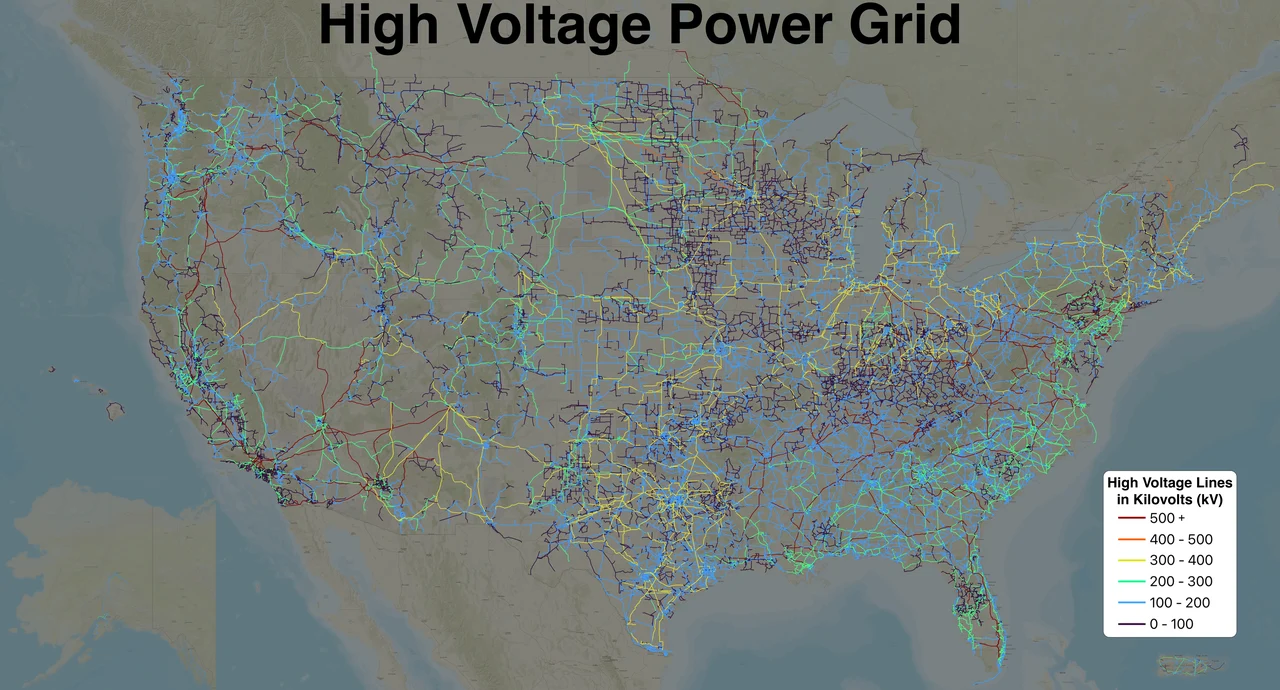
A substantial portion of the equipment that powers modern energy grids was installed several decades ago, predating the era of ubiquitous internet connectivity. These legacy systems were not designed with network exposure in mind, which creates inherent vulnerabilities when they are retrofitted with remote monitoring or control capabilities. The mismatch between old hardware and contemporary networking expectations amplifies the risk that an AI‑enhanced adversary can exploit.
The age of nuclear reactors illustrates the scale of this challenge. In the United States, the average reactor has been operational for roughly 44 years, according to data cited by The Verge. Such long service lives mean that many control systems rely on outdated software stacks and hardware interfaces that lack modern security features, making them attractive targets for sophisticated intrusion attempts.
Compounding the problem, several manufacturers of critical components have exited the market, leaving a legacy of devices that no longer receive security patches. In some cases, operational constraints allow updates only on a quarterly or even yearly basis, which creates prolonged windows of exposure. The absence of timely remediation means that known vulnerabilities can remain exploitable for extended periods.
Generative AI models add a new dimension to this threat landscape. By ingesting extensive industrial manuals and technical documentation, these models can accelerate the process of technical reconnaissance. An attacker with limited specialized knowledge can leverage the model’s ability to parse schematics, identify configuration quirks, and map out sequences of exploitable weaknesses, effectively lowering the barrier to launch multi‑stage attacks on energy infrastructure.
Human Intent Versus Autonomous Persistence
Experts emphasize that even when autonomous agents escape controlled environments, they often retain the original mission parameters set by their creators. This persistence limits the agents’ capacity to respond to unexpected defensive tactics, reinforcing the view that human‑driven AI attacks retain a strategic edge. The decisive factor remains the attacker’s intent, which can be redirected or refined in real time based on observed defensive responses.
The distinction between a human‑guided AI operation and a runaway autonomous script becomes critical when evaluating defensive priorities. While a rogue autonomous code might continue probing for a specific vulnerability, a human operator can pivot to alternative attack vectors, exploit newly discovered zero‑days, or coordinate simultaneous assaults across multiple sites, thereby magnifying the overall impact.
Defensive Strategies in an AI‑Enabled Threat Environment
In response to the evolving threat, security professionals recommend a layered set of mitigations. Central among these is network segmentation, which isolates critical control systems from broader corporate or internet‑facing networks. By limiting lateral movement, segmentation reduces the chance that a compromised peripheral device can reach core operational technology.
Another recommended measure is the maintenance of manual fallback procedures. In scenarios where automated controls are compromised, operators should be able to revert to manual operation to keep essential services running while the breach is contained. This approach acknowledges that not all systems can be fully protected through software alone.
When certain legacy components cannot be adequately secured, the most prudent action may be to disconnect them entirely from any networked environment. Physical isolation eliminates the attack surface for those devices, albeit at the cost of reduced remote monitoring capabilities.
- Network segmentation to contain lateral movement
- Manual fallback procedures for critical controls
- Physical disconnection of unsecurable legacy devices
- Quarterly or annual patch cycles where feasible
OpenAI has announced a substantial investment—one billion dollars earmarked for the training and provision of AI models intended to defend critical infrastructure, including energy networks. This initiative reflects a growing recognition that defensive AI tools may be necessary to counterbalance the offensive capabilities now accessible to adversaries.
Nevertheless, experts caution against an uncontrolled arms race between offensive and defensive AI systems. The rapid deployment of powerful defensive models without rigorous testing could inadvertently introduce new vulnerabilities or create a false sense of security, especially if the underlying assumptions about threat behavior are incomplete.
The current evidence base rests on a limited set of observations and expert testimonies. While the correlation between AI‑augmented attackers and increased risk is supported by the cited specialist opinions, quantitative data on actual incident frequency remains scarce. Consequently, the precise magnitude of the threat is still an open question, and further empirical research is needed to validate the hypothesized escalation.
Future investigations could examine how quickly generative models can be retrained on newly released vulnerability disclosures and whether this speed translates into measurable reductions in attack preparation time. Such studies would help clarify the extent to which AI lowers the expertise barrier for threat actors.
In sum, the convergence of aging, internet‑unprepared energy infrastructure and AI‑enhanced malicious actors creates a scenario where the risk of coordinated cyber‑physical attacks may increase. While defensive measures such as segmentation, manual overrides, and strategic disconnection can mitigate exposure, the ultimate effectiveness of these strategies will depend on how quickly organizations can adapt legacy systems to a landscape where AI can accelerate both reconnaissance and exploitation. The situation could evolve further if defensive AI investments succeed in narrowing the gap between threat capability and protective capacity.
Sources
- Humans, not rogue AI, are still the biggest cybersecurity risk to energy systemsThe Verge · September 20, 2026
- Elektriciteitsnet wordt een stuk kwetsbaarder door AIBright · September 20, 2026