
Apple’s Reference Image on iPhone 18 Pro Aims to Prove Photo Origin
Apple’s new Reference Image feature, available on the iPhone 18 Pro and Pro Max, creates a signed digital negative at the sensor level and processes it in Private Cloud Compute, offering a way to demonstrate that a picture really came from the device that captured it.
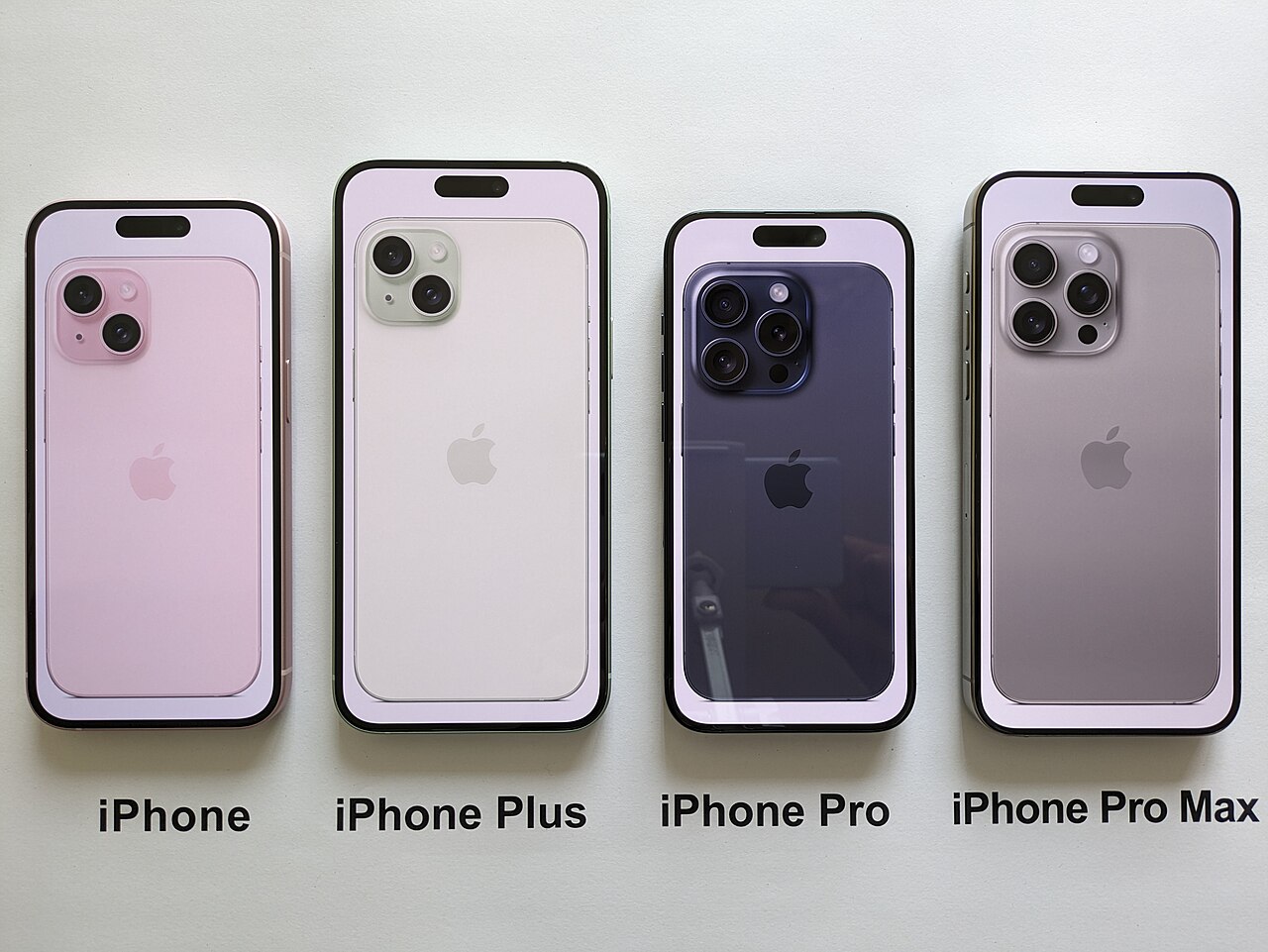
Apple has added a new optional mode called Reference Image to the main camera of the iPhone 18 Pro and Pro Max. When the user turns the feature on, the camera sensor creates a secure digital negative at the moment of capture. This negative contains pixel‑level signatures as well as metadata that is cryptographically signed by the Secure Enclave, the chip that stores Apple’s highest‑grade keys. In addition, two timestamped tokens are placed at the start and at the end of the exposure, which defines a very narrow time window – Apple estimates the window to be roughly fifteen minutes – during which the image can be unequivocally linked to the device that recorded it.
The signed negative never remains in a human‑readable form on the phone. Instead, it is immediately uploaded to Apple’s Private Cloud Compute infrastructure. There, a verifiable processing pipeline – whose steps are recorded in a public transparency log – turns the raw negative into a reference image that can be shared together with a cryptographic proof of origin. Apple stresses that the content of the negative is never exposed to Apple staff, and the system is deliberately designed to prevent anyone from correlating multiple reference images back to the same device or photographer.
Apple presents Reference Image as a complement rather than a replacement for existing provenance standards such as C2PA and traditional watermarking solutions. While C2PA attaches provenance metadata to a file after it has been created, Reference Image embeds a hardware‑rooted proof at the moment of capture. Apple also hinted that future versions may be combined with its SynthID technology, which would embed cryptographic identifiers directly into the image pixels, further strengthening the link between picture and device.
How the workflow works
- User activates Reference Image in the camera settings.
- The sensor records a signed digital negative alongside the regular photo.
- The Secure Enclave signs a small set of external metadata, including a timestamp and a hash of the device identifier.
- Two timestamp tokens are attached to mark the exact start and end of the capture window.
- The signed negative is transmitted to Private Cloud Compute for secure processing.
- A reference image is generated and stored together with a cryptographic proof that can be verified later.
Reported limitations
Analysts at ZDNET have identified a number of practical constraints that limit the immediate usefulness of the feature. First, the mode is not enabled by default; users must turn it on manually for each shooting session, which adds friction for casual photographers. Second, the extra data attached to each capture makes the resulting files substantially larger, potentially stressing device storage and complicating sharing over bandwidth‑limited channels. Third, the service is only available in a subset of regions, meaning that many users will never see the option at all. Fourth, the verification tools are currently confined to Apple’s own ecosystem, so a journalist using a Windows‑based workflow, for example, cannot easily validate a reference image without an Apple device. Finally, because the processing pipeline remains closed‑source, external auditors have limited visibility into the exact transformations applied to the negative, and the system does not yet provide depth information that could definitively separate a staged set‑up from a genuine scene.
Potential use cases
Despite these hurdles, the technology opens interesting possibilities for professionals who need to prove the authenticity of visual evidence. Reporters covering conflict zones or fast‑moving events could use Reference Image to demonstrate that a photograph was taken at a specific time and location, thereby countering claims of manipulation. Insurance adjusters could attach a verifiable provenance record to damage documentation, reducing disputes over whether images were altered after a claim was filed. Legal teams could rely on the cryptographic chain‑of‑custody provided by the signed negative to support admissibility of photographic evidence in court, provided they also follow established archival and human‑review procedures. In each scenario, the reference image acts as a technical anchor that complements traditional verification methods.
Comparison with other provenance tools
Reference Image differs from conventional watermarking in that the proof is embedded at the sensor level, not added as a visible or invisible overlay after the fact. Traditional watermarks can be stripped, blurred, or otherwise compromised during post‑processing, whereas the signed negative remains bound to the hardware root of trust. Compared with C2PA, which relies on metadata that can be edited or removed, the Apple approach ties the provenance directly to the device that captured the scene. However, because verification still occurs inside Apple’s private cloud, interoperability with non‑Apple platforms remains a significant challenge, and third‑party tools cannot yet validate a reference image without going through Apple’s services.
In summary, Apple’s Reference Image introduces a novel hardware‑anchored method for establishing photo provenance. The concept is promising, especially for organisations that already operate within the Apple ecosystem. Yet the current rollout is hampered by regional availability, larger file sizes, and a closed verification pipeline that limits cross‑platform adoption. Future openness and the addition of cross‑industry tools will be essential for the feature to gain broader traction beyond early adopters.
English‑speaking media outlets, newsrooms and enterprises that rely on visual content should therefore verify three key aspects before integrating Reference Image into their workflows: first, that the necessary regional support and cloud services are available for their users; second, that their storage and distribution pipelines can handle the increased file size without compromising performance; and third, that they have a clear process for retrieving and validating the cryptographic proof, ideally with an independent audit of Apple’s transparency log, to ensure the provenance claim can be trusted in legal or regulatory contexts.
Sources
- Apple Reference Image: A New Approach for Verified PhotographyApple Security Research · September 15, 2026
- L'iPhone 18 Pro peut prouver que vos photos ne sont pas truquées – mais avec certaines limitesZDNET France · September 16, 2026