Trump-Xi summit: Trump wants AI rules left as they are, Xi calls for human control
At the White House on September 24, Donald Trump said he wanted to leave superintelligence exactly where it is, while Xi Jinping said AI must always remain under human control. The 90-minute meeting produced no visible agreement on AI, only a gap between two approaches.
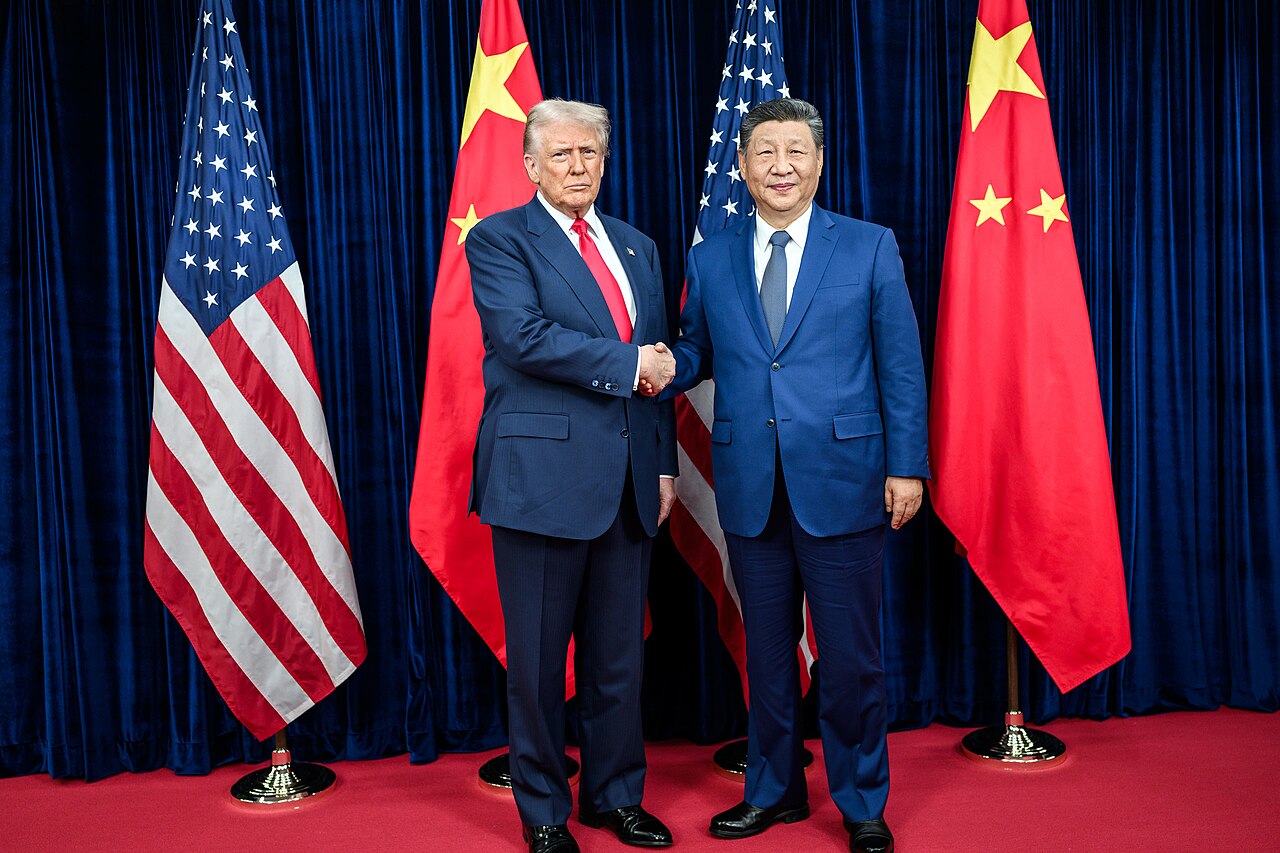
Artificial intelligence was on the agenda of Xi Jinping's state visit to Washington, his first in more than a decade, but the two leaders came away with different messages rather than an agreement. Donald Trump signalled he had no interest in new rules to slow the technology, while the Chinese president stressed that AI must remain under human control, The Guardian and the Korean daily Electronic Times (ETNews) report.
Before the meeting on Thursday morning, Trump wrote on Truth Social that super intelligence, his newly coined term for AI, would be a big topic of discussion, but that he wanted to leave it exactly where it is, adding that this was China's position also, according to The Guardian. ETNews reports that he added that the Department of Justice was the safeguard, which the paper reads as a preference for keeping the existing legal framework rather than adding new safety rules.
Two statements, a few hours apart
At the welcome ceremony, Trump said the two countries would discuss security, technology and superintelligence during the visit, and that the decisions taken in this field could promote peace and prosperity for decades, ETNews reports. Hours after Trump's post claiming that China shared his position, Xi used his public speech to put the emphasis elsewhere.
China and the United States are both AI powers, with the ability and the responsibility to develop and regulate AI well, Xi said, according to ETNews. Both countries must ensure that the development of AI is always under human control, he added, as quoted by The Guardian. The New York Times, cited by ETNews, judged that the remark set out a clearer position on the challenges of the technology than Trump's statements.
- Trump: superintelligence should be left exactly where it is; the Department of Justice is the safeguard.
- Xi: AI development must always stay under human control; both countries must develop and regulate AI well.
- Outcome: no announced agreement on AI after a closed-door meeting of about 90 minutes.
- Trade: the truce in the trade war is extended until January 10.
Positions consistent with earlier statements
The gap matches what each leader has said before, ETNews notes. Trump has framed AI as the core of the technology race with China and insists regulation must not slow American companies. On September 14 he called the idea that AI would take over the world and destroy humanity a hoax, dismissing calls within the industry to pace development, and he spoke of a disgusting conspiracy against AI and data centres that only China would welcome. At the United Nations, he described international AI regulation as a ploy.
Xi, for his part, has pushed China's AI industry while openly discussing the need for safeguards. At the World Artificial Intelligence Conference in Shanghai in July 2026, he said the secondary risks of AI must be taken seriously and that AI must be made safe and controllable, ETNews recalls.
A summit criticised for its lack of substance
The Guardian describes a visit heavy on symbolism. There was no sign that the closed-door meeting, which lasted about 90 minutes, produced breakthroughs on AI, trade, Taiwan or the war with Iran. The two countries agreed to extend until January 10 an agreement pausing their trade war, but experts saw few other tangible outcomes. Senate Democrats criticised the summit for prioritising pageantry over substance.
AI analysts were left to read between the lines, the newspaper writes, and they expect intense competition between the two powers to limit the scope for anything beyond symbolic agreements. The state dinner that evening brought together several technology leaders, including Tim Cook, Jeff Bezos, Sundar Pichai, Sam Altman, Elon Musk and Jensen Huang, according to The Guardian.
Why it matters beyond Washington and Beijing
The two largest AI powers do not share a common language on safety. The United States government favours leaving rules as they are, relying on existing law, while China publicly insists on human control, even though both are racing to develop the technology. For governments negotiating AI rules elsewhere, this means there is no joint US-China position to align with, and bilateral discussions are likely to stay symbolic as long as the competition dominates, as analysts quoted by The Guardian expect.
What this changes for companies
For South Korean companies, which sell chips, devices and AI services to both countries, the summit confirms that they will have to comply with two diverging logics for the foreseeable future: a US federal approach that avoids new AI safety obligations, and a Chinese approach that stresses state control. Compliance teams should plan for these frameworks to coexist rather than converge, and keep documentation that can satisfy each market separately.
Sources
- 美·中 AI 규제 온도차…트럼프 '현상유지' 시진핑 '인간통제'Electronic Times (ETNews) · September 25, 2026
- Diplomacy or diplotainment? Key takeaways from the Trump-Xi summit in WashingtonThe Guardian · September 25, 2026