Pope Leo warns against an AI “paradise of machines”
Opening a visit to France, Pope Leo XIV said artificial intelligence must serve people, warning that technology without ethical judgment could deepen dehumanisation and injustice.
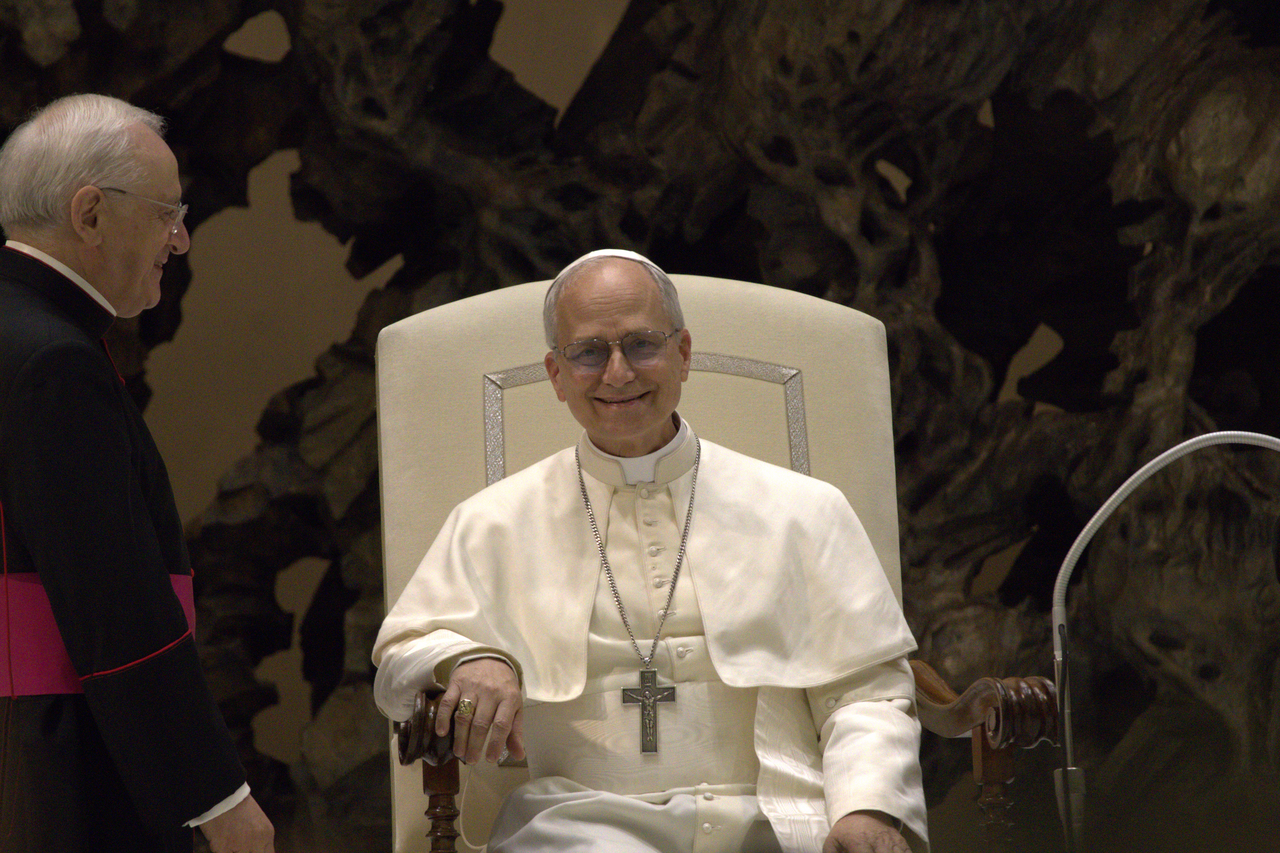
On 25 September 2026, Pope Leo XIV used the opening of his visit to France to warn that people could lose their humanity in a “paradise of machines” that invades and conditions daily life. Speaking first at the Élysée Palace and later at UNESCO’s Paris headquarters, the pope argued that artificial intelligence must remain at the service of the human person rather than become an instrument of domination or injustice.
The intervention places AI at the centre of the first official papal visit to France in 18 years. Leo, 71, became pope in 2025 and has repeatedly raised concerns about the direction of technological development. His remarks in Paris did not call for a halt to research or describe a specific regulatory programme. Instead, they set out a moral test: technological progress, he said, should not weaken human dignity, responsibility or relationships.
Ethical judgment before technical power
At the Élysée, Leo said there was an urgent need to educate people in ethical discernment if society was to avoid losing its humanity amid a machine-driven paradise. The phrase framed his concern less as a prediction that machines will literally govern society than as a warning about systems that increasingly shape choices, attention and everyday behaviour. The pope presented education in moral judgment as a necessary public response.
At UNESCO, he developed that argument by saying that every science risks losing its proper meaning when pursued without ethics. He noted that certain artificial systems are given the name of a human faculty of thought, intelligence. Yet, he said, ideas and relationships may be impoverished through a process of dehumanisation. His focus was therefore not only on the technical capabilities of AI systems, but also on the social conditions surrounding their use.
- Education that helps people distinguish what is morally right from what is merely efficient.
- Technology designed and deployed in the service of human persons.
- Resistance to systems that rank people by productivity or economic usefulness.
- Public attention to the risks of domination, discrimination and injustice in automated decisions.
A warning about efficiency and human dignity
Leo’s sharpest criticism concerned the tendency to assess people by efficiency. While intelligence is attributed to computational systems, he said, society can struggle to recognise the inalienable dignity of people whose lives are judged by whether they remain productive. Those considered no longer useful, he warned, risk being rejected and discarded. The statement connects the AI debate to wider concerns about labour, care, disability, ageing and access to public services.
The speech did not identify particular companies, algorithms or government systems. That is an important limit on how far its implications can be taken. Leo offered a broad ethical critique rather than evidence that a named AI tool had caused a particular harm. But his language points directly to a policy debate already facing institutions: whether automated tools should influence decisions involving employment, welfare, healthcare, education, policing or other areas where a person’s rights and opportunities are at stake.
Technology, law and political power
The pope also criticised leaders who, in his words, invoke the law when it serves their interests and disregard it when it restrains them. He did not name individuals. The remarks widened his address beyond AI, linking technological power to the rule of law and to the responsibilities of political authority. Earlier this year, Leo said the world was being ravaged by a handful of tyrants, according to reporting on his recent public interventions.
His French visit unfolds in a politically sensitive period. Emmanuel Macron’s time in office is approaching its end ahead of the French presidential election expected next spring, with Marine Le Pen polling strongly, according to the reported context. France is also a secular republic under its 1905 law separating church and state. Leo’s intervention therefore enters a national conversation where religious authority can speak forcefully on ethics but does not determine public policy.
A broader French agenda
AI is only one part of the pope’s itinerary. Leo voiced concern about what he described as profit-driven uses of science and technology, referring to genetic manipulation, surrogacy, organ trading and arranging one’s own death. His comments came after France passed legislation in June granting some adult patients the right to assisted dying. He also urged France to remain a tireless champion of peace and is due to address European peace in Metz as Russia’s full-scale war against Ukraine continues.
The visit also carries the unresolved weight of clerical sexual abuse in France. Leo is scheduled to meet privately with seven survivors in Lourdes. Survivors’ groups have said more people should have been consulted, while the Catholic Church said the format was intended to enable in-depth dialogue. A 2021 report estimated that 330,000 children had been abused over 70 years by priests or other church-related figures and described a systemic cover-up by church officials. For French audiences, the pope’s call to put people before systems will be measured not only against AI policy, but also against the Church’s own record of accountability and care.