OpenAI accepts unpaid math advisory group after dispute over open-problem claims
A new Institute for Advanced Study group gives mathematicians a public advisory role, but OpenAI’s claims about more than 100 solved problems remain company assertions.
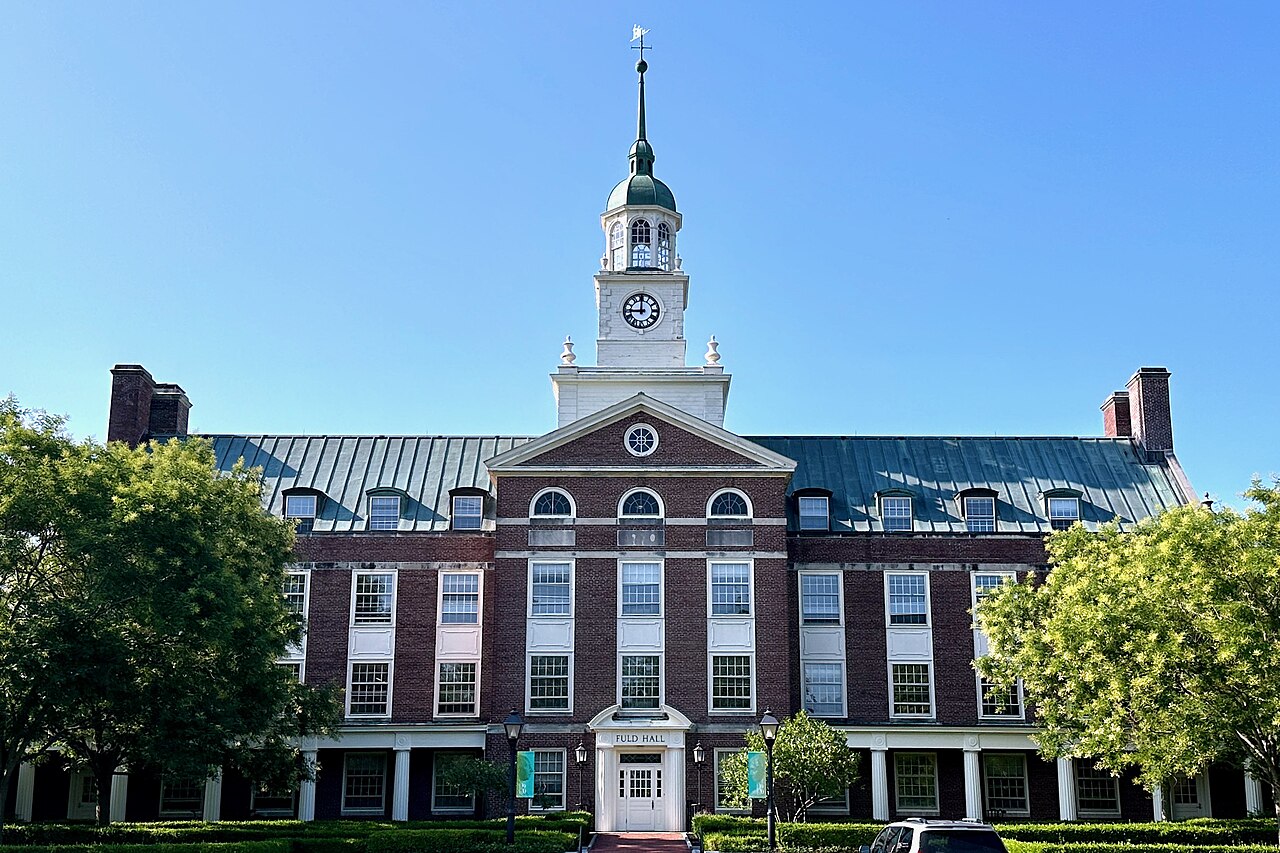
OpenAI has accepted the creation of an independent mathematics advisory group after controversy over company claims that an internal model had resolved more than 100 open mathematical problems. The group was formed on September 21 at the Institute for Advanced Study in Princeton. Its role is not to validate those claims in advance, not to manage OpenAI’s research, and not to act as a gatekeeper. It is an unpaid body of mathematicians that may offer advice, including unsolicited and public advice, on how significant mathematical outputs should be assessed, communicated and released.
What changed after the controversy
The change is institutional rather than evidentiary. Before the group’s creation, the public record described OpenAI’s assertion that an internal model had resolved more than 100 open mathematical problems, including work related to Navier-Stokes. Those statements remain company claims. The formation of an advisory group does not turn them into independently verified results. It does, however, create a visible channel through which mathematicians can comment on the significance of claimed results, suggest standards for disclosure and help coordinate the handling of releases that could affect active areas of research.
The group has nine members: François Charles, Camillo De Lellis, Timothy Gowers, Martin Hairer, Nikhil Srivastava, Ulrike Tillmann, Ravi Vakil, Edward Witten and Melanie Matchett Wood. The composition matters because it places the response outside OpenAI’s employment structure. The group is unpaid and controls its own membership. Those two features distinguish it from an internal review board or a company-appointed panel whose agenda, continuity and membership would be directed by the firm. At the same time, independence of membership does not mean authority over the company’s research programme.
The immediate background is a letter signed by twenty-five Fields medalists calling for more care. That letter represented a public challenge to the way claims around mathematical advances were being communicated. Among the nine members of the new group, De Lellis is the only one who signed the earlier letter. That detail is important because the advisory group should not be described as simply the same signatories entering an OpenAI process. It is a separate body with its own membership, formed after the criticism and designed to provide a standing source of advice.
How the advisory structure works
The advisory group can assess significance, coordinate releases and suggest standards. These functions address different stages of the problem. Assessing significance means helping distinguish between outputs that may be routine, incremental, technically interesting or potentially important for a field. Coordinating releases concerns the way information is presented to the mathematical community and the public. Suggesting standards means proposing expectations for evidence, documentation and communication when a company claims that an AI system has produced results touching open problems.
Those powers are advisory, not supervisory. The group cannot slow OpenAI’s research and cannot redirect it. This limitation is central to understanding what has changed. OpenAI has accepted an external forum for advice, but it has not transferred control over its internal model development or research priorities. The company may continue research on its own schedule. The advisory group may comment publicly or privately, including without being asked, but it does not have veto power over announcements, experiments or the allocation of company resources.
The unpaid structure also cuts in two directions. It supports the group’s distance from direct commercial compensation, which is relevant when claims about major scientific progress are at stake. But being unpaid does not automatically make a group comprehensive, permanent or equivalent to peer review. Its authority will depend on how it operates: whether advice is specific, whether standards are clear, and whether public statements separate mathematical verification from corporate communication. The group’s ability to give public and unsolicited advice is therefore one of its most consequential features.
What the numbers prove, and what they do not
The figure of more than 100 open problems is not an independent measurement in the facts available here. It is part of OpenAI’s claim about an internal model. A company claim can be newsworthy, especially when it concerns mathematics and AI, but it is not the same as independent verification. The creation of the advisory group does not itself prove that any stated problem has been solved, that all claimed solutions are correct, or that the work has the significance implied by the phrase “open problem.” The number indicates the scale of OpenAI’s assertion, not the outcome of an outside audit.
The same caution applies to the reference to Navier-Stokes. Work related to Navier-Stokes may sound particularly consequential because of the prominence of the topic, but the verified facts do not establish that an independent body has confirmed a solution to a Navier-Stokes problem. The careful distinction is between an announcement by a company about its internal model and a mathematical result accepted through independent scrutiny. The advisory group can help clarify such distinctions in future communications, but its existence does not retroactively settle them.
The letter signed by twenty-five Fields medalists is a separate numerical fact with a different meaning. It does not prove or disprove OpenAI’s mathematical claims. It shows that a substantial group of highly recognized mathematicians called for more care in the handling of such claims. That is evidence of concern about process, communication and standards. It is not a benchmark, not a technical evaluation of the internal model, and not an independent count of correct solutions. In this story, the numbers measure different things: OpenAI’s claimed output, the scale of public concern, and the size of the advisory response.
Practical implications for AI mathematics
For OpenAI, the practical implication is that future claims about mathematical advances may face a more structured external response. The company has not given up control of research, but it has accepted a body that can publicly advise on significance and standards. That creates reputational pressure. If OpenAI announces further results, the existence of the group may make it harder to blur the line between internal confidence and community validation. Conversely, if the group’s advice is ignored, that too can become part of the public record.
For mathematicians, the group provides a defined point of contact without making the wider community dependent on OpenAI’s internal processes. Because it controls its own membership, the advisory group can in principle maintain continuity and adapt its expertise. Because it can give unsolicited advice, it does not need to wait for company invitation before responding to public claims. But its practical reach remains limited. It cannot compel disclosure, delay releases or force changes in research direction. Its influence is therefore based on credibility, clarity and public accountability rather than formal authority.
For readers and institutions interpreting future announcements, the main lesson is methodological. A company announcement, an advisory opinion and an independent verification are different categories. A benchmark by an editor, a claim by a developer and a judgment by external mathematicians should not be merged into a single statement of fact. In this case, OpenAI’s claims about more than 100 resolved open problems remain company claims. The advisory group’s formation is a response to the controversy and a possible mechanism for better communication, not proof that the disputed claims have been established.
Sources
- OpenAI forms math advisory group as its AI resolves more than 100 open problemsTechCrunch · September 21, 2026
- OpenAI tente de renouer le dialogue avec les mathématiciensNext · September 21, 2026