The strangest orders in the book trade: why AI firms are buying up Britain's secondhand shelves
Booksellers from Northumberland to Galway report bulk orders with no theme, no haggling and opaque buyers, shipped to freight warehouses near Heathrow. The suspicion is that the books are not being read but scanned — and a 2025 US court ruling explains why that has become a business.
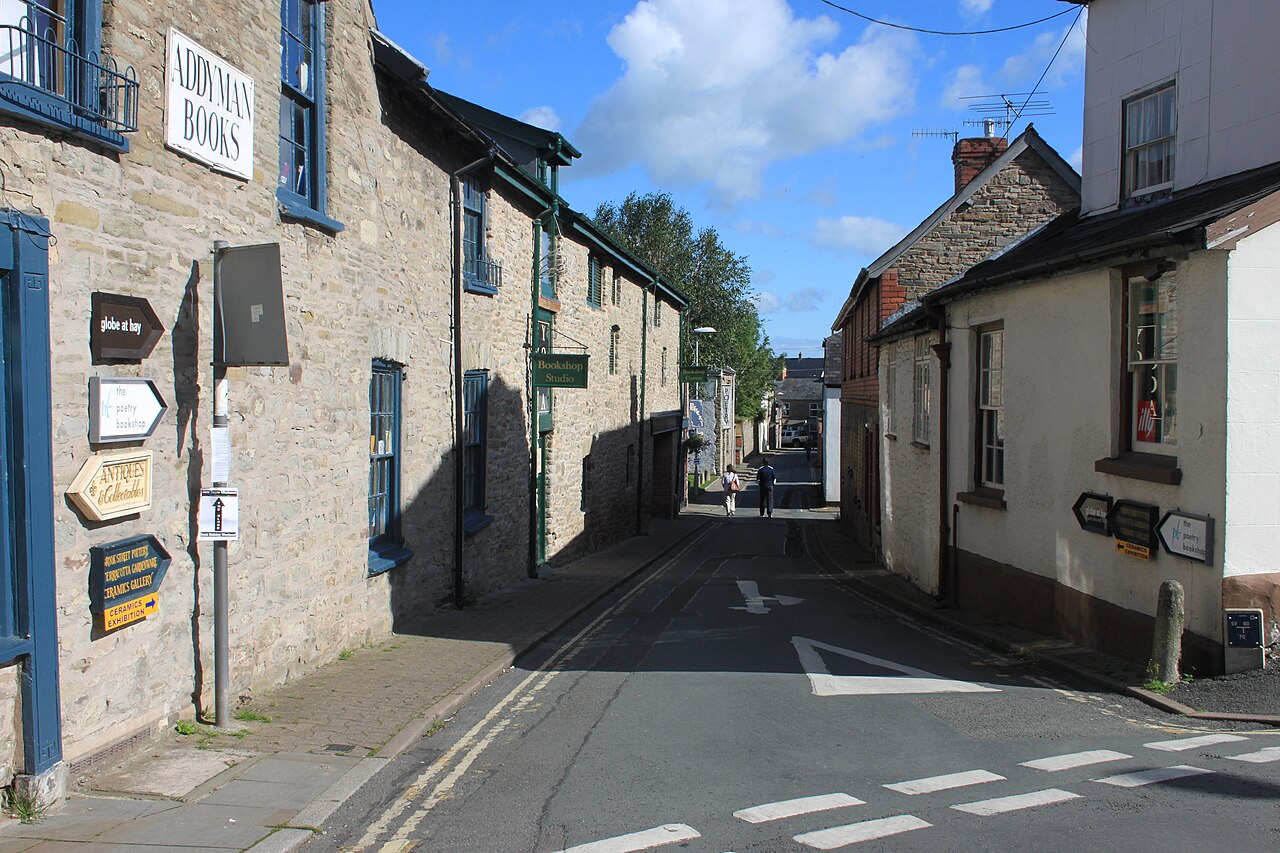
Stuart Manley has been in the secondhand book trade for thirty years. At Barter Books in Alnwick, Northumberland, a typical week means selling two or three thousand books. Recently, a single bulk order from a Canadian company matched what he would normally shift in seven days. He says he has never seen anything like it. The pattern he describes has now been reported by booksellers across the United Kingdom and Ireland, and echoed by shops in the United States, continental Europe and Australia.
Orders that no reader would place
What makes the orders strange is not their size but their shape. A book order normally follows a theme — sport, motoring, local history. These do not. One recent request from a single buyer combined an Estonian translation of John le Carré's The Mission Song, a copy of Anne Brontë's Agnes Grey from one particular imprint, and the October 1983 edition of the monthly magazine Warship. Manley sold hundreds of effectively random titles to three buyers for around 4,000 pounds.
Jim Shaughnessy, who runs MW Books in Claregalway, Ireland, has been receiving large and varied orders since May. He describes them as sporadic and presumably machine-driven, with little thematic currency: books on agricultural implements in eighteenth-century Africa alongside biographies of 1950s racing drivers. David Gower-Spence, of BookLovers of Bath, saw a rush of orders for around 200 books between May and July, from buyers other sellers have also named.
- One anonymous UK seller has filled orders for 6,000 books since January, worth thousands of pounds.
- Buyers pay full price and do not ask for bulk discounts — unusual in a trade built on haggling.
- Different buyer aliases have shipped to a single delivery postcode: a cluster of freight warehouses near Heathrow.
- One named buyer, Canada-based Zoom Books, describes itself as North America's leading book recycling company.
The opacity is part of the pattern. One bookseller, speaking anonymously, told the Guardian that orders placed under different buyer names were delivered to the same address, and that the aliases behind them are hard to penetrate even for experienced sellers. Zoom Books has been contacted for comment.
A court ruling turned old paper into a supply chain
The commercial logic traces back to a courtroom in California. In 2025, in a case brought by three authors against Anthropic, Judge William Alsup ruled that training an AI model on lawfully purchased physical books was exceedingly transformative, and therefore permitted under US copyright law. Buying books to train a model became, at a stroke, a legally defensible route to data — and one that does not require a licensing negotiation with any publisher.
When court documents were unsealed last month, the scale became visible. Internal communications referred to the effort as Project Panama, with the stated aim of destructively scanning all the books in the world. Destructive scanning means shipping volumes to industrial digitisation sites, removing the spine so the pages can be fed through a scanner at speed, and recycling what is left. An Anthropic spokesperson said Claude is trained on a mix of publicly available web data, commercially acquired datasets and data the company generates itself, described sourcing books as a widely used approach across the industry, and stated that none of its data acquisition programmes buy and destroy rare or antiquarian books.
In some ways it's very nice to sell some of these titles which haven't been sold for many years, but it would be sad if they are ultimately destroyed.
Two legal regimes, one shelf
For British sellers, the awkwardness is that the ruling that created this demand does not apply here. UK copyright law requires the rights holder's prior permission for reproduction, including the copying involved in building a training library. The same book, bought in the same shop, sits under one regime when scanned in California and another when scanned in Cambridge. That divergence is why the destination of a pallet matters as much as its contents, and why booksellers cannot easily tell whether a sale is feeding a lawful pipeline or an unlawful one.
What it means for the trade
In the short term this is money the secondhand trade has not seen in years: dead stock moving at full price, no discount pressure, prompt payment. The medium term is less comfortable. A market where the buyer values a book as a block of unscanned text, rather than as a copy someone wants to read, prices scarcity differently — and once a volume has been through a destructive scanner, it is gone from circulation entirely. Sellers who want to keep a say in that outcome have one practical lever, and it is contractual rather than technological: the terms on which they agree to sell in bulk, and to whom. Manley's own position is the honest one available to most of the trade — he does not know where his books have gone, only that the reality behind the name has been discussed on bookseller forums for a long time.
Sources
- Secondhand booksellers in UK and Ireland suspect AI firms behind 'strange' bulk ordersThe Guardian · August 15, 2026
- Secondhand book sales are booming. Is it because of AI?BBC News · August 15, 2026