Trump Calls for Official Rebranding of AI to “Super Intelligence” at UN
On September 22, 2026, former President Donald Trump urged the United Nations to adopt the term “super intelligence” instead of “artificial intelligence,” citing concerns that the word “artificial” implies falseness.
Trump Calls for Official Rebranding of AI to “Super Intelligence” at UN
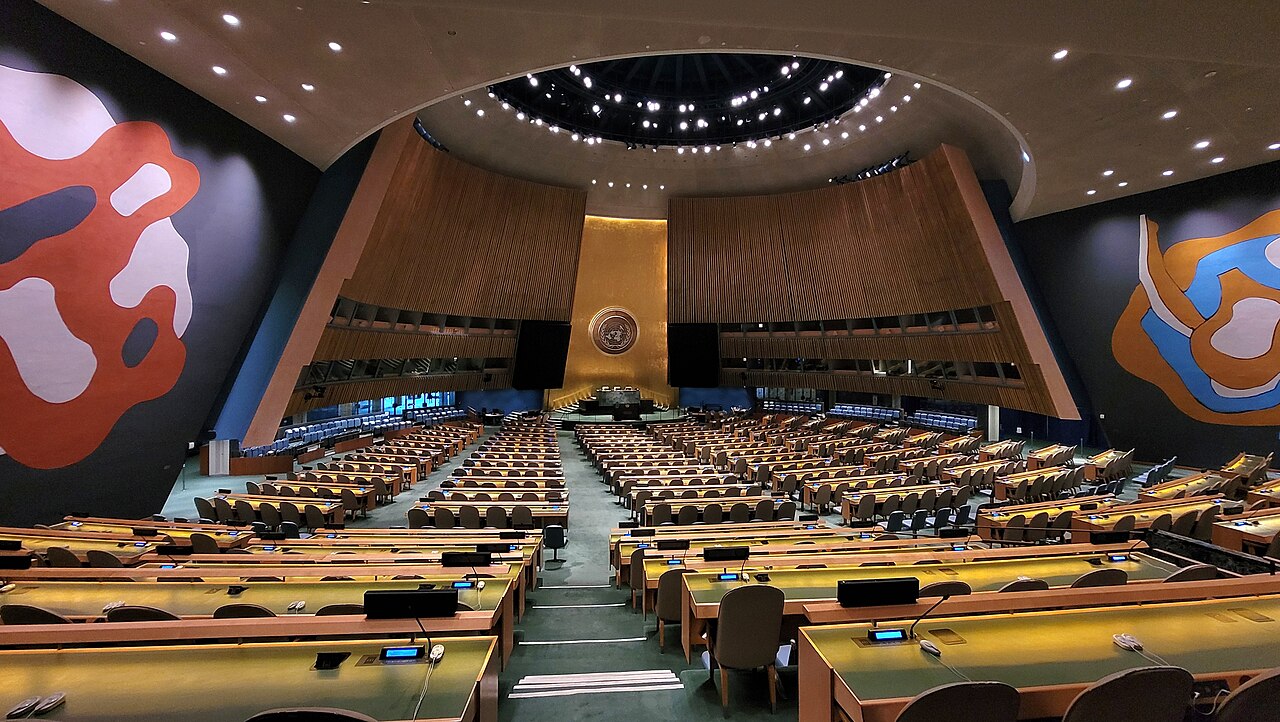
On September 22, 2026, former President Donald Trump addressed the United Nations General Assembly and urged the international body to replace the term “artificial intelligence” with the phrase “super intelligence.” He framed the request as a linguistic correction, arguing that the word “artificial” suggests falseness, while “super intelligence” would better reflect the technology’s advanced capabilities.
During the same speech, Trump announced that all official U.S. documents should adopt the new terminology, directing federal agencies to substitute the abbreviation “AI” with “SI.” He presented the shift as a symbolic gesture rather than a substantive policy overhaul, emphasizing the power of language in shaping public perception.
Rationale Behind the Terminology Shift
Trump argued that the adjective “artificial” creates the impression that the technology is counterfeit or less authentic, whereas “super intelligence” would convey a sense of advanced capability without the negative connotation. He suggested that the change would help restore confidence in the technology among citizens and policymakers.
He emphasized that the United States should lead by example, encouraging other nations to follow suit and adopt the new abbreviation “SI” in place of the traditional “AI.” According to Trump, a coordinated global rebranding could unify terminology across borders and reduce misunderstandings about the nature of the technology.
Legal and Regulatory Context
Both The Verge and Golem.de note that Trump’s declaration does not currently translate into any binding decree or regulatory text. No legislation or executive order was cited that would compel agencies, private firms, or international bodies to change their terminology.
The president himself acknowledged the uncertainty of his authority to enforce such a change, describing the proposal as a political statement rather than a legally enforceable mandate. He stressed that the initiative relies on voluntary adoption and diplomatic persuasion.
- Replace “AI” with “SI” in all U.S. government publications
- Update internal glossaries of federal agencies to reflect the new term
- Encourage private sector partners to adopt the terminology voluntarily
- Promote the change in international forums such as the UN
- Monitor adoption rates without imposing penalties
Strategic Implications for U.S.–China Competition
In the same address, Trump framed the terminology debate within a broader geopolitical contest, portraying the United States’ technological edge over China as a matter of national power. He suggested that a unified naming convention could reinforce America’s leadership in emerging technologies.
He warned against what he described as a “global control scheme” targeting AI development, positioning the United States as a defender of open innovation. Trump claimed that the rebranding would help differentiate U.S. efforts from those of Beijing, which he alleged pursues restrictive policies.
The claim that renaming the technology would somehow bolster U.S. competitiveness was not supported by technical analysis; the change is purely semantic. Experts cited by The Verge and Golem.de argue that naming conventions have limited impact on research funding, talent pipelines, or hardware manufacturing capacity.
Nevertheless, the rhetoric may influence public perception and could be leveraged in diplomatic negotiations to shape standards and norms around emerging technologies. By framing the issue as a matter of national prestige, the administration hopes to gain leverage in multilateral forums.
Practical Impact on Companies
For companies operating in the United States, the immediate impact is largely documentary. Without a formal administrative instruction, existing contracts, compliance frameworks, and technical specifications remain unchanged, and businesses are not required to alter their legal language.
In practice, organizations may need to update internal documentation, marketing materials, and employee training modules if they choose to align with the president’s suggestion. However, no legal risk arises from continuing to use “AI” in official communications, provided that the terminology change is not codified into law.
Concretely, an English‑speaking organization should monitor any forthcoming guidance from the Department of Commerce or the Office of Science and Technology Policy. Until such guidance is issued, the safest approach is to retain the established term “artificial intelligence” in formal reports while noting the political discourse as background context.
Industry associations have expressed mixed reactions, with some welcoming the opportunity to refresh branding, while others caution that frequent terminology shifts could create confusion among investors, regulators, and the public.
Academic institutions are also watching the development closely. Researchers fear that a focus on naming could divert attention from substantive issues such as algorithmic bias, data privacy, and the ethical deployment of advanced systems.
In the coming weeks, the United Nations is expected to consider a brief resolution acknowledging the terminology proposal, though no binding language is anticipated. The outcome will likely reflect the broader diplomatic dynamics surrounding technology governance.
Overall, while the call for rebranding to “super intelligence” adds a new rhetorical layer to the ongoing debate about AI governance, it remains a symbolic gesture without immediate regulatory force. Stakeholders are advised to stay informed about any future policy developments that could alter the status quo.
Sources
- Trump says the US is officially renaming AI to ‘super intelligence’The Verge · September 22, 2026
- Donald Trump: KI heißt in den USA jetzt Super IntelligenceGolem.de · September 22, 2026