Nvidia opens probe of CEO Huang as shareholder suit lands
Nvidia fell 4.27% on Nov. 9 after its board opened an independent probe of CEO Jensen Huang over reported ties to an alleged Chinese spy; a class action followed.
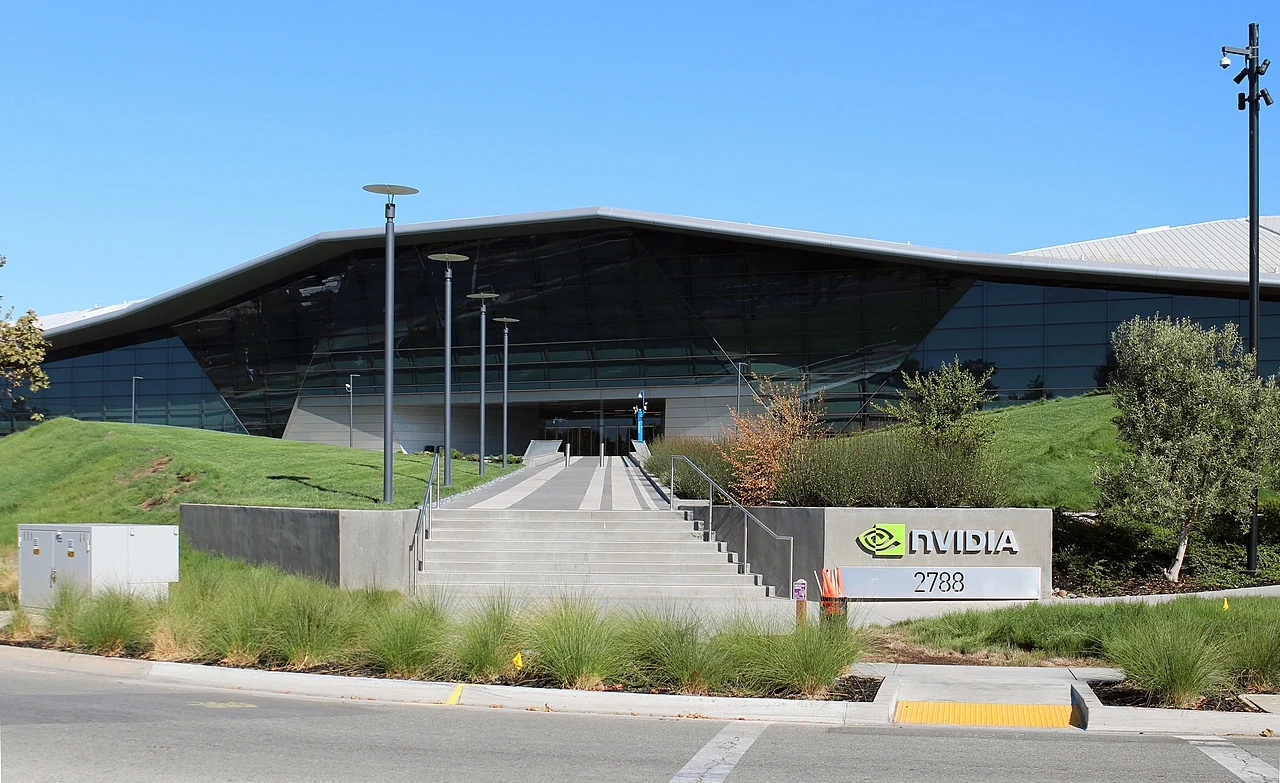
Nvidia shares closed 4.27% lower, down $7.97, on Monday, November 9, 2026, the first trading day after the company's board announced an independent investigation into chief executive Jensen Huang, according to CNBC and TechCrunch. The drop came while the broader market rallied and rival chipmakers rose: CNBC reported gains of 13.26% for AMD and 8.78% for Broadcom. Everything below is reporting or allegation attributed to its source; no charge against anyone has been announced.
What has been reported, and what is disputed
The investigation follows reports by The New York Times and the Financial Times, relayed by CNBC, that U.S. intelligence agencies believe Alice Huang, who is no relation to Jensen Huang, passed information to Beijing. The BBC reports that she was a top executive at Megaspeed, a Singapore-based data center company, between March and November 2023, and that the Times says U.S. officials believed she had been recruited by China's Ministry of State Security. According to the BBC, her whereabouts are unknown and she did not respond to the Times' request for comment.
China rejects the claims. Foreign Ministry spokesperson Guo Jiakun said on Monday that the allegations about Chinese spies were “entirely groundless, speculative and intended to smear and malign China,” according to the BBC. The BBC adds that it remains unclear what intelligence, if any, was gathered or passed to Beijing.
Nvidia's board said it has “confidence in Jensen” and “no reason to believe that either national security or Nvidia secrets were compromised,” as reported by CNBC. The company said Huang “fully supports the review and has committed to cooperating with it.” In a message to staff, Huang acknowledged he had “fallen short” of his responsibilities and apologized. This article does not go into his private life, which is not the matter of public interest here.
President Donald Trump said on Monday that the FBI is also looking into the matter, according to the BBC; the FBI declined to comment. Trump also said Huang told him “I had no idea she was a spy” and that he believed him. Those words are Huang's only as relayed by Trump.
The shareholder lawsuit and Nvidia's legal exposure
TechCrunch reports that at least four securities law firms, including Schall, Brown & Schwartz and Levi & Korsinsky, announced investigations on Monday into whether Nvidia misled investors. By the afternoon, Rosen Law Firm had filed a proposed class action in the U.S. District Court for the Northern District of California, where Nvidia is headquartered, on behalf of retail investor Mark Kistenmacher. It names both Nvidia and Huang.
The proposed class covers anyone who bought Nvidia securities between October 9, 2025, and November 8, 2026. According to TechCrunch, the complaint points to three statements: a spokesperson's late-October remark that Huang's interactions with Alice Huang were “not unusual or unexpected,” the company's earlier claim that it found “no evidence of diversion” of its chips, and Huang's October 30 comment to Bloomberg that Nvidia's dealings with Megaspeed were “normal and not unusual.” These are allegations in a complaint. No court has ruled, and the sources do not report a Nvidia response.
Robert Bartlett, a Stanford Law professor, told TechCrunch he expects a “classic fraud on the market” claim, in which damages are tied to the stock's decline. He said a settlement would typically be paid by the company and its directors-and-officers insurers rather than by the CEO or the board personally, and that this is a civil matter. He sorted Nvidia's wider exposure into three buckets:
- A securities fraud claim, which he called the clearest immediate problem.
- Governance: what the board knew and when, and whether the company had reporting lines to bring such a risk to directors.
- A scenario that would change everything: if the board's investigation finds that Huang knew about the intelligence connection, which Bartlett called “a whole other ball game.”
Governance and succession at the world's most valuable chipmaker
CNBC notes that Huang co-founded Nvidia in 1993, is its president and CEO, and owns just over 3% of the shares. He sits on a board of 11 members that has no official chair. Internal records reviewed by CNBC show he has 33 direct reports. Nvidia's risk factors do not name him as a key person; they refer to dependence on a “longstanding executive team.”
Analysts at Melius Research wrote on Monday that “there is no clear successor to Jensen, and we had expected him to stay in this role for at least 10 more years.” Bernstein's Stacy Rasgon said “Jensen is Nvidia. Nvidia is Jensen.” Timm Schulze-Melander of Rothschild & Co. Redburn wrote that Huang could be forced to step back only if the probe reveals “something materially more serious,” and that resignation is not a foregone conclusion. The BBC says its sources consider his removal unlikely given the money at stake, and notes there is no public succession plan. Several analysts told CNBC the probe could lead to governance changes, including a contingency plan.
Chips, China and the supply chain
The BBC describes Nvidia as central to the U.S.-China AI race: TSMC, which works with Nvidia, makes more than 90% of the world's most advanced chips, and U.S. export controls since 2022 have kept top chips out of China. Huang has said Nvidia's share of the Chinese market fell from around 95% to effectively zero. The BBC puts Nvidia's value at $4.5 trillion, and The Verge counts about $99 billion of Nvidia equity investments in AI labs, neoclouds and infrastructure companies.
Joachim Klement of Panmure Liberum told CNBC the impact is for now contained to Nvidia, but that if Huang's position were endangered, Nvidia might cut back its support for other companies, which could spread to other chip stocks. Dan Ives of Yorkville Ives & Co. said Nvidia remains two to three years ahead of China in AI chips. Megaspeed, for its part, was suspected of helping divert Nvidia chips to China, a concern Nvidia says it investigated and debunked; the BBC adds that Singapore's government is investigating earlier sanctions-evasion allegations. Senator Elizabeth Warren called for investigations and new legislation, per CNBC.
What this changes for companies that rely on Nvidia
Two dates frame the next weeks: Nvidia reports third-quarter earnings on November 17 and holds a major conference in Washington at the end of the month, per CNBC. For U.S. companies that buy Nvidia GPUs, rent them from cloud providers or depend on Nvidia financing, the points to watch are the outcome of the board's review, any governance change at the top, the 60-day window in which shareholders can seek lead-plaintiff status, and any shift in export policy. None of these is settled, and the sources do not say how the probe will end.
Sources
- Nvidia stock: Jensen Huang affair with alleged Chinese spy probedCNBC · November 9, 2026
- Jensen Huang's affair highlights Nvidia's key man risk with no heirCNBC · November 9, 2026
- Jensen Huang: What we know about Nvidia CEO's affair with suspected Chinese spyBBC News · November 9, 2026
- Everything we know so far about the Nvidia spy scandal targeting CEO Jensen HuangThe Verge · November 9, 2026
- The race is on to sue NvidiaTechCrunch · November 9, 2026