European regulator seeks clearer warnings on smart glasses
The European Data Protection Board says smart glasses should make recording clearly visible, as their workplace use raises privacy, labour-law and organisational confidentiality concerns.
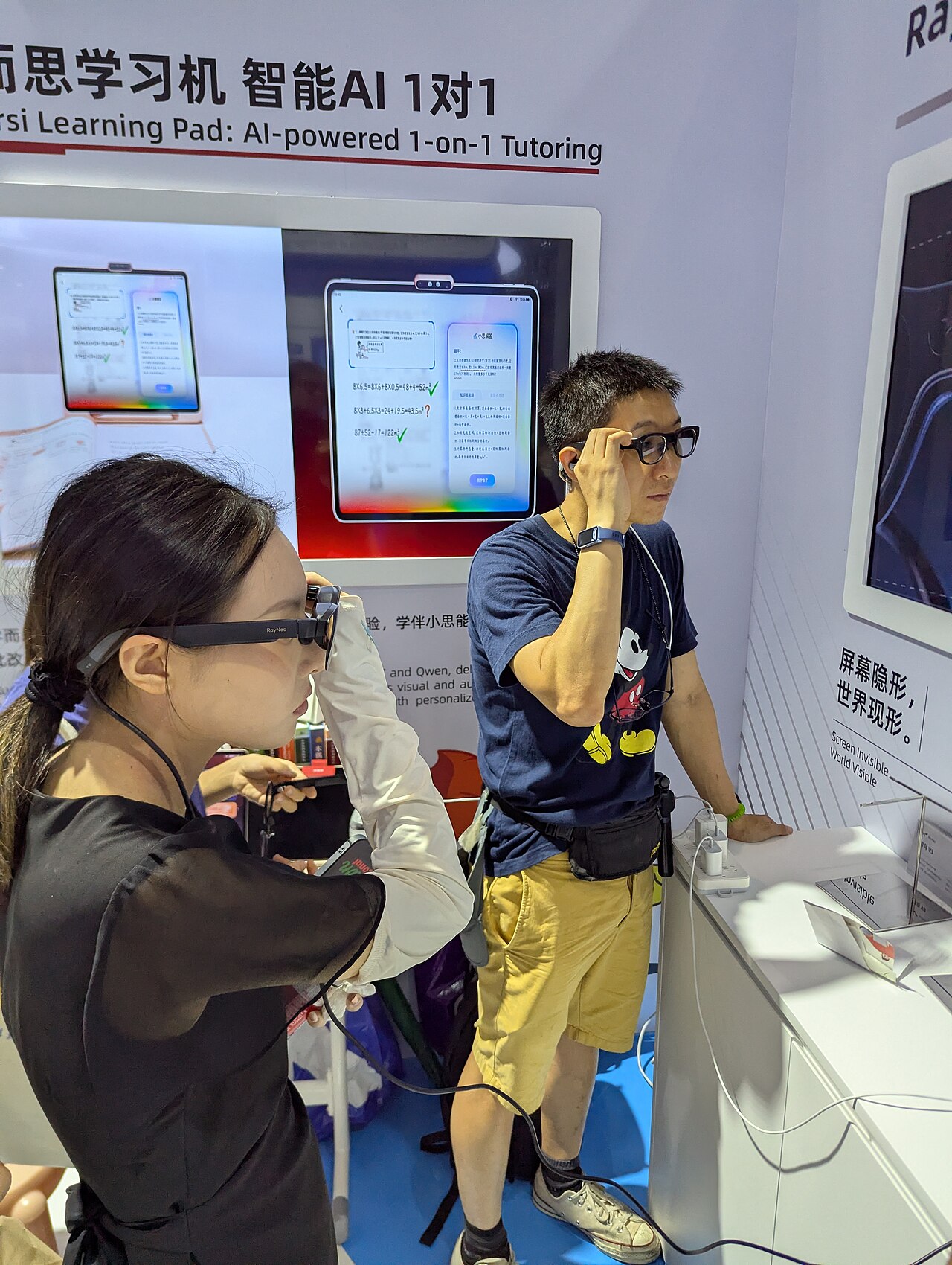
A preliminary European warning
The European Data Protection Board, or EDPB, has adopted an initial statement on the data-protection challenges posed by smart glasses. The regulator does not call for a ban on devices resembling ordinary eyewear but fitted with cameras, microphones and internet connectivity. Instead, it calls for stronger safeguards, especially transparency measures that allow people nearby to understand when their personal data may be processed.
According to the EDPB, smart glasses can create new opportunities for communication, assistance and innovation. But their discreet appearance also creates a central privacy problem: people may be filmed, photographed or recorded without knowing it. The Board says the risks are particularly serious in sensitive environments, including hospitals, schools and workplaces, and when recordings are shared on social networks. Children may be especially exposed when using such devices or when being recorded.
Workplace, privacy and confidentiality concerns
The workplace is one of the contexts specifically highlighted by the EDPB. The use of smart glasses at work may raise concerns about employee surveillance and about the confidentiality of organisational information, including trade secrets and intellectual property. The statement does not establish that every workplace use is unlawful. It points instead to the need to assess the purpose, the circumstances and the applicable rules.
The Board also distinguishes between personal use and uses that can fall under the General Data Protection Regulation. Recording relatives or friends, or using glasses for personal translation in a private setting, may qualify as a purely personal activity covered by the household exemption. In contrast, a user who publishes a photo or video through a public social-media account, or uses smart glasses in official, professional or political activity, may be considered a data controller under the GDPR.
Even where the GDPR does not apply, the EDPB notes that smart-glasses use can remain subject to criminal, civil or labour law, as well as sector-specific rules. This distinction matters for employers and employees: a device used privately can still create legal or workplace consequences depending on how it is used and where recording takes place.
Shared obligations for users and companies
The EDPB describes responsibility as shared. Users must consider the privacy and dignity of other people and avoid actions that could harm them. When their use goes beyond a strictly personal context, they may have GDPR obligations, including informing people clearly and explicitly that the glasses are being used, particularly for video or audio recording.
Manufacturers and providers of connected applications or services also retain their own responsibilities. The EDPB says they cannot transfer their data-protection obligations to users. They must comply with applicable rules and ensure that new processing remains compatible with the original purpose for which data were collected.
The Board identifies several directions for product design and operation:
- visible and audible recording indicators;
- privacy-friendly notifications on nearby smartphones;
- limits on continuous recording and storage periods;
- blurring or anonymisation of bystanders, and on-device processing where possible;
- geographical restrictions in sensitive locations and default limits on unnecessary persistent storage.
Why a single light may not be enough
The EDPB considers transparency a major challenge because bystanders may not know that data about them are being processed, who is processing it or for what purpose. It mentions bright LED lights, audio signals, voice-activation cues, smartphone alerts and distinctive product designs as possible ways to make recording apparent.
These measures should be reliable, difficult to bypass and updated when necessary, according to the Board. A simple indicator light may not be enough. It can be difficult or impossible for visually impaired people to perceive, and it may be mistaken for a reflection or sunlight. The EDPB therefore encourages manufacturers to combine several mechanisms and to make smart glasses more distinguishable from ordinary frames.
The Board also encourages common industry standards and public-awareness efforts so that people can identify these devices and understand what types of processing may occur in different settings.
Research and practical implications
Alongside its statement, the EDPB published a report titled “The connected gaze. Video recording, surveillance and administering evidence in the age of smart glasses.” The report was prepared by an external contractor through the Support Pool of Experts programme. The Board specifies that the views in that report are those of its authors and do not necessarily represent the EDPB’s official position.
The research examines user experiences and non-users’ perceptions. It indicates that smart glasses can sometimes become tools of interpersonal surveillance and evidence handling, while differences in people’s ability to use them can create power imbalances between wearers and recorded individuals.
For companies and organisations operating in the English-speaking world, the practical change is a need to review policies on recording devices, confidentiality and employee monitoring. They should not assume that discreet hardware removes transparency duties, and should assess smart-glasses use alongside applicable data-protection, labour and sector-specific requirements.
Sources
- L’Europe veut rendre les lunettes connectées beaucoup moins discrètesNext · October 14, 2026
- EDPB publishes statement on the data protection challenges of smart glassesEuropean Data Protection Board · October 13, 2026