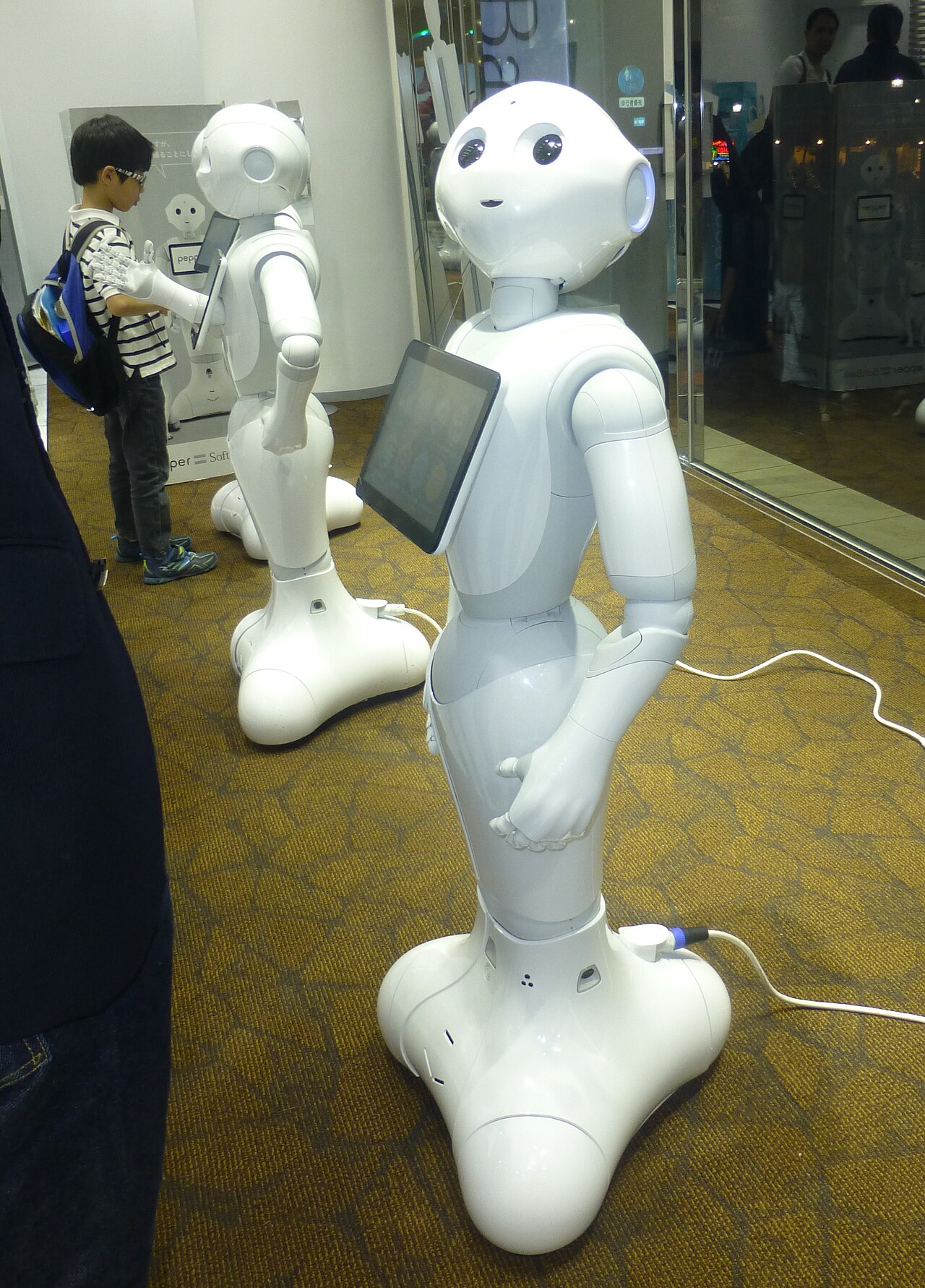
Study Finds Japan's Care Robots Grew Jobs, Not Cut Them
A Stanford-led study of nearly 860 Japanese nursing homes finds that adopting care robots raised employment by 26% and eased staffing shortages, rather than replacing the workers many feared they would.

A study of Japanese nursing homes has found that adopting robots to help with elder care increased employment rather than reducing it, easing a staffing crisis that has become a preview of what many aging societies are about to face. The study, titled "Robots and Labor in the Service Sector: Evidence from Nursing Homes," was published on August 6 in the inaugural issue of the journal Health Affairs Review and covered by Stanford's Freeman Spogli Institute for International Studies (FSI) the same month, with Stanford Magazine's editorial newsletter The Loop summarizing the findings again on September 8. The paper's authors are Stanford health economist Karen Eggleston, who directs the Asia Health Policy Program; Toshiaki Iizuka of the University of Tokyo's Graduate School of Economics; Yong Suk Lee of the University of Notre Dame; and Ellie Xi, a Stanford undergraduate and former research assistant to Eggleston.
Japan offers what FSI's write-up calls "the most pertinent case study" of demographic disruption colliding with a care-labor shortage: as of 2025, 30% of its population was 65 or older, and its fertility rate has been falling faster than projected. To cope, Japan's central government has since 2015 funneled subsidies through prefectural governments to help nursing homes buy "kaigo robots" — devices that assist with transfers, mobility, monitoring and companionship. Because different prefectures rolled out these subsidies at different times and at different levels of generosity, the researchers were able to treat that variation as a natural experiment, comparing staffing trends at homes nudged toward adopting robots against those that were not, using 2017 survey data spanning roughly 860 facilities.
What the robots actually do on the ward floor
The study groups the robots into three categories that map onto the physically hardest and most repetitive parts of caregiving work. Transfer aids — wearable and non-wearable devices — help staff lift frail residents from beds to wheelchairs, cutting the back strain that is a leading cause of caregiver burnout. Mobility robots support residents in moving, using the restroom or bathing with more independence. Monitoring and communication systems include sensors that alert staff when a resident has slipped out of bed or fallen, alongside social robots meant to provide companionship and cognitive stimulation. None of these are humanoid caregivers replacing a nurse's judgment; they are meant to absorb the physically taxing or repetitive tasks that drive staff out of the profession.
More jobs, not fewer, and mostly on flexible contracts
The results run counter to the standard automation-and-job-loss narrative. Robot adoption was associated with a significant drop in staffing retention problems, a 28% increase in care workers, a 39% increase in nurses, and roughly 26% higher total employment at the facility level. Notably, all of that employment growth happened among non-regular employees — staff on flexible, often part-time, contracts, a work structure the Japan Nursing Association already promotes as a way to reduce stress and burnout. "The study provides evidence suggesting that robots can complement rather than simply replace care workers, including by alleviating retention difficulties in a sector facing persistent labor shortages and potentially supporting quality of care," said Xi, a co-author, in the FSI write-up. The paper also finds signs that robot adoption may improve continuity and quality of care rather than diminish it.
- Study: "Robots and Labor in the Service Sector: Evidence from Nursing Homes," Health Affairs Review, published August 6, 2026
- Data: roughly 860 Japanese nursing homes, 2017 survey data, plus prefecture-level robot-subsidy variation as an instrumental variable
- Care-worker employment: +28% at facilities that adopted robots
- Nurse employment: +39%
- Total facility employment: roughly +26%, entirely among non-regular (flexible/part-time) staff
- Context: 30% of Japan's population was 65 or older as of 2025, with fertility falling faster than projected
The mechanism the researchers describe is not robots doing the emotional or judgment-heavy parts of caregiving, but robots taking over enough of the physically brutal and repetitive work that facilities can keep staff around and hire more of them on flexible schedules. That combination — lower burnout, better retention, more part-time hiring — is precisely the kind of labor-market effect that policymakers in other aging societies have struggled to find evidence for when weighing whether automation helps or hurts a caregiving workforce already stretched thin.
Why the rest of the world is watching Japan's experiment
Japan is not an isolated case; it is, as Stanford Magazine put it, "your crystal ball." South Korea, China, Italy, Germany and eventually much of the rest of East Asia and Europe are moving through the same demographic transition on a delay of years to a couple of decades, each facing the same question Japan is already living through: who cares for a shrinking pool of working-age adults' aging parents. The study's authors frame their findings as directly relevant to policymakers in those countries who are weighing whether subsidizing care robots is money well spent or a threat to caregiving jobs. Because Japan's subsidy program has now run long enough, and unevenly enough across regions, to generate causal evidence rather than anecdote, its experience offers other governments something rarer than a pilot project: a real-world natural experiment they can study before committing their own funds — and their own care workforce's jobs — to the same bet.
Sources
- Robots Ease Elder Care Shortages Without Displacing Workers or Diminishing Care Quality, Study FindsStanford Freeman Spogli Institute (FSI) · August 6, 2026
- Robot caregivers; football kicks off; "for you" feeds — The LoopStanford Magazine · September 8, 2026
- Robots and Labor in the Service Sector: Evidence from Nursing HomesStanford FSI / APARC (Health Affairs Review) · August 6, 2026