False Flock camera match leaves Florida woman jailed 13 days
On September 23, Lindsey Isaacs told a US Senate panel that an AI-assisted Flock camera search helped lead to her arrest over a fatal Florida crash she says she did not cause.
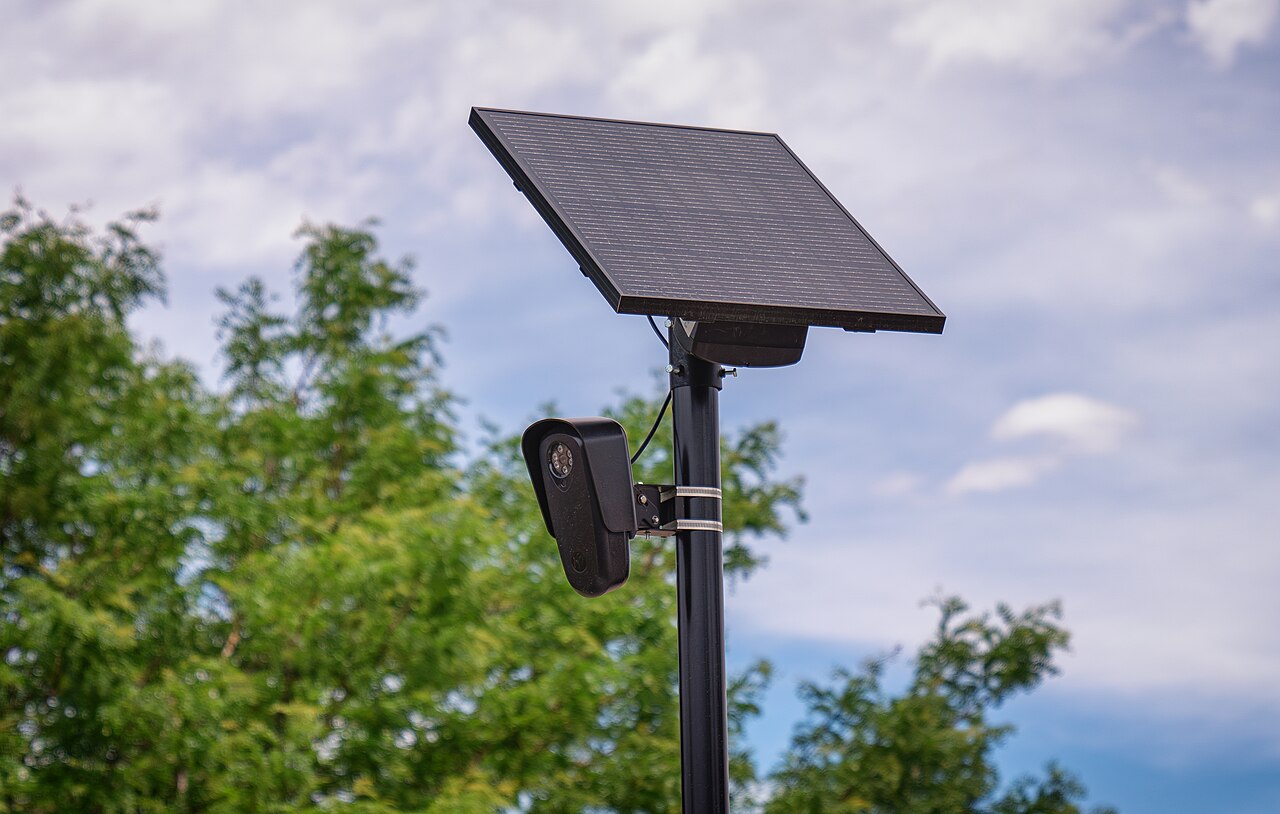
On September 23, 2026, Lindsey Isaacs told a US Senate subcommittee in Washington that she spent 13 days in jail after a Flock Security camera image helped place her under suspicion in a fatal hit-and-run case in Volusia County, Florida. Prosecutors later declined to file charges against her. Her testimony put a personal account at the center of a congressional hearing about Flock and other automatic license plate reader systems.
Isaacs, a former Palm Coast resident, said the Florida Highway Patrol accused her in connection with an October 4, 2025 crash on Interstate 4. The collision killed Flagler County Deputy Administrator Jorge Salinas, his wife Nancy Salinas, and a 54-year-old Deltona man who was riding a Suzuki motorcycle. Isaacs was accused of three counts of vehicular homicide, though she has said from the outset that she was not involved.
A vehicle image became part of the case
According to Isaacs’s Senate testimony, a Flock camera photographed her black Dodge Durango roughly two to three miles west of the crash scene. She said she later learned that a witness had described a maroon Dodge Durango. The distinction became central: prosecutors ultimately charged Alisa Lee Montalvo of Deltona, who, according to the News-Journal report, drove a maroon Dodge Durango.
Sen. Josh Hawley, the Missouri Republican who chairs the Senate Judiciary Subcommittee on Crime and Counterterrorism, characterized the result returned by the system as a false positive. He said Isaacs’s vehicle was not pictured at the crash scene and that the result had come from an AI search based on a general description rather than a conventional plate-number search. Isaacs agreed with that account during the hearing.
- Isaacs said a Flock camera captured her black Dodge Durango two to three miles from the crash site.
- She said a witness description referred to a maroon Dodge Durango.
- Her arrest warrant was issued on April 17, 2026.
- Prosecutors declined to file charges against Isaacs in May 2026.
From inquiry to detention
Isaacs told senators that she had spent October 4, 2025 cooking at her Palm Coast apartment with her mother, then driven to a store in Davenport. She said she returned home at about 10:25 p.m., ate food prepared earlier and called her parents to say goodnight. Around 1:04 a.m. the next day, she said, troopers and Marion County Sheriff’s Office deputies went to her parents’ home in Ocala asking where she and her Dodge Durango were.
Her parents then drove to Palm Coast, where Isaacs said they found troopers outside her home and an impound truck taking her vehicle away. She said officers told her there was collision-consistent damage on the Durango, but she could not see the damage they described and considered the vehicle to be in immaculate condition. She retained defense attorney Patrick McGeehan that day, according to her testimony.
The warrant was issued months later, on April 17, 2026. Isaacs said she was ordered to surrender at the Volusia County Jail by 2 p.m. She testified that she was placed in solitary confinement for about three and a half days, then housed for roughly 10 days in G Block, a maximum-security unit at the Volusia County Branch Jail. She said she was denied bond at a hearing on April 22.
Evidence, review and release
Isaacs said McGeehan showed the court photographs of her Durango in the Florida Highway Patrol impound lot without visible damage. She said that presentation prompted the state to reassess both the vehicle and the case. She was granted bond on April 29, after 13 days in custody. The 7th Circuit State Attorney’s Office subsequently declined to bring charges against her.
Her account also described the human consequences of a detention later followed by no charges. Isaacs said she feared she could spend the rest of her life in prison and said other inmates harassed her over the allegations after her mugshot appeared on jail television screens. She told the committee that the episode had permanently changed the direction of her life. Those statements describe her experience; the available reports do not provide a detailed public account from investigators explaining every step in the initial decision to arrest her.
What the hearing does and does not establish
The hearing was titled “Always Watching: Flock’s Nationwide Network of AI Surveillance Cameras” and concerned Flock devices as well as similar automatic license plate readers. Isaacs did not tell senators that technology alone made every decision in her case. Instead, she said information gathered by surveillance technology became part of an investigation with serious consequences for a person. The available reporting supports that the camera image was one element in the investigation, not a complete public reconstruction of all investigative evidence.
CNN reported that it contacted Flock Security and had not received a response at the time of publication. The supplied reporting contains no response from Flock, no explanation of the search parameters used in Isaacs’s case, and no independent technical audit of the system’s performance. It therefore would go beyond the available evidence to assign sole responsibility for the arrest to the camera network or to determine how frequently comparable mismatches occur.
For US readers, the case illustrates why the distinction between a lead and proof matters when automated tools identify vehicles sharing broad characteristics. A camera image may help direct an investigation, but the account presented to the Senate shows the stakes of checking color, location, physical vehicle condition and other corroborating evidence before a person loses liberty. The unresolved questions are institutional as much as technical: what review occurred, what contrary evidence was considered, and how quickly errors can be corrected.