OpenAI Launches ChatGPT for Teens With New Restrictions
OpenAI unveiled ChatGPT for Teens, a version for 13- to 17-year-olds with automatic age detection, restrictions on sensitive topics and no voice mode, after criticism and lawsuits over minors' safety.
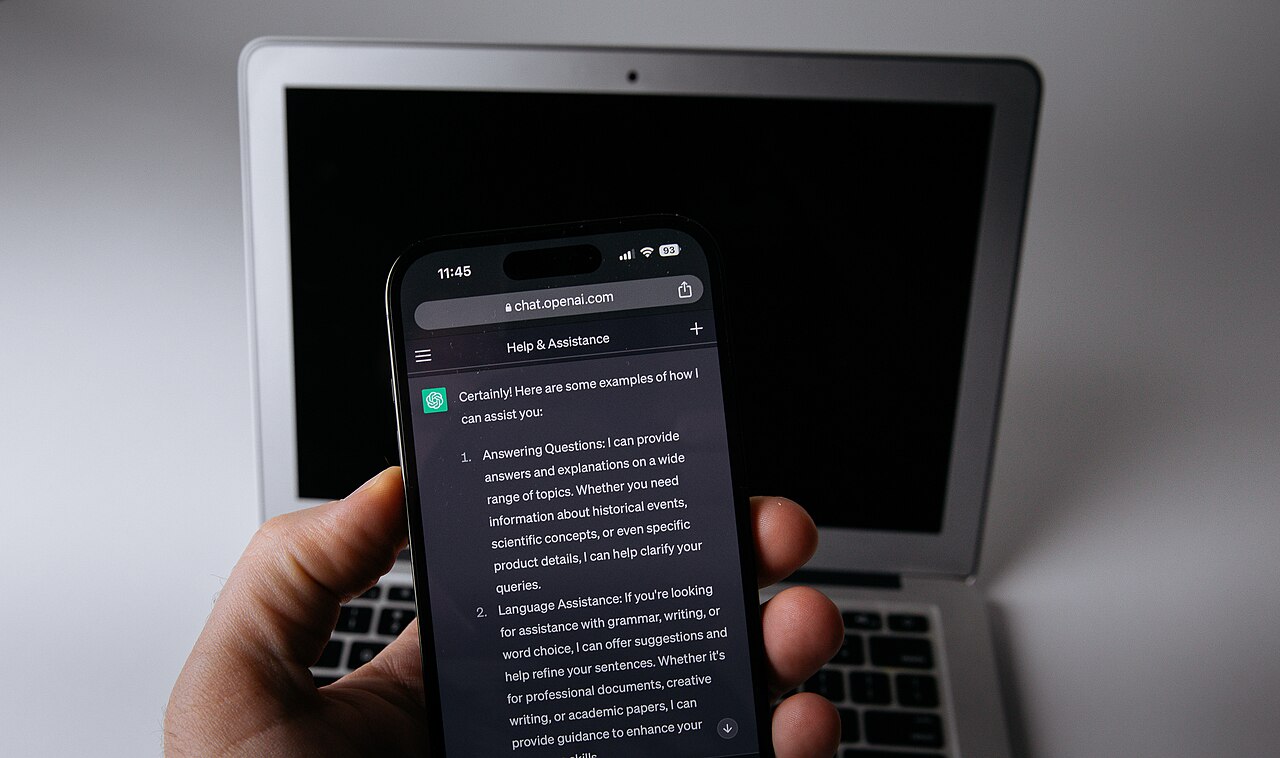
OpenAI unveiled ChatGPT for Teens on Tuesday, 18 August 2026, a version of its chatbot designed specifically for users aged 13 to 17. The San Francisco-based company said it wants to offer a space tailored to teenagers' developmental stage, without talking down to them or treating them like young children, according to Ann O'Leary, OpenAI's vice-president of global policy, quoted by The Guardian. The launch follows sharp criticism and lawsuits accusing the company of having contributed, through conversations with ChatGPT, to the suicide of some minor users.
How OpenAI detects that a user is a minor
According to ABC, OpenAI does not directly verify users' ages but applies an age-estimation system based on behavioural signals — such as the times the app is used and the type of questions asked — in addition to the user's own declaration at sign-up. If the system identifies someone as a minor, or the user identifies themselves as one, the account automatically switches to the teen version. The company says an adult wrongly classified as a minor can regain full access by verifying their age 'quickly and easily via a selfie through Persona,' a third-party identity verification service. The approach echoes the one Meta already applies to teen accounts on Instagram, which carry stricter content, messaging and privacy restrictions than standard accounts.
Content restrictions and parental controls
The teen version restricts conversations about self-harm, suicide and romantic or sexual content, and the model is barred from suggesting it has feelings of its own or is conscious, to prevent a minor from developing an emotional attachment to the system, according to Allison Mishkin, OpenAI's head of child development, quoted by The Guardian. Parents who link their teen's account to their own can set 'quiet hours' during which the teenager cannot use ChatGPT, and will receive notifications in high-risk situations, such as signs the minor might harm themselves. OpenAI has also added alerts related to eating disorders to the list of signals shared with parents. According to the BBC, each alert is reviewed by a human before being sent, and the company aims to get it to parents within an hour of the request. Turning on these parental controls requires both the teenager and the adult to agree to link their accounts, though O'Leary stressed the goal is for the tool to be safe 'even if you don't use parental controls.'
- Minimum age: 13; under-13s cannot use ChatGPT.
- Automatic age detection through behaviour and self-declaration, with selfie verification via Persona if misclassified.
- Restrictions on self-harm, suicide, and romantic or sexual content.
- No human voice mode: teens can turn off the chatbot's spoken responses.
- The model cannot suggest it has its own feelings or is conscious.
- Optional parental controls: quiet hours, risk notifications reviewed by a human within an hour, and Study Mode scheduling.
- Homework help designed to guide the student rather than hand over direct answers.
A launch under regulatory and legal pressure
The BBC notes the launch comes with no specific regulation yet governing AI chatbots aimed at minors in the UK, although the British government has considered restricting under-18s' access as part of other social media reforms. In the United States, more than 70% of teens turn to AI chatbots for companionship and half use them regularly, according to a 2025 Common Sense Media study cited by The Guardian. OpenAI's chief executive, Sam Altman, has publicly acknowledged the company is studying 'emotional overreliance' on the tool, a phenomenon he called 'really common' among young people. OpenAI stresses, however, that nine in ten teens who use ChatGPT do so to support their learning, according to figures cited by the BBC. Other competitors have been more cautious with minors: Anthropic's Claude remains adults-only, and Google did not allow minors either when it first launched its assistant, then called Bard.
For English-speaking families, the change means checking whether their teenagers already use ChatGPT and, if so, jointly activating the newly announced parental controls, since both sides must explicitly consent for them to work. For education companies in the US, UK, Canada, Australia and elsewhere that build on ChatGPT for study platforms, the shift means clearly separating minor and adult accounts within their own products, and testing how their integrations behave once the system classifies a user as a teenager, since the content restrictions and the absence of a voice mode can alter features already built on OpenAI's API. In the United States and Canada, anyone struggling with thoughts of self-harm or suicide can call or text 988, the free, 24-hour Suicide & Crisis Lifeline.
Sources
- OpenAI launches ChatGPT for Teens with stronger safeguardsThe Guardian · August 18, 2026
- Llega el ChatGPT para adolescentes: detección de edad automática, temas restringidos y mayor control parentalABC · August 18, 2026
- OpenAI launches ChatGPT for Teens with new safety featuresBBC News · August 18, 2026