Anthropic launches wet‑lab AI platform to test biology hypotheses in San Francisco
Anthropic confirmed it now runs a physical biology laboratory near San Francisco, using its Claude models to design and verify experiments while partnering with external researchers and biotech firms.
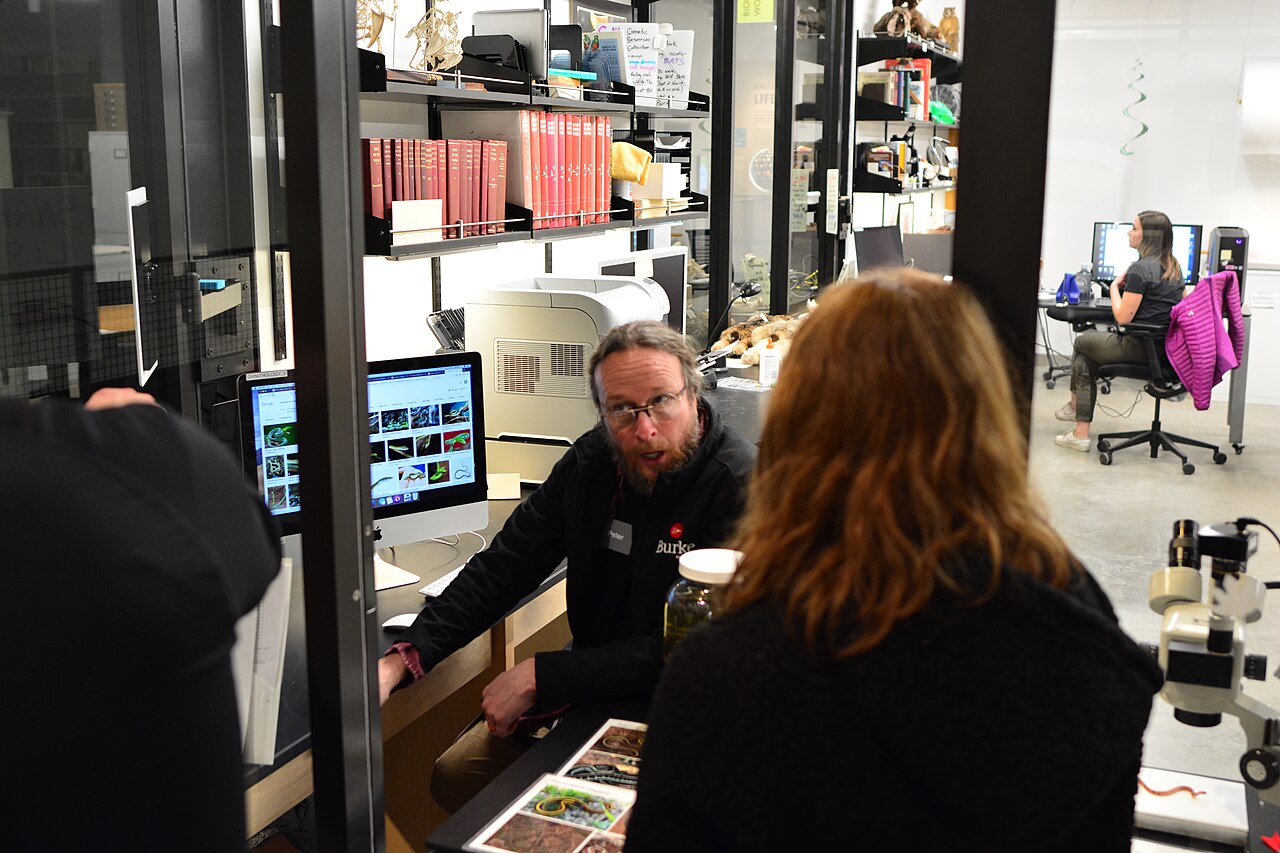
Anthropic announced that it operates a wet‑lab facility in the San Francisco area where real‑world biology experiments are carried out with the assistance of its large language models. The lab represents the final testing ground for hypotheses generated by Claude, the company’s flagship AI system, and it is positioned to bridge the gap between computational prediction and tangible biological evidence.
Why a wet lab matters for AI‑driven biology
According to Eric Kauderer‑Abrams, head of life‑sciences at Anthropic, “Physical experimentation remains the ultimate validation of any biological hypothesis.” He emphasised that while in‑silico simulations can narrow down possibilities, only hands‑on wet‑lab work can confirm whether a predicted mechanism actually functions in a living system, providing the decisive proof point that no virtual model can supply.
The facility conducts a portion of its work internally, but it also opens its benches to external partners. Researchers who meet Anthropic’s verification criteria can access the most powerful Claude models through the newly introduced Life Sciences Verification Program, allowing them to propose projects that are then evaluated for feasibility and safety before any material is handled in the lab.
Strategic acquisitions and collaborations
In April 2026 Anthropic acquired Coefficient Bio, a company specialising in data‑rich biological assays. The acquisition gives Anthropic a ready‑made pipeline for generating high‑quality experimental data that can be fed back into Claude’s training loops, thereby creating a virtuous cycle of model improvement and empirical validation.
Later that month the company announced a partnership with Novo Nordisk to explore drug‑discovery use cases. Anthropic stresses that its focus is on fundamental biology rather than direct pharmaceutical development, aiming not to compete with its own pharma and biotech customers while still providing them with richer mechanistic insights.
Automation and hardware integration
Anthropic’s long‑term vision is for Claude to pilot laboratory robots with minimal human oversight. To that end, the firm relies on its Model Hardware Standard, a framework that standardises the interface between AI agents and laboratory instruments, allowing seamless command of liquid‑handling robots, spectrometers and imaging devices, and reducing the latency between instruction and execution.
The company explicitly rules out any human clinical trials at this stage, keeping the wet‑lab work confined to pre‑clinical assays and proof‑of‑concept studies, which ensures compliance with regulatory boundaries and avoids premature exposure of AI‑driven protocols to patient populations.
- Internal experiments run by Anthropic scientists
- Verified external researchers accessing Claude via the Life Sciences Verification Program
- Collaborative projects with partners such as Novo Nordisk
- Data‑generation pipelines built on Coefficient Bio’s assay platforms
Anthropic highlights a dual responsibility that comes with combining autonomous experimentation and deep biological knowledge: accelerating research while preventing harmful applications and safeguarding partner data, a balance it says is embedded in its governance charter.
For English‑speaking organisations, the new wet‑lab capability means that AI‑driven hypothesis generation can now be linked directly to physical validation without leaving the Anthropic ecosystem. Companies can submit a biological question, receive a Claude‑crafted experimental plan, and, if approved, have the plan executed in a state‑of‑the‑art lab staffed by both human experts and robotic assistants. This reduces the time between computational insight and experimental proof, potentially cutting months‑long iteration cycles down to weeks, while also providing a controlled environment that respects intellectual‑property boundaries and regulatory constraints.
Regulatory and ethical considerations
Anthropic has instituted a compliance framework that aligns its wet‑lab activities with FDA guidance on pre‑clinical research, GDPR requirements for data handling, and emerging AI ethics standards. The framework mandates independent review of each proposed experiment, mandatory risk assessments, and transparent reporting of any AI‑generated recommendations that influence experimental design.
The initiative is anchored in San Francisco, a hub of biotech innovation, and the lab’s proximity to the city’s research institutions facilitates collaborations with academic groups while also ensuring that local regulatory bodies can readily audit the facility’s operations.
Sources
- Anthropic is operating a lab that conducts biology experimentsTechCrunch · September 18, 2026
- Anthropic bouwt eigen biolab voor AI-geneesmiddelenonderzoekBright · September 18, 2026