
Mathematicians Keep Using AI Tools Even as Attribution Risks Grow
Despite growing concerns over credit, confidentiality and unverifiable claims, leading mathematicians continue to rely on AI systems such as Codex, Claude and ChatGPT, while calling for stricter attribution and verification rules.
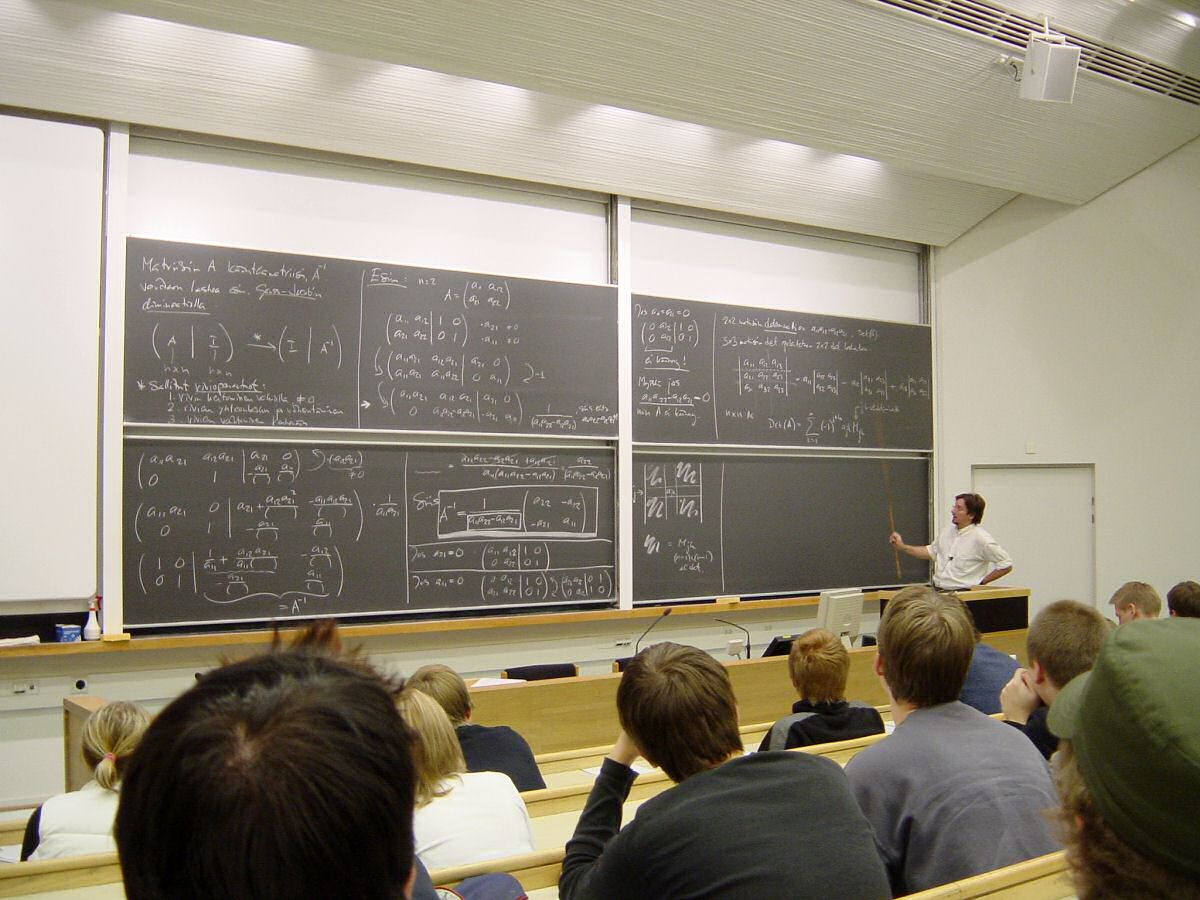
A recent Wired report documents that a sizable portion of the mathematics community still turns to large language models for proof assistance, conjecture generation and code verification, even as they voice unease about how contributions are recorded and how data privacy is safeguarded.
The article highlights that tools like OpenAI’s ChatGPT, Anthropic’s Claude and the open‑source Codex are being used in research groups across Europe and North America, often to test ideas quickly before committing to a formal write‑up.
High‑profile disputes illustrate the attribution gap
Tristan Buckmaster, a researcher focused on the Navier‑Stokes equations, publicly accused OpenAI of publishing results that mirror his unpublished work. OpenAI responded that the exchanges recorded on September 8 and the corresponding pre‑print did not influence the model’s output, underscoring the difficulty of proving causal links between a researcher’s private notes and a model’s suggestion.
Andreas Thom, another mathematician, obtained a corrected statement from OpenAI after the company omitted a 2019 article that directly informed his own findings. The correction illustrates how even large organizations can miss critical citations when aggregating scholarly material.
Collective calls for transparency
In a coordinated effort, twenty‑five Fields Medalists signed an open letter, reported by Wired, urging AI firms to bridge the gap between commercial development cycles and the slower, verification‑heavy pace of mathematical research.
The letter stresses that while AI can accelerate routine calculations, it cannot replace the rigorous peer‑review process that validates each logical step and acknowledges every intellectual contribution.
Leiden Declaration sets the agenda
The Leiden Declaration on Artificial Intelligence and Mathematics, released on June 2, 2026, proposes concrete measures to protect the integrity of mathematical work. It calls for mandatory disclosure of any AI assistance in publications and for authors to assume full responsibility for recommendations generated by those tools.
According to the declaration, plausible but false arguments produced by AI increase the burden on reviewers and jeopardize independent verifiability, a risk that is especially acute in fields where a single erroneous step can invalidate an entire proof.
- Require explicit AI‑use statements in all submissions
- Maintain a reproducible log of prompts and model outputs
- Ensure that any AI‑generated claim is independently checked before acceptance
- Prohibit marketing announcements of AI‑derived results before peer‑reviewed publication
- Create an audit trail linking each result to its human contributors
The declaration also warns against announcing AI‑derived breakthroughs on corporate marketing calendars before the necessary scientific evidence is available, a practice that can create premature hype and mislead funding bodies.
The overarching goal is not to ban AI from mathematics but to preserve proof, credit, transparency and the autonomy of researchers, ensuring that the community can continue to benefit from computational assistance without sacrificing rigor.
The core tension highlighted by the community revolves around the balance between speed and certainty. While large language models can generate conjectures or suggest proof strategies within seconds, each suggestion must still pass the traditional gauntlet of logical scrutiny. This means that any AI‑produced line of reasoning is subject to the same chain of deductions, counter‑examples, and formal verification that a human‑originated argument would undergo, effectively inserting an additional verification layer that can double the workload for reviewers who must now assess both the mathematical content and the fidelity of the AI’s contribution.
In practice, the requirement to disclose AI assistance introduces a new administrative step that reshapes the workflow of research groups. Teams will need to maintain detailed logs of prompts, model versions, and output excerpts, which must be stored in a reproducible format and made available upon request. Such documentation not only aids in tracing the provenance of a result but also creates a permanent record that can be audited if disputes arise, thereby reducing the risk of inadvertent plagiarism or misattribution that has plagued recent high‑profile cases.
The verification burden imposed by plausible yet incorrect AI outputs cannot be overstated. A single erroneous inference generated by a model can cascade through a proof, leading reviewers to spend considerable time disentangling the mistake from valid portions of the argument. Consequently, journals and conference committees may need to allocate dedicated verification resources, such as specialized editorial staff or automated proof‑checking tools, to ensure that AI‑augmented submissions meet the same standards of rigor as traditional manuscripts.
From an institutional perspective, the adoption of the Leiden Declaration’s recommendations will likely trigger policy revisions at the departmental and university levels. New reporting templates will become standard, requiring faculty and graduate students to certify AI usage and to attach reproducible logs to every submission. Training programs will be instituted to educate researchers on responsible prompting techniques, on recognizing model hallucinations, and on best practices for independent validation of AI‑suggested claims before they are presented as part of a formal result.
The broader scientific ecosystem will feel the ripple effects of stricter attribution and verification norms. Funding agencies may adjust grant evaluation criteria to reward projects that demonstrate transparent AI usage, while also penalizing those that bypass verification steps. Moreover, the publishing industry could see a shift toward journals that specialize in AI‑augmented research, offering enhanced peer‑review pipelines that integrate both mathematical expertise and computational auditing, thereby fostering a culture where speed does not compromise credibility.
Ultimately, these practical measures aim to preserve the foundational principles of mathematical research—proof, credit, and reproducibility—while still leveraging the undeniable advantages of modern AI tools. By embedding explicit disclosure, rigorous independent checks, and audit trails into the research lifecycle, the community can mitigate attribution risks, prevent premature hype, and maintain the trust essential for long‑term progress, ensuring that computational assistance acts as a catalyst rather than a source of uncertainty.
For English‑speaking research institutions, the practical impact is clear: departments will need to adopt new reporting templates, train staff on responsible AI usage and allocate resources for independent verification of AI‑suggested results. In doing so, they can harness the speed of modern models while maintaining the trust that underpins mathematical discovery.
Sources
- Mathematicians Hate AI. They Can't Quit ItWired · September 19, 2026
- Leiden Declaration on Artificial Intelligence and MathematicsLeiden Declaration · June 2, 2026