Huawei Accelerates AI Roadmap with Q1 2027 Ascend 960DT Launch and Peerium Supercluster Architecture
Huawei announced on September 17, 2026 that its Ascend 960DT AI processor will be ready for market in the first quarter of 2027, ahead of the previously planned Q3 timeline, and introduced the Peerium architecture that links massive compute clusters through a unified memory and peer‑to‑peer interconnect.
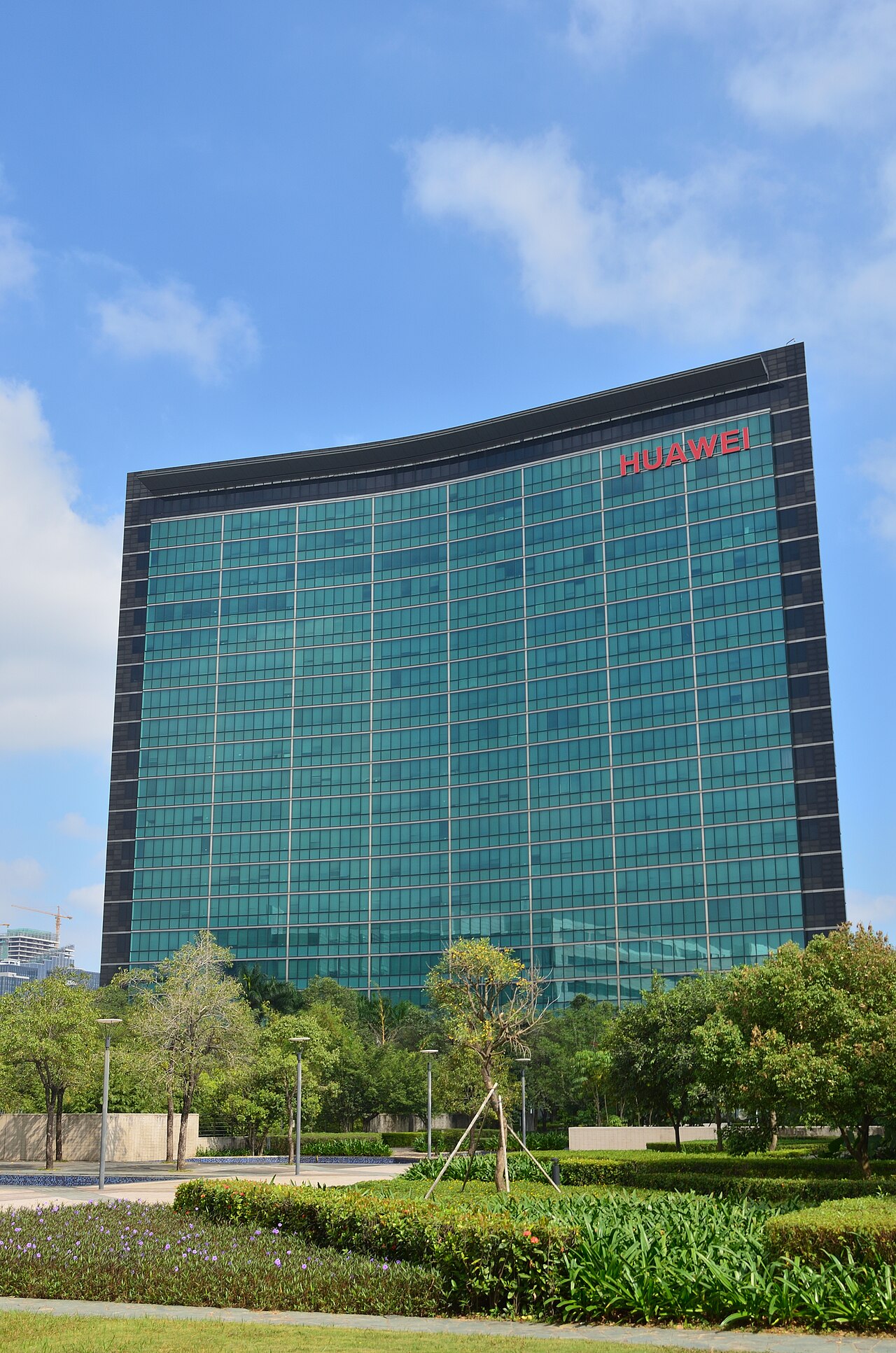
On September 17, 2026 Huawei disclosed that its next‑generation Ascend 960DT AI chip will be available in the first quarter of 2027, moving the launch forward by two quarters from the earlier Q3 2027 target. The announcement is part of a broader effort to provide a complete AI compute stack that can train and infer large models while reducing reliance on foreign semiconductor technology.
Performance claims and early availability
Huawei states that the Ascend 960 family doubles the performance of its predecessor, although the claim has not yet been validated by independent testing. The company also highlights a shortened development cycle, suggesting that the chip design and early silicon validation have progressed faster than originally projected.
Peerium: a new compute paradigm
Alongside the chip announcement, Huawei unveiled Peerium, an architecture built around nested parallelism, a unified memory addressing scheme, and a peer‑to‑peer interconnect fabric. The architecture is designed to treat a cluster of thousands of accelerators as a single, coherent computer, simplifying programming models for massive AI workloads.
Central to Peerium is UnifiedBus, known in Chinese as Lingqu, which aims to connect CPUs, NPUs, memory modules, SSDs, network cards and switches through an open protocol. Huawei positions Lingqu as a universal data path that eliminates the need for multiple proprietary bridges, potentially lowering latency and improving bandwidth utilization across heterogeneous components.
- Atlas 950 SuperPoD: originally targeted 15 488 Ascend 960 chips per pod, revised to 4 096 chips per pod in the latest announcement
- Atlas 950 SuperCluster: can interconnect up to 256 000 accelerator cards
- First SuperCluster deployment already underway in a Chinese research institute
- Peerium supports both training and inference workloads across the same fabric
- UnifiedBus protocol is open, allowing third‑party hardware to join the fabric
Hardware rollout and scale
Huawei reports that an Atlas 950 SuperCluster, built on Peerium, is currently being deployed. The system is capable of linking up to 256 000 accelerator cards, a scale that would place it among the largest AI clusters in the world if fully realized. The early deployment serves as a proof‑of‑concept for the unified interconnect and the nested parallelism model.
The shift from the earlier 15 488‑chip SuperPoD target to a 4 096‑chip configuration reflects a trade‑off between early availability and raw scale. Analyst Rui Ma notes that while the Ascend 960DT arrives sooner, the accompanying system is smaller than originally envisioned, which may affect the speed at which Huawei can match the largest existing superclusters.
Huawei frames the Peerium initiative as a strategic response to U.S. export restrictions on advanced semiconductors. By controlling both the silicon and the interconnect fabric, the company aims to reduce external dependencies and maintain a domestic pipeline for AI research and commercial deployment.
Nevertheless, key metrics such as actual performance under real‑world workloads, power consumption, manufacturing yield and large‑scale availability remain unverified. Huawei has not provided independent benchmark data, and the industry will be watching the first shipments closely to assess whether the claimed performance gains translate into tangible advantages.
The Peerium architecture also introduces a new programming model that abstracts the underlying hardware topology. Developers can write code that scales from a single Ascend 960DT chip to a full SuperCluster without redesigning algorithms, potentially accelerating time‑to‑market for AI applications that require massive parallelism.
From a supply‑chain perspective, the earlier launch date could help Huawei meet the growing demand for AI accelerators in China’s data‑center market, where domestic players are seeking alternatives to Nvidia and AMD GPUs. The unified bus may also simplify integration with existing server platforms, reducing the engineering effort required to build heterogeneous AI systems.
What this means for English‑speaking organisations is a new, large‑scale AI compute option that is fully integrated under a single architectural umbrella. If Huawei’s performance claims hold, enterprises could access a platform that offers double the throughput of the previous generation while benefiting from a unified memory and interconnect strategy that reduces system complexity. However, the lack of independent validation and the current focus on the Chinese market suggest that early adopters should evaluate risk carefully, especially regarding software compatibility, support contracts and potential geopolitical constraints.
Sources
- Huawei plans Q1 2027 launch of new AI chip as it takes on NvidiaTechCrunch · September 17, 2026
- 华为开创AI时代计算架构:让百万处理器成为一台计算机Leiphone · September 17, 2026