Google opens Gemini 4 Carbon to all, with agent swarm feature
Google opens Gemini 4 Carbon to developers and Ultra subscribers, with /swarm teams of AI agents, but access costs more for consumers.
Google opened Gemini 4 Carbon to the public on 10 November 2026, according to a post on the company's blog by Koray Kavukcuoglu, senior vice president of Google DeepMind and Google's chief AI architect. The model, presented as the most powerful in the range, becomes available to developers, enterprises, scientists and consumers, along with a preview of /swarm, a feature that hands a request to a team of AI agents. The price of entry, however, goes up.
Carbon is not a surprise arrival. According to Google, the model was given two weeks earlier to a group of cybersecurity defenders through the Fairwind Program. It follows Gemini 4 Argon, which Google presents not as a replaced model but as a complement: Argon remains « the ideal choice » for most software engineering and knowledge work, while Carbon targets tasks that test the limits of a model's intelligence, such as complex multi-step coding and debugging or open-ended scientific research. To do so, it uses more tokens than Argon, in order to explore, reason deeply and run long verification loops.
Figures that mostly come from Google
Google says Carbon ranks first on several evaluations it describes as independent, at more than two times lower cost per task than the next best external model:
- CursorBench 4.0, a programming-oriented evaluation;
- WANDR, Perplexity's test;
- AutomationBench, Zapier's test;
- Multimodal Knowledge Agent (MKA), a new evaluation built with Artificial Analysis for dense documents (charts, blueprints, tables), where Carbon ranks second, at an average cost per task more than six times lower than the top model.
These figures come from Google. Artificial Analysis measurements, relayed by Frandroid citing VentureBeat, give a more nuanced picture. On its Intelligence Index v5.0, Carbon leads with 59 points, ahead of Anthropic's Claude Opus 5.5 (58) and OpenAI's GPT-6 Astra (57), and well ahead of Argon (50). On AA-Omniscience, it answers 58% of questions correctly versus 48% for Argon, but its hallucination rate rises from 4% to 11%. According to The Decoder, Anthropic's new flagship Fable 5.2 beats it in the Artificial Analysis test (62 points against 60 in the High version), and, according to Frandroid, Carbon remains behind Grok 4.7, Muse Wonder and Kimi K3.1 Pro on the office tasks of AA-Briefcase. Carbon's scores differ from one article to the other (59 at Frandroid, 60 at The Decoder), and it is not known whether the index version is the same.
/swarm: a team of agents for a single request
The newest part is /swarm, in preview in Google Antigravity, Google's platform for coding with agents. According to Google, the feature turns a single prompt into a team of coordinated agents whose work can be followed in real time. Carbon takes the roles that demand the deepest reasoning, such as architecture design, coordination and auditing, while faster, lighter models work in parallel isolated workspaces, with adversarial verifiers that test every change. This is the logic of an agentic system: several agents, distinct roles and a check.
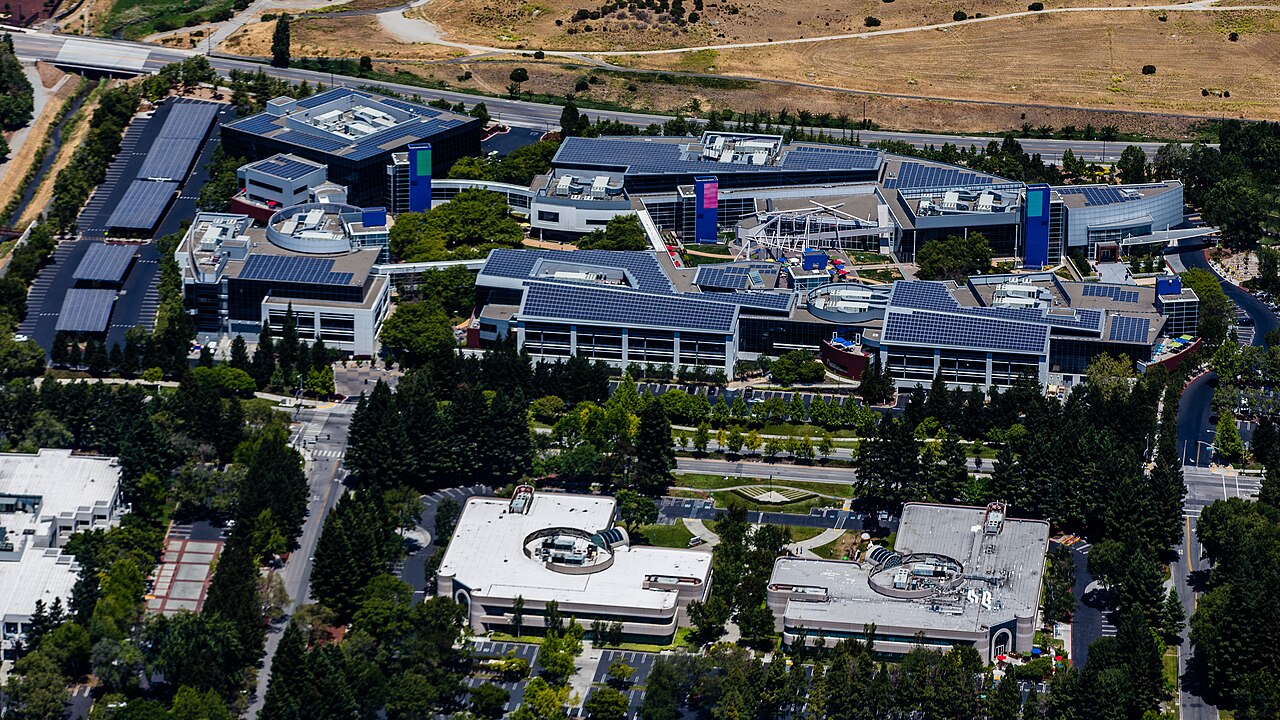
Google illustrates the feature with a 3D game in which you explore the Mountain View campus as a pelican riding a GBike, with an interactive 3D reconstruction of the building of the Eiffel Tower from historical photos, and with a playable 18th-century fortepiano. These are demonstrations chosen by the vendor. The Decoder notes that the cost-benefit of agent swarms is debated: OpenAI and Anthropic have recently sounded rather reserved and research is sceptical. The main value seems to be the speed gained through parallelisation, which remains complex to implement.
Price and access: the bill goes up
For developers, Carbon is available through the API in Google AI Studio and in Gemini for Business, for all paying accounts, at the same introductory price as Argon: 2 dollars per million input tokens and 10 dollars per million output tokens. The word « introductory » is Google's; The Decoder states that the standard rate is 4 dollars for input and 20 dollars for output.
At an equal token price, the real bill should be higher than with Argon, since Carbon uses more tokens, The Decoder points out. In the Artificial Analysis test published two weeks earlier, a solved task cost 7.76 dollars on average with Carbon at the standard rate, against 10.04 dollars for Opus 5.5 Max, 6.25 dollars for GPT-6 Astra Max and 26.50 dollars for Fable 5.2 at the maximum level (about 9 dollars in the High version).
It is on the consumer side that the entry ticket stings. According to Frandroid, Carbon is reserved for Google AI Ultra subscribers in the Gemini app, in Google Search's AI Mode and in Antigravity. Pro subscribers stay on Argon, whereas Argon had been opened to Pro and Ultra subscribers at the same time on 13 October. In France, Google AI Pro costs 21.99 euros a month and Ultra starts at 99.99 euros, with limits five times higher than Pro; a second tier at 219.99 euros multiplies them by twenty. A Pro subscriber must therefore pay 78 euros more a month to try Carbon right now.
Safety and reservations
Google published a full safety report and the model card. According to The Decoder, Carbon passes 92% of an internal honesty test of 375 tasks (70% for Argon) and refuses in 98% of cases to invent missing experimental data. Against adaptive red-teaming agents, it blocks 99% of attack paths and lowers the breakthrough rate per attempt from 3.1% to 0.8%. External testers from Trajectory Labs found no universal jailbreak in 132 hours and more than 13,000 requests.
On the Gray Swan indirect prompt injection benchmark, Carbon reaches a 0% attack success rate, which Google presents as a first. The Decoder tempers this: it does not mean prompt injections are solved, and the test may be saturated.
In cybersecurity, Google cites Wiz's Scan for Good program, in which the model found zero-day vulnerabilities at two large SaaS providers in under two hours, as well as its Project Fortify system, with 100% recall on scanning and 95% precision on triage in an internal test. These performances, however, apply to the version available through the Fairwind Program, and Google gives no precise figures for the benchmarks where it says it leads, The Decoder notes.
What it changes for a Brazilian company
For a company in the English-speaking market, as for a Brazilian one, the question is not whether to adopt Carbon everywhere but where it is worth its price. Google itself recommends Argon for most uses; Carbon is justified for heavy projects, such as a multi-package code migration or a security audit, where a mistake costs more than extra tokens. Before committing, it makes sense to measure the real cost per task on your own cases, to account for the introductory price, which may change, to check the local availability and pricing of Ultra subscriptions (the prices quoted are those of France) and to treat /swarm as a preview to be tested with human checks. Teams already experimenting with agents in parallel will find a test bench there; the others can wait until usage feedback builds up.
Sources
- Gemini 4 Carbon is now availableGoogle DeepMind · November 10, 2026
- Google startet Gemini 4 Carbon mit neuer Agenten-Schwarm-FunktionThe Decoder · November 10, 2026
- Vous pouvez maintenant utiliser Gemini 4 Carbon (si vous payez le prix fort)Frandroid · November 10, 2026