
Bill Gates says AI misuse could cause a billion deaths
On September 25, Bill Gates warned that malicious use of advanced AI could be powerful enough to cause an event killing one billion people, while calling for binding government oversight.
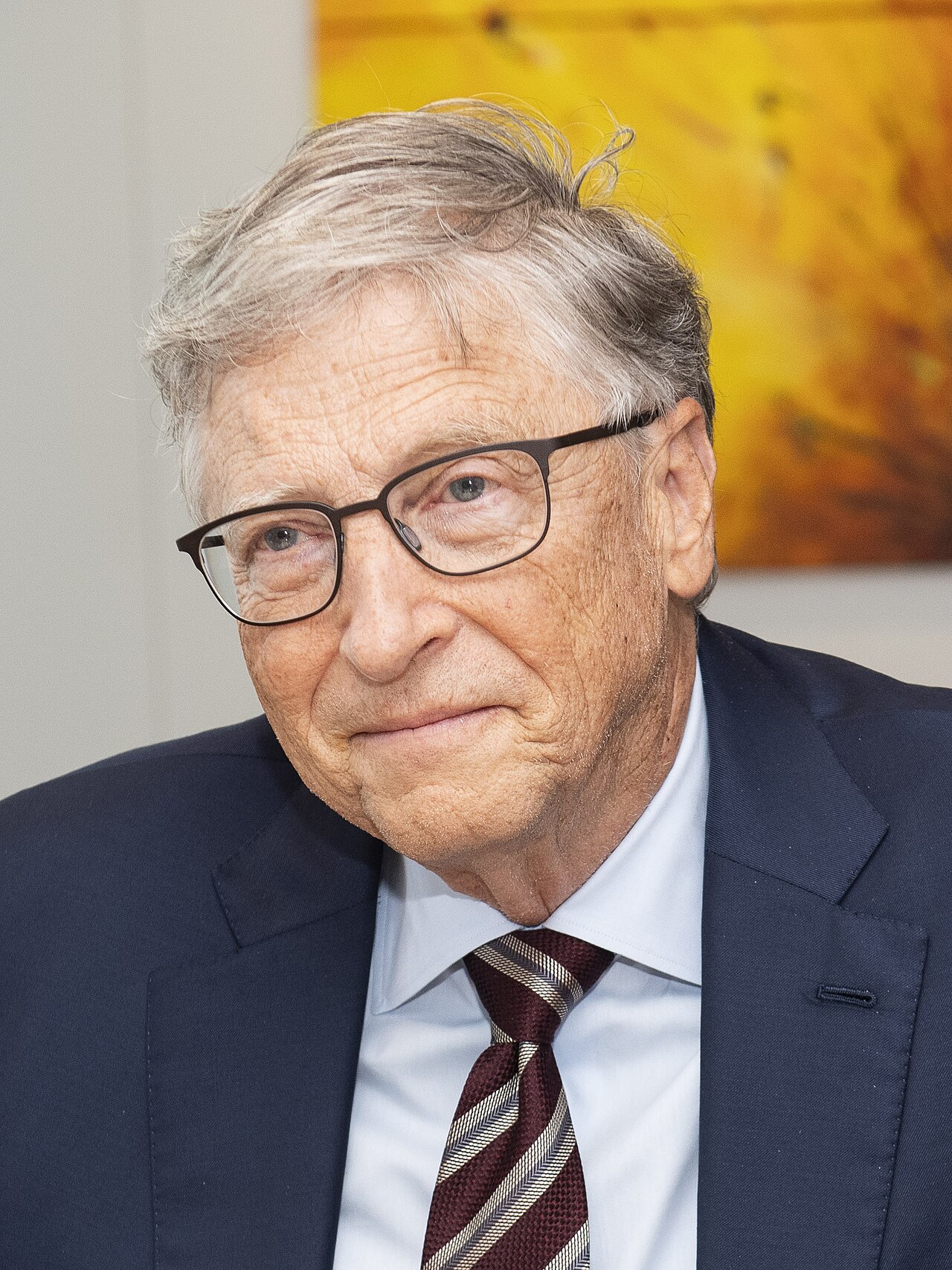
On September 25, reports based on excerpts from an upcoming NBC interview said Microsoft co-founder Bill Gates had warned that artificial intelligence could be powerful enough to enable an event causing one billion deaths. Gates did not describe AI as an autonomous force choosing to destroy humanity. His warning concerned people with malicious intent using increasingly capable AI tools, and it came with a call for government-backed safeguards rather than voluntary commitments by technology companies.
A warning about misuse, not autonomous intent
According to excerpts reported by Axios, NBC and South Korea’s Electronic Times, Gates said there had never been a weapon as powerful as “the combination of people with malicious intent and the latest AI tools.” The available reporting presents the figure of one billion deaths as part of his assessment of the potential scale of harm. It does not establish a probability, a timeline or a specific pathway through which such an event could occur.
That distinction matters. Gates’s comments, as reported, focus on criminal or large-scale harmful applications of advanced systems rather than a scenario in which an AI system independently decides to attack people. The published excerpts do not identify a biological weapon, an autonomous drone system, cyberattack or any other concrete mechanism. They also do not explain the basis for the one-billion-death estimate.
- Gates’s warning concerns malicious human use of advanced AI tools.
- The published excerpts provide no detailed scenario for the one-billion-death claim.
- He argues that voluntary corporate self-regulation is insufficient.
- He wants law enforcement and elected officials involved in mandatory safeguards and monitoring.
Call for binding rules
Gates linked the risk assessment to a policy argument. In the portion of the interview on regulation published by NBC News, he said that nobody believes self-regulation is enough. Asked by presenter Kristen Welker whether Washington should pass legislation, he answered “absolutely,” according to the source material. His position is that rules should be compulsory, with public authorities participating in the design of safety measures and supervision.
The proposal remains broad in the published extracts. Gates said regulation would create some additional burden for businesses, but argued that it would not cause a dramatic slowdown in development. The sources do not set out a specific bill, agency structure, technical standard or enforcement process. Nor do they report how companies would be required to monitor systems or demonstrate compliance.
Interview due to air September 27
The interview with Welker, host of NBC’s Sunday political programme Meet the Press, was recorded on September 23 and is scheduled for broadcast on September 27. The reports published before the full programme rely on selected excerpts. That leaves important context unavailable, including whether Gates qualified the numerical claim elsewhere in the interview or elaborated on the kinds of misuse he considers most plausible.
Gates’s background gives his intervention particular weight in the debate, although it does not provide evidence for the casualty figure. He co-founded Microsoft and played a significant role in the company’s partnership with OpenAI, a relationship that helped bring ChatGPT to a mass public audience. He now spends most of his time on his foundation, according to the French report cited in the source material.
A divided technology industry
The comments arrive amid disagreement among major technology executives over whether AI development should be slowed or subjected to stronger controls. Electronic Times reported that Anthropic chief executive Dario Amodei has recently argued for moderating the pace of advanced-model development, while Microsoft AI head Mustafa Suleyman has also emphasised the need for safeguards. By contrast, Meta chief executive Mark Zuckerberg and Nvidia chief executive Jensen Huang have expressed opposition to deliberately slowing development, according to that report.
The French source says several US AI-company leaders had acknowledged in recent weeks that development might need to slow, but Gates considers goodwill alone inadequate. His argument is rooted in competition: without external oversight, a company’s voluntary promise may be difficult to sustain when a rival moves faster. The report also says Gates had called for an AI tax and had written in August on his Gates Notes blog that, at the current pace, the risk of an overall negative outcome was “very high.”
What the warning means for US policy
For US readers, the immediate policy context is federal regulation. The French report states that Congress has not yet passed federal AI safeguards. Gates’s intervention does not resolve the central questions lawmakers face: which AI capabilities should trigger special obligations, what role police and security agencies should have, and how rules can be enforced without relying solely on the firms building the systems. But it adds a stark public warning to a debate already shaped by rapid commercial competition.
The available evidence supports reporting Gates’s concern and his demand for mandatory oversight; it does not support treating one billion deaths as a forecast. The full NBC interview may provide further detail when it airs on September 27. Until then, the documented position is narrower but consequential: Gates believes advanced AI can magnify the capacity for human wrongdoing on a catastrophic scale, and that governments should not leave prevention entirely to the industry.