
XPRIZE Wildfire: AI Drones Detect Blazes in Under Ten Minutes
XPRIZE Wildfire finalists detected ignitions in under ten minutes using AI and autonomous drones, though total extinguishing remains an operational hurdle.
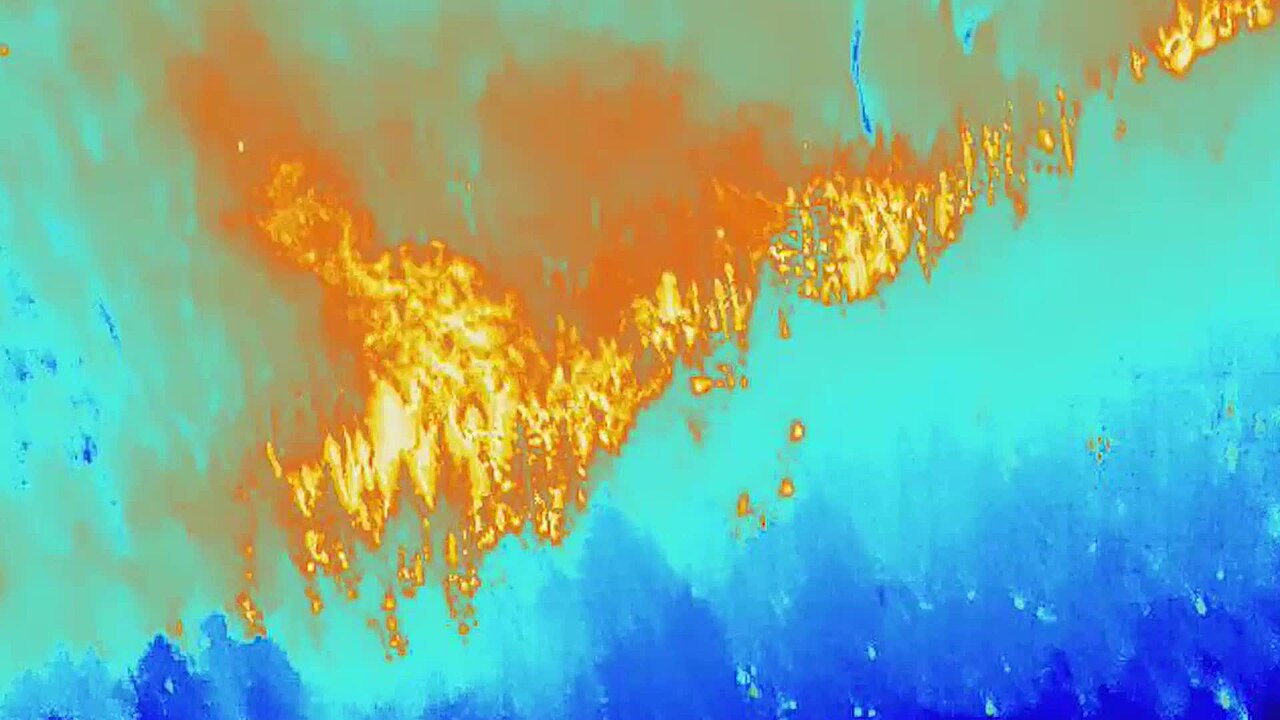
The global fight against catastrophic wildfires has reached a critical technological benchmark. Organizers of the $11 million XPRIZE Wildfire competition, launched in April 2023, revealed the winners of their multi-year initiative at the New York City Fire Museum on September 23, 2026. The competition aimed to revolutionize disaster management across two tracks: space-based early detection and fully autonomous aerial suppression. While several teams proved that emerging hardware and artificial intelligence can pinpoint ignitions in under ten minutes, none claimed the grand prizes because autonomous extinction under field conditions remains unresolved.
We want to be able to prepare and provide tools for firefighters to really allow them to do the best job. They’re great at what they do, but it’s unfair to continue to put them in harm’s way when there’s technology coming online that can help keep them safe, keep communities safe, and protect ecosystems.
Traditional emergency response still relies predominantly on human reporting. As Andrea Santy noted to Ars Technica, emergency 911 calls take an average of at least 15 minutes from ignition, giving blazes critical time to spread. XPRIZE Wildfire set a strict ten-minute operational threshold across both tracks to outpace conventional emergency response timelines.
Space-Based AI Detection Over Vast Landscapes
Track A challenged teams to analyze satellite Earth observation streams using machine learning to detect and characterize ignitions across vast territories. Finalists underwent live trials in April 2026 alongside the New South Wales Rural Fire Service in Australia. Although the $3.5 million grand prize offered by the Australian Minderoo Foundation went unclaimed, XPRIZE awarded $1.05 million across five teams that demonstrated significant software innovation.
Most orbiting platforms are designed for broad meteorological and environmental monitoring rather than tactical fire tracking, though specialized constellations such as OroraTech in March 2025 and Google-backed FireSat in July 2026 have begun deploying. To bridge this gap, the UK-based SIRIUS Wildfire Alliance won the $500,000 first-place award by fusing optical imagery with synthetic aperture radar (SAR) to model fire spread. Arizona-based Team Snuffed earned second place and $250,000 for a transparent, probabilistic data-fusion architecture tailored for firefighters. Special recognition prizes of $100,000 each went to MyRadar for commercial data ingestion, DeepFire for automated spread alerts, and German firm Mayday.AI, which adapted a volcanic-ash algorithm to track smoke through dense cloud cover.
Autonomous Drones and Sensor Meshes in Alaska
Track B tested autonomous response in June 2026 across 1,000 square kilometers (386 square miles) of rugged wilderness in Nenana, Alaska, near Fairbanks. Competitors were required to detect a high-risk ignition in under ten minutes, dispatch suppression hardware, ignore decoy fires, and completely extinguish the blaze. While all three finalists detected the fire within the time limit and two launched attacks, none dropped sufficient fire suppressant to fully knock it down. The judging panel distributed $2.5 million in awards based on operational milestones:
- Anduril Industries secured first place ($1.2 million) plus a $1 million Lockheed Martin bonus for the fastest detection, combining thermal Sentry Towers, its Lattice software platform, surveillance drones, and a Ghost-X drone dropping fire-retardant balls.
- Dryad Networks took second place ($800,000) by integrating Silvanet—a mesh of 170 solar-powered ground gas sensors—with aerial reconnaissance and its Silvaguard Suppression Drone.
- AURA Foresight achieved third place ($500,000) using an accessible approach that paired custom AI coordination software with off-the-shelf commercial DJI drone swarms.
The really exciting part was, we did have a team that was able to do all of the actions within the 10 minutes and very accurately hit the fire. But they weren’t able to put enough suppressant on it to knock it down entirely.
Operational Realities and Industrial Implications
The urgency of these systems is highlighted by mounting disaster costs. Real-world events underscored the competition's timeline: the August 2023 Lahaina wildfire killed 102 people; massive Canadian smoke plumes blanketed North American cities; the March 2025 South Korea fire set national records; and the January 2025 Los Angeles fire caused $140 billion in losses and 31 deaths, according to an analysis in Nature Reviews Earth & Environment. In 2026, European fires forced over 320,000 evacuations across Spain and France while threatening NASA's Deep Space Communications Complex near Madrid.
As XPRIZE Wildfire transitions into an Impact Phase led by Pacific Gas and Electric Company (PG&E), the operational lesson for industrial site operators, utility providers, and forestry organizations is evident. Autonomous end-to-end extinction remains limited by drone payload capacity and suppressant chemistry. However, multi-sensor detection meshes and AI-enhanced satellite analytics are ready for operational integration. Organizations managing remote infrastructure can deploy these automated early-warning layers today to trigger human and mechanical response well before the typical 15-minute 911 threshold.
Sources
- XPRIZE Wildfire winners spotted fires within 10 min—but couldn’t stop themArs Technica · September 23, 2026
- XPRIZE Wildfire awardeesXPRIZE · September 23, 2026