Princeton AI learns thousands of words from children’s speech
Published in Science on 5 November 2026, a Princeton study trained one AI per child on about 1,000 days of home recordings; a nightly replay made it work.
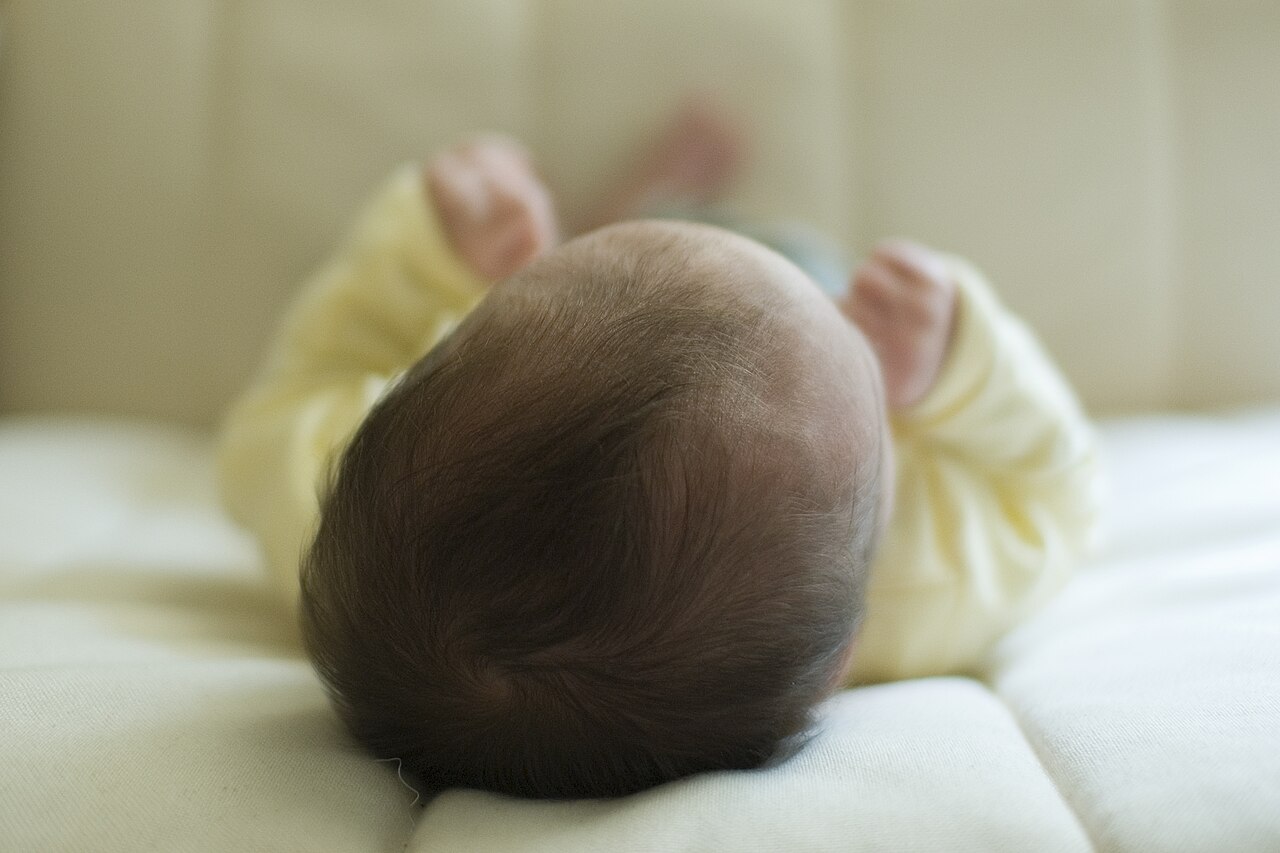
Princeton University researchers have trained artificial intelligence models to learn spoken words the way children do: day after day, from the speech heard at home. According to a Princeton release distributed by EurekAlert, the study was published in the journal Science on 5 November 2026 and follows roughly the first 1,000 days of life of children recorded in their homes. SingularityHub covered it on 12 November and the Portuguese outlet Pplware on 14 November.
A model, here, is a neural network: a program made of layers of simple computing units whose connections are adjusted during training. Replay is the technique at the heart of the study. At the end of each simulated day, the model hears again a sample of the speech it has already heard, an idea inspired by the way sleep is thought to consolidate memories in the brain, according to SingularityHub.
What data did the researchers collect?
According to Princeton, 17 babies from 15 households in New Jersey were recorded during their first three years, and the analysis covers 8 of these children. EurekAlert reports 1.2 million hours of data gathered over roughly 1,000 days. SingularityHub adds that each home had between 4 and 14 devices running about 12 hours a day, and that parents kept the right to withdraw or delete recordings under an ethical framework designed by the team.
After removing noise, long silences and overlapping conversations, the team kept up to 6,600 hours of audio per child to train an individual model, according to SingularityHub. For comparison, the same outlet notes that large language models, the systems behind chatbots, need billions of words of text.
Why did the model need a night of replay?
Each model started from nothing: no list of English sounds and no indication of where one word ends and the next begins, according to SingularityHub. It had two parts: an audio encoder that cuts speech into 20-millisecond slices, and a predictive decoder trained to anticipate which sounds come next. Princeton explains that the model received the child’s speech day by day, in order, instead of the shuffled data used to build typical neural networks.
The first results were disappointing. Hadas Raviv, a computational cognitive scientist at Princeton, said that simply exposing the model to the daily stream of speech was not enough, according to SingularityHub. Adding a replay phase at the end of each simulated day changed the outcome. Princeton sums up what the model needs: a whole day of speech, day after day, and a night to replay it.
What did the AI learn, and how fast?
- With replay, the models first picked up phonemes, the basic sound units of a language, then recurring words, according to SingularityHub.
- Across the eight children, the models learned roughly 37 phonemes within 15 months and began recognising words before the age of two, at very different rates, according to SingularityHub.
- Around the 1,000-day mark, the vocabulary of each child’s AI counterpart had reached thousands of words, according to SingularityHub and Pplware.
- By adjusting parameters such as the amount of repetition during replay and the processing rate, the team obtained word-comprehension trajectories matching each child, according to Princeton via EurekAlert.
Princeton stresses why this matters: psychology has largely relied on averages, and a model that follows individual children opens the door to studying development child by child. The release also says the model learned to comprehend language in each household despite large differences in the speech the children were exposed to.
What are the limits of the study?
The researchers stress that the AI does not learn exactly like a baby. According to Pplware, children also rely on visual cues, gestures and social interaction. SingularityHub adds that the model learned from sound alone and does not process information in the parallel, energy-efficient way of neurons. Which features of the model reflect real infant learning, and which are computational shortcuts, remains to be sorted out, according to the same outlet. The sources read also describe a limited sample, 8 children from New Jersey households, so extending the result to other languages or environments is not established.
What is this research for?
According to EurekAlert, the Princeton team wants to use the model to test the effect of more or less sleep, or of different kinds of speech such as television, and hopes to diagnose learning impairments better by understanding how a typical brain learns language. Raviv said that, unlike much of modern AI, which aims for superhuman performance, the goal is to understand how humans learn.
Pplware and SingularityHub add that the approach could inspire more efficient AI models that learn from less data. That is a hypothesis, not a result of the study: neither source reports a measured saving in data or energy. Zara Harmon and Caroline Rowland of the Max Planck Institute for Psycholinguistics, who were not involved, wrote that such work makes it possible to model learning under increasingly realistic conditions, according to SingularityHub.
What does it change for a company?
For a company in the English-speaking world, nothing here is a product yet: the model is a research tool, not a service. Three points deserve attention. First, teams building voice assistants, language-learning apps or speech-based health tools can note the replay principle, which suggests training on a continuous stream with a periodic review rather than only on huge shuffled corpora; this remains to be validated outside the lab.
Second, the data. Continuous home recordings of young children required a framework that lets parents withdraw or delete their data, a useful reference for any company that handles children’s voice data under data-protection rules. Third, claims about lower energy use remain unproven for now, so they should not enter a business case until measured results are published.
Sources
- Princeton researchers train an AI model to learn language the way children doEurekAlert (Princeton University) · November 5, 2026
- This AI Learned Language From the Recordings of a Baby’s First 1,000 DaysSingularityHub · November 12, 2026
- Esta IA aprendeu milhares de palavras apenas a ouvir um bebé durante 1000 diasPplware · November 14, 2026