Nvidia backs Doctolib and three French AI companies
Nvidia is taking minority stakes in Doctolib, Pigment, Genesis AI and Entalpic, linking European AI sovereignty to its chips, computing power and software.
Nvidia is expanding its presence in France through minority investments in four artificial-intelligence companies. The group is entering the capital of Doctolib and has also invested in Pigment, Genesis AI and Entalpic, according to statements reported by Journal du Net and Frandroid. The amounts, the stakes and the valuations used for the transactions have not been disclosed.
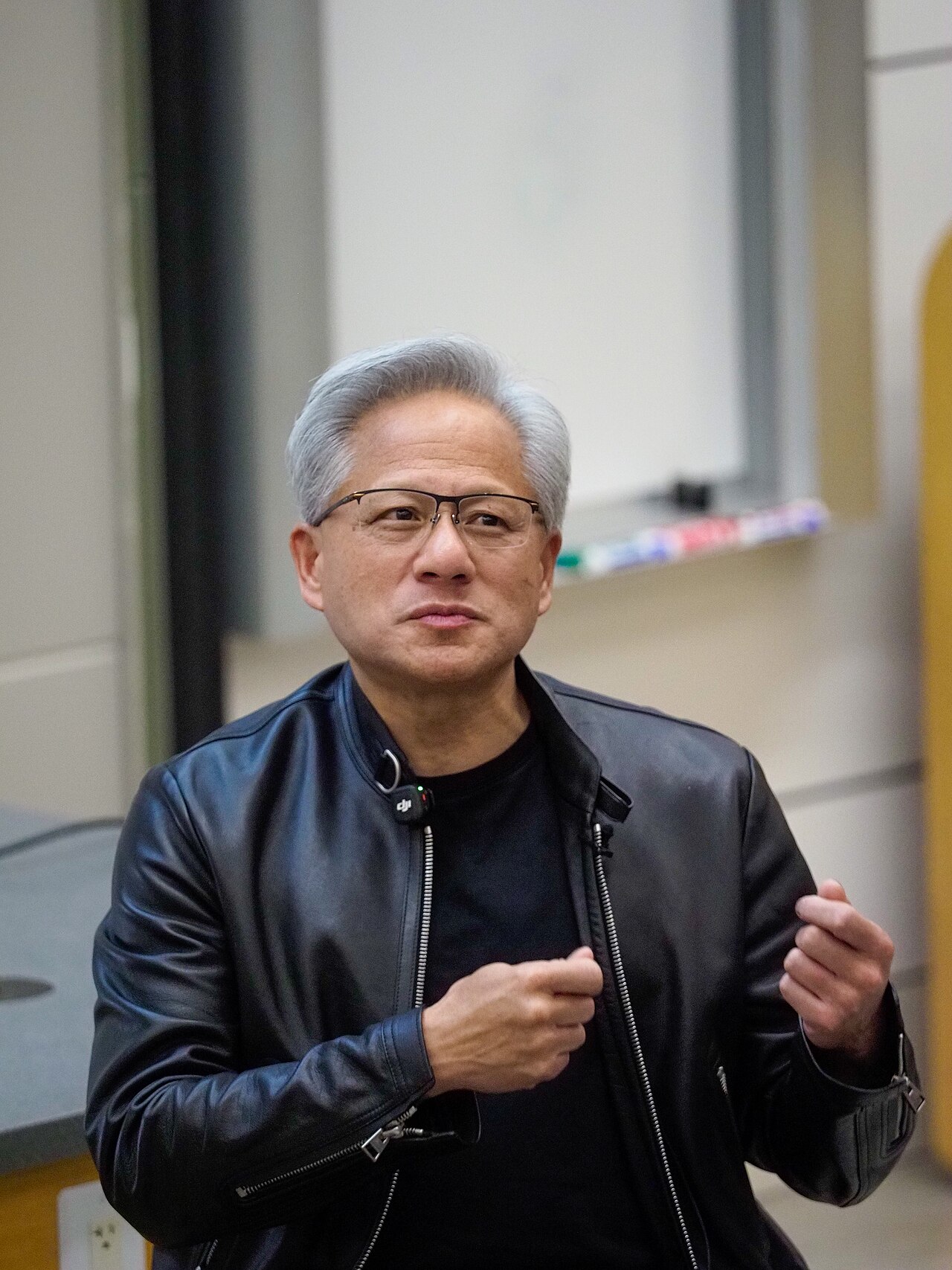
The announcement was made in Paris on 13 October by Jensen Huang, Nvidia’s chief executive. He said the participation in Doctolib was intended to help launch what he called an AI revolution in Europe. That formulation is an executive statement, not an independently established assessment of the European market. The operation nevertheless gives Nvidia a direct financial position in a French health platform and in three other young companies.
A minority investment in Doctolib
Nvidia will become a minority shareholder in Doctolib without a seat on the company’s board, Doctolib chief executive and co-founder Stanislas Niox-Château told Agence France-Presse. The financial terms have not been made public. Frandroid reports that the partnership will help Doctolib train its own AI models in Europe.
Doctolib says the capital provided by Nvidia should allow it to accelerate hiring in AI and the development of proprietary models. In this context, proprietary means models that do not depend on major AI companies such as OpenAI or Anthropic. Doctolib also says it wants to use Nvidia chips, computing capacity and open software to build an AI it can train with its own models and data and control itself.
The company is working on a personal health assistant for patients. Frandroid reports that this assistant is already used by 400,000 French people and is intended to become available to everyone in 2027. The sources do not provide further detail about its operation or performance, so those figures should be understood as reported information rather than an independent evaluation.
Doctolib also plans assistants for healthcare professionals. According to Stanislas Niox-Château, these tools would cover administrative and clinical tasks. Decision-support assistants are to be designed with healthcare professionals and European hospitals. Doctolib presents these projects as a major priority for 2027 and 2028, but the sources do not establish a launch date or clinical benefit.
Data, models and European control
In August, Doctolib launched a scientific research programme using personal data from its 50 million users. The company says the programme is intended to improve care pathways through AI. The available sources do not describe the consent arrangements, the technical safeguards or the results of this programme. They therefore do not justify drawing conclusions about its effectiveness or about the protection of the data.
Doctolib has already been using Nvidia technologies for a year, according to Frandroid. Training an AI model consists of processing very large volumes of data so that the model learns to generate responses. The proposed arrangement combines that technical relationship with a capital investment, while Nvidia remains both an investor and a supplier of chips and computing resources.
This creates a specific interpretation of sovereignty. Doctolib describes sovereignty as the ability to train models in Europe, with its own models and data, under its own control. At the same time, those models would run on Nvidia technology. The sources establish this supplier-investor relationship; they do not establish whether it creates a legal, operational or strategic dependency.
The investment also fits a broader European spending plan attributed to Jensen Huang. He said Nvidia had invested at least 8 billion dollars in Europe during the previous year. Frandroid reports that he promised to announce a further 2 billion dollars of European investment within a week. These are figures and commitments attributed to Nvidia’s chief executive, not independently audited totals in the supplied material.
Three other French bets
Nvidia’s French portfolio extends beyond healthcare:
- Pigment publishes enterprise planning software.
- Genesis AI is developing general-purpose robots.
- Entalpic designs materials at atomic scale for the semiconductor industry.
- Doctolib develops health services and AI assistants around medical care.
The four companies represent different uses of AI, from healthcare and enterprise software to robotics and semiconductor materials. The common element described by the sources is Nvidia’s financial and technological involvement. No source gives the amount invested in any of the three companies other than the general European figures attributed to Huang.
Frandroid places Nvidia’s stock-market valuation at 5,433 billion dollars, or about 4,860 billion euros, and compares it with Doctolib’s latest reported valuation of 3.6 billion euros in the spring. The comparison is based on different types of valuation and does not reveal the price paid for Nvidia’s stake. Neither the purchased percentage nor the valuation retained for the deal has been published.
The company’s European strategy is not limited to France in the supplied material. Huang’s tour was due to continue through London and Berlin, with further investments expected before the GTC conference in Berlin, which he was scheduled to open on 21 October. Frandroid also reports Nvidia investments of 30 billion dollars in OpenAI and the acquisition of Hugging Face for 12.9 billion dollars; those examples illustrate the group’s wider investment approach but do not change the undisclosed terms of the French transactions.
For organisations in English-speaking markets, the French case offers a concrete reference point: a technology supplier can finance companies that want to develop locally controlled AI while providing the infrastructure on which those models run. Businesses should therefore distinguish the location of data and model development from the ownership of the underlying computing stack. The sources establish Nvidia’s investments and the companies’ stated plans, but they do not establish their future results.
Sources
- Nvidia entre au capital de Doctolib pour soutenir l'IA souveraine en santéJournal du Net · October 14, 2026
- Doctolib, Pigment, Genesis AI, Entalpic : Nvidia fait ses courses en FranceFrandroid — IA · October 13, 2026