
Meta tests Takes, a prediction app where staff bet points
Meta is testing Takes, an internal prediction-market app where employees bet virtual cred points, not money. No public launch date has been announced.
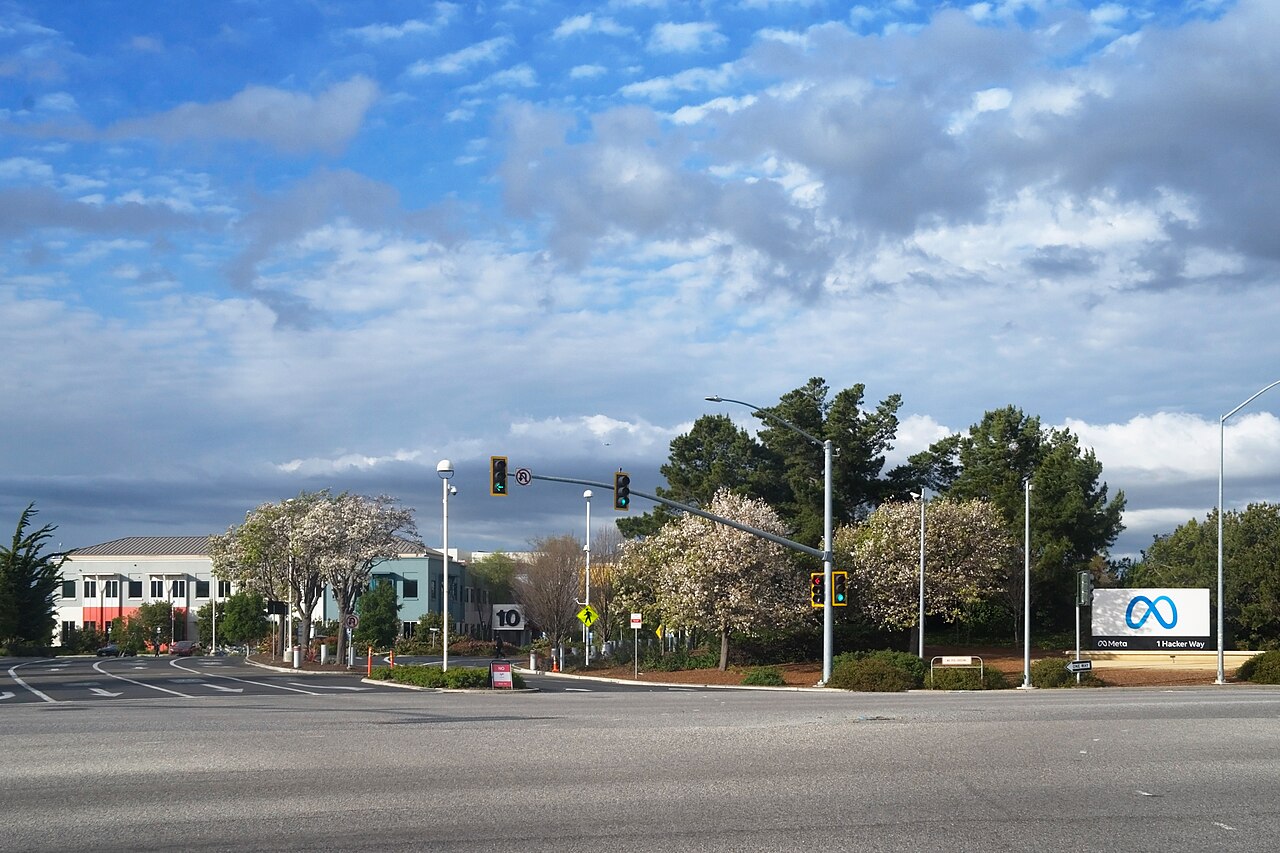
Meta is testing an internal prediction-market app called Takes, in which employees predict the outcome of events with virtual points instead of real money, according to a Wall Street Journal report dated Friday, November 13, 2026, relayed by Investing.com. A prediction market is a service where people bet on whether a future event will happen, and where the collective bets act as a probability estimate. The app is not available to the public, and Meta has not said whether it will ever launch it.
What is Takes and how does it work?
According to Investing.com, Takes lets Meta employees predict the outcome of events using a currency called “cred”. ForkLog explains that cred is short for credibility, and that users earn points for correct predictions and lose them for incorrect ones. In practice, the app works like a game of forecasts, with no cash in or cash out.
CoinCentral reports that real money is not part of the test, which sets Takes apart from Kalshi and Polymarket, two platforms where users trade real-money contracts. This is the main design choice of the product: a reputation score replaces the stake.
The questions reported so far are light. According to Investing.com, one of them asked whether former Apple CEO Tim Cook will become Nvidia’s next chief executive. CoinCentral adds that most voters bet he will not, and that another question asked who would win Jeopardy! on Friday night, the American television quiz show.
Is the app going to be released to the public?
Nothing is decided. According to Investing.com, the Wall Street Journal reported no indication of when or whether Meta plans a public launch, and Takes remains in employee testing. ForkLog also writes that the timeline is unknown, that the company has not made a final decision on releasing the product, and that Meta representatives declined to comment.
CoinCentral points out that Meta often tries products on its own staff first, a step the company calls dogfooding, meaning using your own product internally before shipping it. The same source adds that not every app that reaches testing makes it out, and that names and features can change before launch.
Where does Takes come from?
The project has already changed names once. According to The Next Web, which relayed a New York Times report in June 2026, Mark Zuckerberg directed a small team at Meta to build a smartphone app to compete with Polymarket and Kalshi, internally called Arena. The Next Web writes that the app would operate independently from Facebook and Instagram and would initially use a video-game-style points system, while the company had not ruled out real-money betting in the future.
Investing.com confirms that the project was previously known internally as Arena. ForkLog adds, citing the New York Times, that Zuckerberg later urged Meta’s leadership to explore collaboration options with Polymarket and Kalshi, and that the company planned to integrate certain features of the service into Facebook and Messenger. According to the same source, Meta aimed to attract at least 100 million monthly active users, with people aged 18 to 34 as the main target.
This is not Meta’s first attempt. ForkLog recalls that in 2020 the company launched a prediction app called Forecast, which also ran on virtual points and let users assess the likelihood of events such as the development of the COVID-19 pandemic. The service was shut down in 2021. CoinCentral adds that a recording of a spring staff meeting shows Zuckerberg and product chief Chris Cox discussing the possibility of building as many as 50 new apps.
Why points rather than money?
The legal context explains the caution. According to CoinCentral, Kalshi and Polymarket face lawsuits from US states that call them illegal gambling platforms, while the two companies say they fall under federal oversight by the Commodity Futures Trading Commission (CFTC), the US derivatives regulator. ForkLog notes that in October Utah authorities charged Kalshi and its co-founders Tarek Mansour and Luana Lopes Lara with organizing illegal gambling.
CoinCentral quotes CFTC chair Michael Selig, who spoke at the Cantor Convergence conference on Friday and criticized states for pursuing criminal charges against prediction-market executives: “Somebody says it’s gambling, somebody says it’s a derivative. That’s not something that should be at the risk of going to jail.”
The Next Web offers an analysis of the choice in June: a points-based product would sidestep CFTC jurisdiction and could launch quickly, while a real-money version would require regulatory approval and compliance infrastructure that Meta has never built. This reading is the outlet’s own interpretation, not a statement from Meta.
As for the market, CoinCentral reports that Meta stock rose about 3% on Friday as word of the test spread. The source does not establish a causal link between the two, so this figure should be read as context rather than proof.
What we know and what we do not
- Known: employees are testing Takes with cred points, no real money (Investing.com, CoinCentral).
- Known: the project was earlier called Arena and was ordered by Mark Zuckerberg (Investing.com, The Next Web).
- Unknown: whether and when a public launch will happen (Investing.com, ForkLog).
- Unknown: whether real-money wagering will ever be added; the New York Times reported in June that the company had not ruled it out (The Next Web).
What this changes for a South Korean company
For now, nothing changes in practice: Takes is an employee test, available in no country. For a South Korean company, the useful lesson is about method. Meta tests a points-based forecasting game on its own staff before any public decision, the dogfooding practice described by CoinCentral. A firm that wants to collect its employees’ collective expectations, for example on a product deadline or a sales target, can run a similar internal exercise with a reputation score and no money at stake. This is our own reading, not something Meta has announced.
The second point to watch is regulation. If Meta ever adds real money, as the New York Times said in June it had not ruled out, local rules on gambling and financial contracts would apply. Any company thinking of building such a service should check them first. For now, the safest course is to follow Meta’s announcements and treat Takes as an experiment that may never reach the market.
Sources
- Meta Stock Rises 3% as Staff Test “Takes” Prediction AppCoinCentral · November 13, 2026
- Meta tests prediction-market app for employees, WSJ reportsInvesting.com (Yahoo Finance Canada) · November 13, 2026
- Meta Tests Prediction Market App ‘Takes’ with EmployeesForkLog · November 14, 2026
- Meta’s new prediction market app Arena could bring betting to 3 billion usersThe Next Web · June 23, 2026