
Meta Open‑Sources Muse Gadgets: Enabling Developers to Connect AI Agents to ESP32, Raspberry Pi and Home Devices
On 2 October 2026, Meta announced the Muse Gadgets open‑source project, providing firmware and a Linux SDK so developers can integrate Muse agents into ESP32, Raspberry Pi, displays, buttons, sensors and actuators, and it is offering 5,000 Home Link units for free to eligible users.
Meta Announces Muse Gadgets Open‑Source Project
On 2 October 2026, Meta officially released to the public an open‑source initiative named Muse Gadgets. This release marks a strategic extension of the company’s Muse artificial‑intelligence agent beyond a purely conversational interface into tangible hardware platforms. Meta simultaneously made available a complete set of firmware and a Linux software development kit (SDK), allowing developers worldwide to download, modify, and deploy the code without charge. The open‑source licence permits both commercial and non‑commercial use, and the code repository is hosted on a public platform.
Within the context of this project, the term “Muse agent” refers to Meta’s generative‑AI assistant that can receive commands via an application‑programming interface (API), execute tasks, and return results. By embedding this agent inside a physical device, end‑users are able to interact with the AI through voice commands or button presses, enabling use cases such as real‑time reminders, environmental control, or information queries. The agent’s responses are generated in real time, and the system can be extended with custom skill modules written by developers.
Supported Hardware and Development Tools
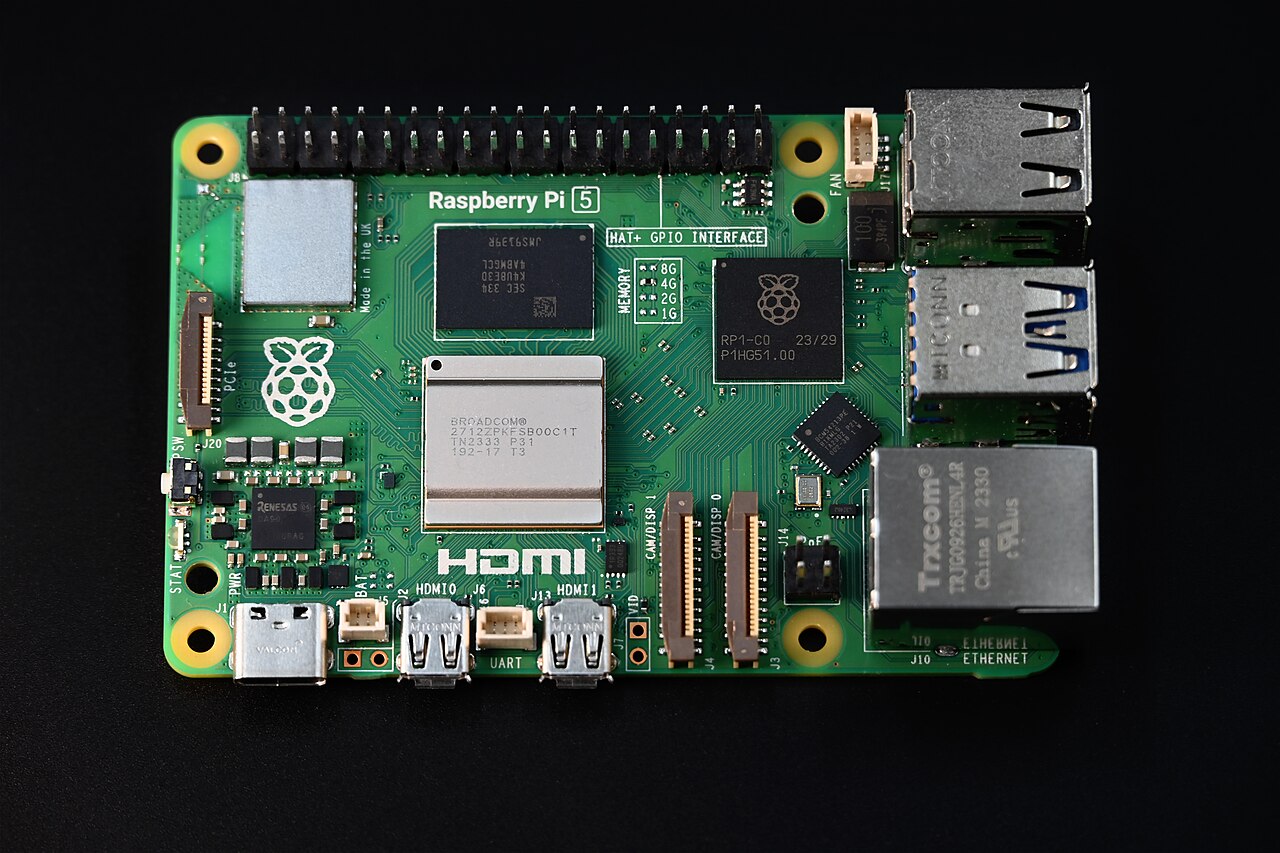
The Muse Gadgets project explicitly lists the hardware platforms that are supported. These include the low‑power ESP32 microcontroller, the widely adopted Raspberry Pi single‑board computer, and a range of displays, buttons, sensors and actuators. The ESP32 provides built‑in Wi‑Fi and Bluetooth connectivity, making it suitable for portable or Internet‑of‑Things devices, while the Raspberry Pi offers a full Linux environment that simplifies the execution of more complex AI inference and multitasking workloads. The hardware list also covers common peripheral modules such as temperature sensors, motion detectors and relay switches, allowing a broad spectrum of IoT scenarios.
Meta also released two core codebases. The first is a firmware image that can be flashed directly onto an ESP32, embedding a secure communication protocol for interaction with the Muse agent. The second is a Linux‑targeted SDK that contains example programs, driver modules, and API documentation. Both codebases are signed by Meta to prevent tampering, and the SDK includes tools for debugging and performance profiling. Developers need only follow the provided setup guide to configure network access and authentication, after which the device can communicate with the Muse service either locally or via the cloud.
Official Examples and Home Link Supply
To lower the barrier to entry, Meta supplied three official example implementations: a colour e‑ink reminder display, a TV stick capable of HDMI output, and a device called Muse Home Link that functions as a home‑network bridge. The e‑ink reminder display can show AI‑generated to‑do items or weather information; the TV stick enables users to control television programming or video playback through voice commands. Each example is accompanied by detailed build instructions, schematics and source code, enabling developers to replicate the hardware with off‑the‑shelf components.
Muse Home Link is the flagship hardware of this announcement. Meta has manufactured 5,000 units equipped with USB‑C power input and is offering free reservation slots to users who have subscribed to the Muse service. The company states that the devices will be shipped in batches over the coming weeks. Meta also provides a web‑based portal where users can register their Home Link devices, view firmware versions and request support. Once received, users can connect a Home Link unit to their home router and, through Meta’s community‑skill framework, control lights, televisions, printers and other appliances, with the exact capabilities depending on the skill modules that each user configures.
User Risks and Security Considerations
In its release notes, Meta explicitly warns that developers and end‑users who employ Muse Gadgets assume all associated risks. Because the AI agent requires continuous cloud updates and security patches, inadequate management could expose the device to unauthorized third‑party skill injection or data leakage. Failure to apply updates promptly could result in degraded functionality or exposure to known vulnerabilities.
Furthermore, coupling an AI agent with physical actuators introduces practical challenges around permission management and secure updates. Meta recommends that enterprises establish strict skill‑approval workflows before deployment and utilise the provided signature‑verification mechanism to ensure that only trusted skills are executed on the device. Enterprises are encouraged to integrate the signature verification step into their continuous integration pipelines.
Impact on Local Organizations
For companies and developers in Taiwan, the open‑source release of Muse Gadgets means that AI capabilities can be embedded into proprietary hardware products more quickly, opening viable pathways from smart‑home solutions to industrial automation. Organizations will need to reassess internal cybersecurity policies, set up monitoring and update mechanisms for AI agents and third‑party skills, and leverage Meta’s SDK to accelerate prototype development, thereby shortening time‑to‑market for new offerings. Adopting the open‑source stack may also reduce licensing costs and foster collaboration with the broader developer community.
Sources
- Meta wants your next gadget to be Muse-infusedTechCrunch · October 2, 2026
- Meta open sources code to let you make Muse AI gadgetsThe Verge · October 2, 2026