LG U+ to launch an enterprise AI token business in 2027
South Korean carrier LG U+ will enter the B2B AI token market in 2027, promising to cut the total cost of a task rather than only the price of a token.
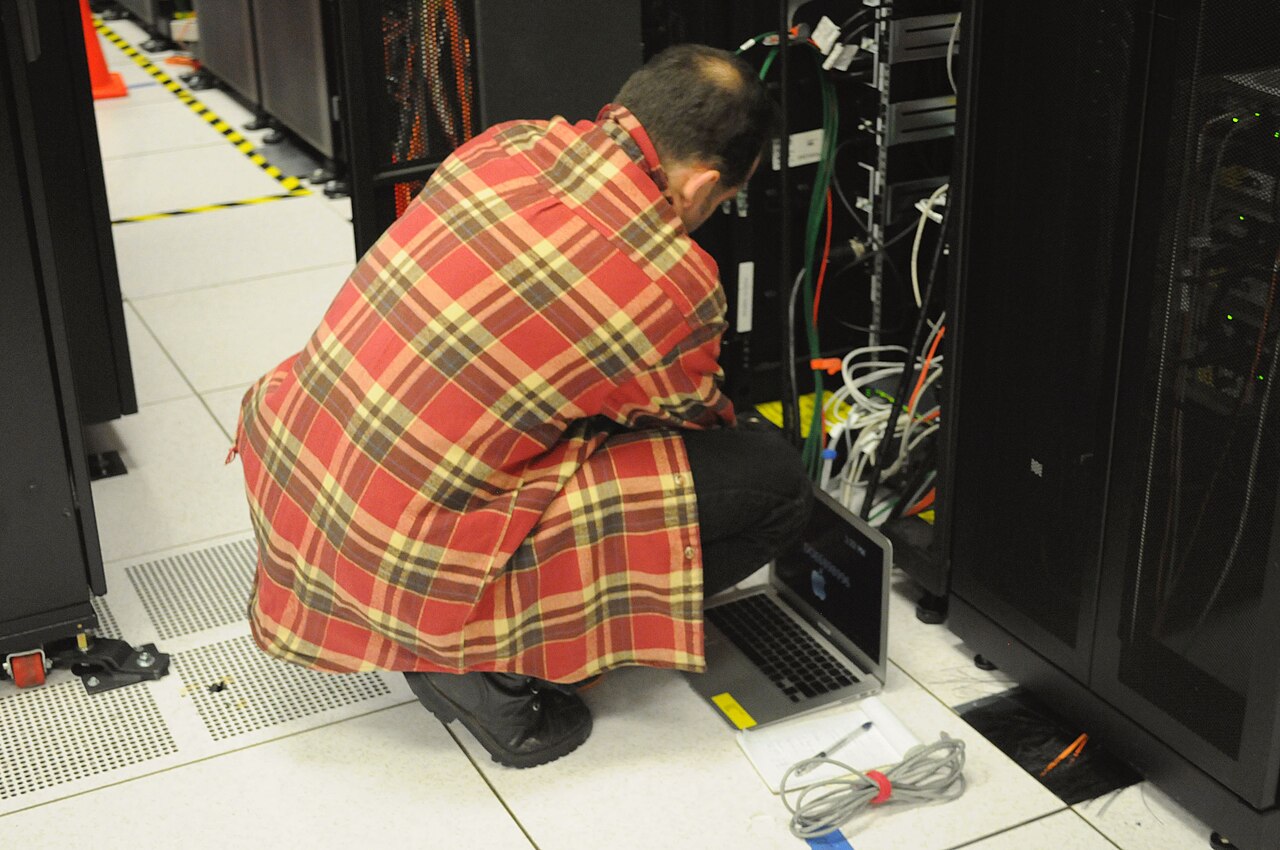
According to ZDNet Korea, South Korean telecom operator LG U+ (LG Uplus) will enter the enterprise market in 2027 with a “token” business: a relay service that gives customers access to AI models by combining models and infrastructure suited to each task. The company laid out its strategy at a press briefing in Seoul on November 12, 2026, and the South Korean press reported it on November 15.
A token is the unit of text an AI processes on input and output, and it is the basis on which usage is billed. According to ZDNet Korea, the more an AI agent loops through searches, analysis and verification to complete a job, the more tokens it consumes. LG U+ therefore argues for a different yardstick than the price of a token: the total cost of finishing a task, which it calls “Task Cost.”
What does LG U+ want to sell to businesses?
According to ZDNet Korea and Pointe Economy, the operator will pursue two routes in parallel from 2027: partnerships with outside companies and infrastructure it builds itself. ZDNet Korea reports that chief technology officer Lee Sang-yeop said Kakao would handle the front end while LG U+ would handle “model serving,” meaning the running of models that produces the answers. The article does not spell out the exact scope of that split.
According to ZDNet Korea, LG U+ points to three fields of experience: its AI call app ixi-O, its AI contact center (AICC) and its internal AI transformation. The same outlet says ixi-O initially combined an on-device model from LG AI Research with Google Gemini, then the share of the company's own model and of EXAONE, LG AI Research's model family, was adjusted to improve cost efficiency. Operating data from “Modu AI,” the public AI service for citizens that LG U+ is commercializing with Kakao at the end of this year, is also meant to feed the business.
What savings does the operator claim?
The figures below are internal test results announced by LG U+ and reported by ZDNet Korea and DigitalToday. In the articles read, none has been verified by a third party.
- According to ZDNet Korea and DigitalToday, using LG U+'s own model for coding cut operating costs by about 90% compared with a commonly used model; ZDNet Korea adds that processing efficiency rose roughly fourfold on the same infrastructure.
- Model routing means sending each request to the model that fits its difficulty. According to ZDNet Korea, internal tests show cost reductions of at least 25% for general questions and at least 30% for coding agents; DigitalToday says answer quality stays at about 95%.
- According to DigitalToday, “harness engineering,” which limits an agent's tools and scope and reuses procedures that worked, cut token use by 38% on general tasks and by 84% on coding tasks.
- According to DigitalToday, shrinking a model from 35 billion to 10 billion parameters kept 91% of its quality and sped up generation by 40%.
- According to ZDNet Korea, the on-device model shrank from 2.4–3 GB to about 800 MB while keeping more than 95% of the performance of a cloud model used for comparison.
- Speculative decoding has a small model draft an answer that a large model then checks. According to DigitalToday, an EXAONE model went from 80 to 160 tokens per second this way; ZDNet Korea adds that two related research papers were accepted at the NeurIPS conference.
These gains do not necessarily add up. ZDNet Korea notes that the 90% coding figure comes from a verification separate from the routing results. Pointe Economy also quotes an LG U+ executive citing token efficiency of 85% to 90% for agent tasks in telecoms, without detailing how it is calculated. It is safer to read these numbers as orders of magnitude claimed by the company.
How does the “chip mix” work?
According to DigitalToday, an inference run has two stages: “prefill,” which analyzes the question and depends mostly on compute power, and “decoding,” which writes the answer and depends mostly on memory. Pointe Economy says LG U+ assigns prefill to Nvidia GPUs, decoding to AMD GPUs with more memory, and light domain-specific models to domestic NPUs, chips built specifically for AI. According to ZDNet Korea, the operator has been testing NPUs from South Korean start-up FuriosaAI for more than two years.
Pointe Economy reports that, according to Lee Hye-jin, who leads technology strategy, more than 80% of total cost is consumed while the AI is “thinking” before it answers. The outlet raises the Jevons paradox: when unit prices fall, usage grows and the overall bill can still rise.
Why is a telecom operator getting into tokens?
According to Pointe Economy, CTO Lee Sang-yeop says LG U+'s rival is not a big tech giant's large model but the engineering ability to combine its own light models and outside models at the lowest cost for a specific business goal. The outlet adds that telecom experience in optimizing spectrum and traffic is presented as transferable to AI.
The move is not isolated. ZDNet Korea lists among its related articles a headline dated October 27, 2026 about KT entering token production and distribution, and one dated November 9 in which an SK Telecom executive talks about mixing GPUs and NPUs to produce tokens at the lowest price. Those two articles were not read here; only their headlines are cited.
What this changes for a business in the United States and elsewhere
At this stage, the articles read give no pricing, customers, detailed schedule or revenue target. The service does not yet exist commercially, and nothing indicates it will be offered outside South Korea.
For a company deploying AI agents, the lesson is mostly one of method: ask your provider for the full cost of a completed task (model calls, searches, verification) rather than the price per million tokens, test routing between small and large models on your own use cases, and check that claimed savings hold on your data. To frame an agent rollout, see the agentic system.
Sources
- LGU+, 2027년 AI 비용 낮추는 토큰 사업 진출ZDNet Korea · November 15, 2026
- [현장] "AI 토큰 효율 90% 극대화"…LGU+, 비용 잡는 '풀스택 최적화' 공개포인트경제 · November 15, 2026
- AI 토큰 효율화 연구 속도내는 LGU+…서비스 비용 절감 주목디지털투데이 · November 15, 2026