HomeBody System Links GPT‑6 Astra to Unitree G1 Robot for Autonomous Kitchen Tidying
Stanford and Caltech researchers demonstrate HomeBody, a system that directly couples GPT‑6 Astra with a Unitree G1 robot, enabling it to explore, map and clean an unfamiliar kitchen without pre‑trained control layers.
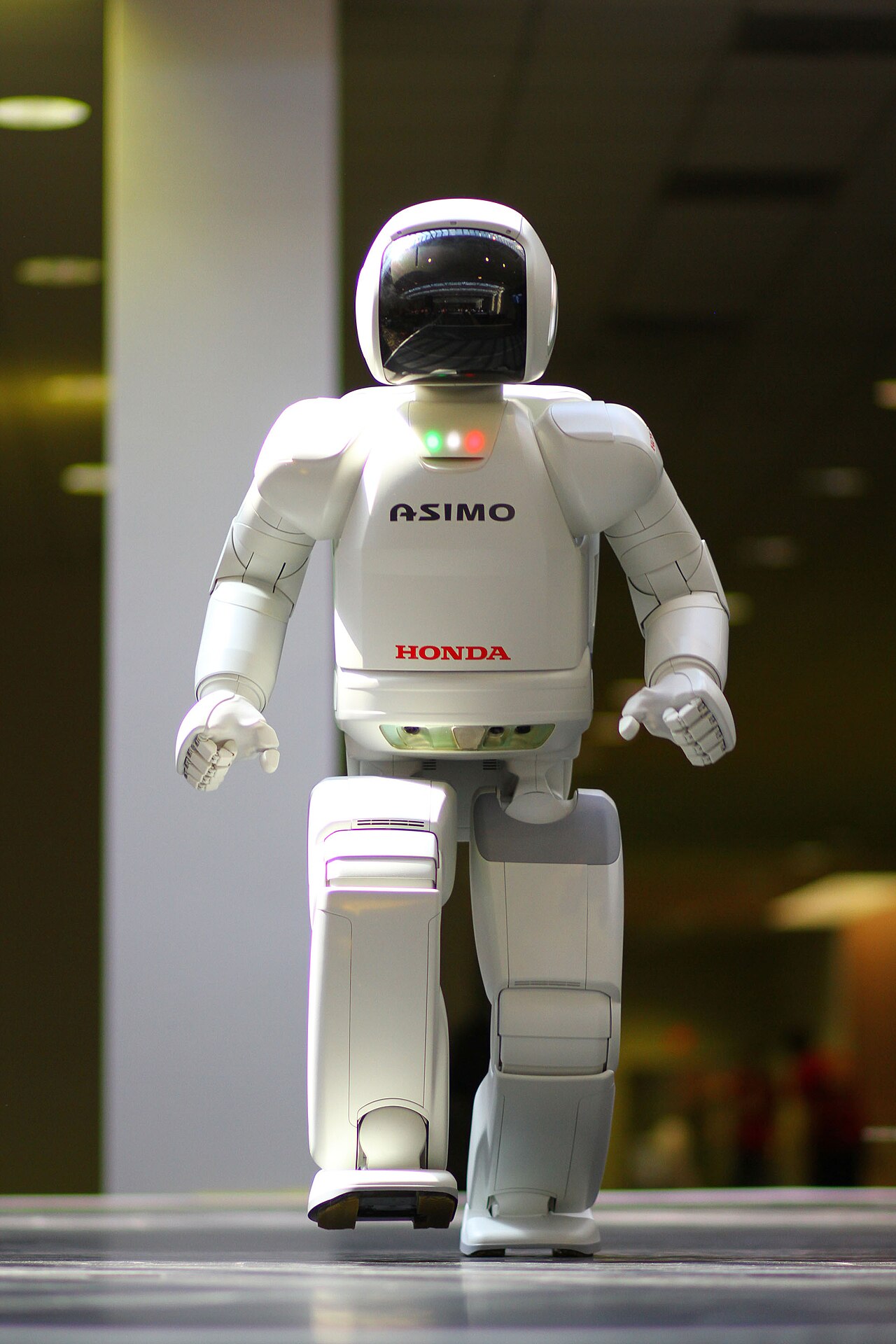
In a joint effort, researchers from Stanford University and the California Institute of Technology have introduced HomeBody, a novel architecture that attaches the large vision‑language model GPT‑6 Astra directly to a Unitree G1 quadruped robot. The integration bypasses the traditional, separately trained control stack and instead relies on the language model to issue high‑level commands that are translated into robot actions through an extensible skill library.
HomeBody’s core premise is that a single, swappable vision‑language model can serve as the brain for a physical agent. GPT‑6 Astra receives visual input from the robot’s cameras, interprets the scene, and calls upon a catalogue of pre‑programmed skills – such as grasping, navigation, and drawer manipulation – to execute the instructed behavior.
Exploration and Digital Twin Creation
Before any cleaning operation begins, the Unitree G1 robot conducts an exploratory sweep of the kitchen. During this phase it captures RGB images, builds a three‑dimensional representation inside Nvidia’s Isaac Sim, and records object identities and spatial coordinates in a dedicated memory structure. This digital twin allows the robot to retrieve items that are later out of sight, effectively giving it a persistent world model.
The memory system is deliberately designed to be queryable by GPT‑6 Astra. When the model plans a sequence of actions – for example, “pick up the red mug from the counter and place it in the dishwasher” – it can reference stored locations to locate the mug even after the robot has moved away and the object is no longer visible.
Language‑Driven Planning and Self‑Correction
Task execution follows a closed‑loop process. The language model receives a high‑level instruction such as “clean up the kitchen,” decomposes it into sub‑goals, and issues commands to the skill library. If an action fails – for instance, if a drawer does not open – GPT‑6 Astra detects the error through visual feedback, revises its plan, and attempts a corrective maneuver.
The researchers explicitly attribute this self‑correcting capability to the model’s ability to reason over its own outputs and to re‑evaluate the visual state after each step. No external supervision or reinforcement signal is required during the test runs.
Performance on Zero‑Shot Navigation Benchmarks
To assess the navigation competence of GPT‑6 Astra in isolation, the team evaluated the model on the R2R‑CE benchmark, a zero‑shot embodied navigation test that supplies only monocular RGB images. The model achieved a 79 % success rate, surpassing the previously reported best zero‑shot result by 13 percentage points and the top supervised result by 6.9 points.
These figures demonstrate that the language model can translate raw visual streams into navigational decisions without any task‑specific fine‑tuning. The success metric reflects the robot’s ability to reach a target location within a predefined tolerance after following the model’s plan.
- Latency of the Astra model slows down command issuance.
- Overheating of the robot’s finger servos limits prolonged grasping.
- High computational cost restricts real‑time deployment on modest hardware.
- Route deviations and narrow‑passage failures persist in complex layouts.
Despite the strong benchmark numbers, the evaluation highlighted recurring failure modes. The robot sometimes deviated from the optimal route, struggled to pass through tight corridors, and misidentified whether it had reached the intended goal. In the ultra‑reasoning setting of the benchmark, 21 failures were recorded, many of which left the robot several metres away from the target.
The authors emphasize that the benchmark was limited to a 100‑episode validation set. No navigation‑specific fine‑tuning, pre‑built maps, or waypoint prediction modules were employed. Consequently, the reported success rate reflects a raw, zero‑shot capability rather than an optimized system.
The HomeBody demonstration itself was conducted in a single, unfamiliar kitchen environment. The robot received the instruction “clean up the kitchen” and proceeded to explore, map, and manipulate objects autonomously. All actions were driven by GPT‑6 Astra’s planning and the skill library without any human‑in‑the‑loop correction.
Limitations and Open Questions
Key technical constraints emerged from the experiments. The latency inherent in querying a large language model through an external API introduces noticeable delays between perception and actuation. Additionally, the Unitree G1’s finger servos exhibited thermal buildup during repeated grasping, forcing the system to pause or reduce grip force to avoid damage.
Computational demand also poses a barrier. Running GPT‑6 Astra alongside Nvidia Isaac Sim and the skill execution engine requires high‑end GPUs and substantial memory, which limits the feasibility of deploying HomeBody on edge devices or in cost‑sensitive settings.
Finally, the evaluation scope remains narrow. The 100‑episode validation set does not cover the full diversity of kitchen layouts, object varieties, or instruction complexities that real‑world deployments would encounter. The authors call for broader testing across varied tasks, longer navigation routes, and multiple environments to gauge generalisation.
Practical Implications for Organisations
For organisations considering autonomous service robots, HomeBody illustrates a pathway to reduce the engineering effort required to program low‑level controllers for each new environment. By leveraging a vision‑language model that can be swapped out, a single robot platform could, in principle, adapt to different domains simply by updating the model or extending the skill library.
However, the current hardware and latency constraints mean that real‑time operation in busy settings remains challenging. Companies must evaluate whether the computational infrastructure needed to run GPT‑6 Astra at scale aligns with their budget and latency tolerances.
The documented failure modes also suggest that safety‑critical applications will require additional guardrails, such as fallback navigation planners or real‑time monitoring systems, to mitigate route deviations and ensure reliable goal verification.
In summary, HomeBody provides a compelling proof‑of‑concept that large vision‑language models can directly drive embodied agents in unstructured domestic spaces. The approach reduces dependence on task‑specific control training but brings new engineering challenges related to compute, thermal management, and robustness that organisations must address before large‑scale adoption.
Sources
- Researchers plug GPT-6 Astra directly into a robot and let it clean up an unfamiliar kitchenThe Decoder · September 27, 2026
- GPT-6-Astra Lights Up Embodied Navigation Evaluation in Zero-Shot Vision-and-Language Navigation in Continuous EnvironmentsarXiv · September 26, 2026