Ex-OpenAI Researcher Claims Blackwell Chips Trained Chinese AI
Will DePue says weight fingerprints show DeepSeek, Moonshot, MiniMax and Ant trained on export-banned Blackwell GPUs. It is a claim, not yet proof of smuggling.
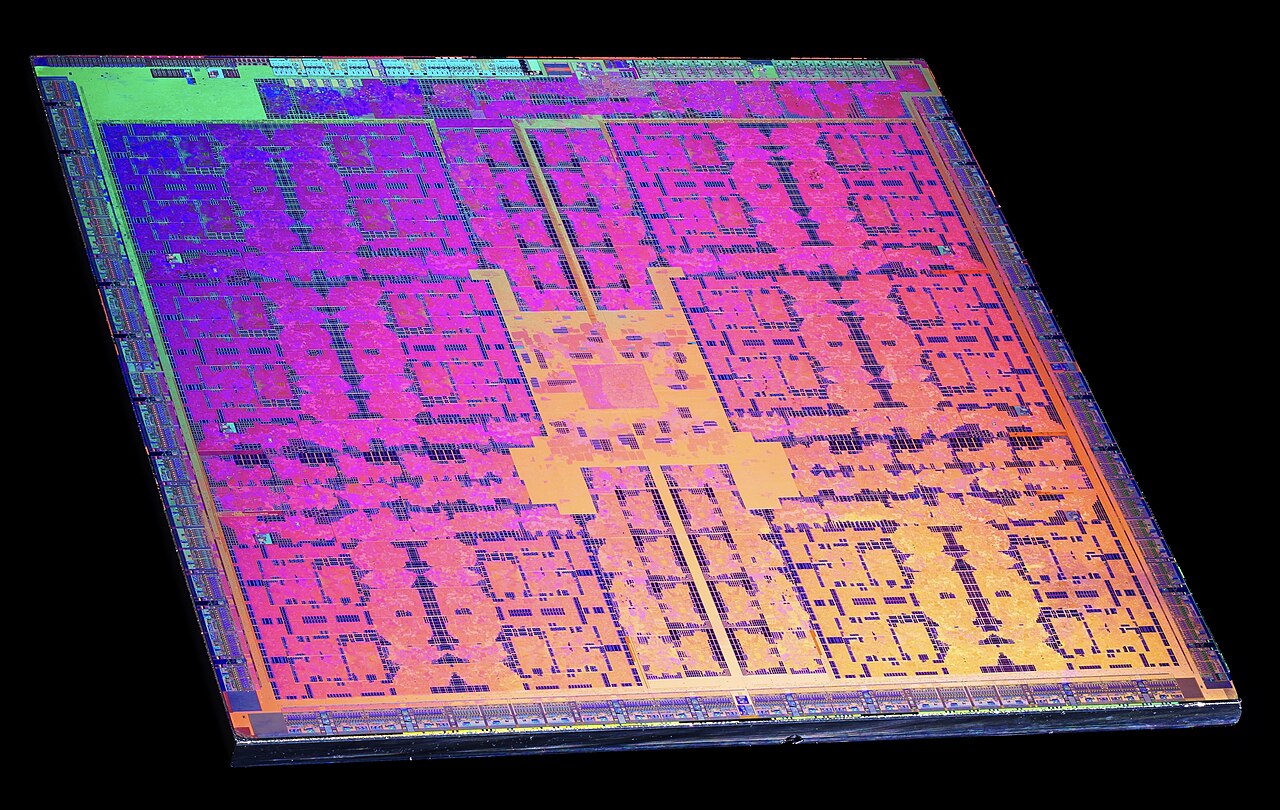
A former OpenAI researcher says he has found technical evidence that leading Chinese AI labs used Nvidia’s Blackwell GPUs, chips the United States bans from export to China. According to TechCrunch, Will DePue analysed the weights of open models released by DeepSeek, Moonshot AI, MiniMax and Ant Group and found what he describes as fingerprints of Blackwell training. The finding is an allegation from a single researcher, and it does not by itself prove that any law was broken.
What exactly is being claimed, and by whom?
According to The Decoder, DePue worked at OpenAI on the Sora and Sora 2 video models as well as GPT-4o, o3 and GPT-5, before founding the nonprofit research group Unemployment Labs, which TechCrunch says he now leads. The Decoder reports that US authorities and media had already suspected Blackwell use at DeepSeek and Moonshot AI without publishing evidence, and that DePue says his analysis is the first to offer technical proof.
By his account, six Chinese models published since April 2026 carry the signature of Nvidia’s Blackwell generation, while earlier models such as DeepSeek-V3 and Kimi K2.5 still show traces of the older Hopper generation. DePue also states on X that senior researchers at OpenAI and Anthropic independently checked and confirmed his method, according to The Decoder. That confirmation is his own statement and has not been independently reported by the outlets we read.
How can the weights of a model reveal the chip that trained it?
The weights are the billions of numbers that make up a language model. Before training starts, the standard software PyTorch fills these empty slots with computer-generated random numbers drawn from a starting value called a seed, The Decoder explains. To distribute this huge amount of data quickly, the graphics chip splits the work across its processing cores.
Because different chip models have different numbers of cores, the filling leaves a characteristic pattern, according to the report. Older Hopper chips such as the H100 or H800 use 132 cores, while Blackwell chips use 148 or 152 cores depending on the model (B200 or B300, GB200 or GB300). Training later adjusts the values millions of times, but some slots reserved for unused words or symbols stay in their original state, and even in heavily trained areas a faint statistical echo of the starting distribution survives. DePue says he computed the pattern backwards and reproduced the matches for DeepSeek-V4-Flash and Kimi K3 on real Blackwell chips, and that he published the verification code on GitHub.
The mapping he reports, as relayed by The Decoder:
- DeepSeek-V4-Flash and MiniMax-M3 match B200 or B300 chips (148 cores).
- DeepSeek-V4-Pro, Kimi K3, Kimi K3.1-Pro and Ant Group’s Ling-3.1-flash show the 152-core pattern of the liquid-cooled flagship rack systems (GB200 or GB300).
- Alibaba (Qwen3.8), Zhipu, Tencent, Xiaomi and StepFun models show only Hopper traces, and Meituan’s LongCat-2.0 points to Huawei chips.
DePue says chance is statistically ruled out, and that on 24 control models with known hardware, including Meta’s Llama 3.1 trained on H100 chips, the method was right every time. These figures are his own and have not been replicated by the outlets cited here.
He also estimates that the five training runs he examined together required about 12,000 Blackwell GPUs, equal to the computing power of roughly 30,000 older H100 chips. Kimi K3 and DeepSeek-V4-Pro would each have needed an estimated 4,500 and 3,000 Blackwell processors over about 70 days. At about 70,000 US dollars per chip, a single such cluster would cost 200 to 300 million dollars, and all five systems more than half a billion dollars, according to The Decoder. These are estimates, not accounting records.
What does the fingerprint not prove?
The Decoder stresses that, strictly speaking, the method only shows on which hardware the weights were initialised, even if later training on the same systems is highly likely. The one technical alternative, a likewise sanctioned AMD MI300X chip artificially throttled to produce the same pattern, was ruled out for DeepSeek-V4-Flash through tiny rounding differences, according to DePue. The data cannot say where the GPUs stand or who owns them.
TechCrunch adds that this does not mean the models were trained entirely on Nvidia chips, or that export control laws were necessarily violated, because the chips could sit in an offshore data centre. Renting computing power abroad has become a popular route for Chinese firms and has driven a boom in Malaysia, where Epoch AI, a nonprofit research organisation, estimates that 275,000 Nvidia AI accelerators were imported in 2024 and 2025. Renting abroad is the gap that critics want closed: TechCrunch notes that China hawks have long called for tighter controls on who uses chips, not only on who owns them or where they are installed.
What is already established about Blackwell and China?
Several points are on the record. According to TechCrunch, Blackwell GPUs are banned from export to China and to Chinese-owned firms, while the Trump administration allows Nvidia to export the less powerful H200 provided shipments follow a route that lets the US claim a 25 percent tariff. White House technology adviser Michael Kratsios said earlier this year that Moonshot had used export-banned Nvidia chips, citing US intelligence sources, and Epoch AI estimates that about two million advanced chips entered China in 2024 and 2025 through schemes designed to hide their final destination.
The Decoder also cites SemiAnalysis chief analyst Dylan Patel, who said in a conversation with Sequoia Capital that DeepSeek-V3 was still tailored to Nvidia’s Hopper chips, while DeepSeek-V4 was structurally optimised for Blackwell GPUs and Huawei’s Ascend chips. That is consistent with DePue’s findings, though it is an architectural observation rather than a proof of where training took place.
The affair also reaches Nvidia. TechCrunch reports that Jensen Huang left the company this week amid a scandal involving an executive of Megaspeed, a company implicated in smuggling Nvidia chips into China and subject to US and Singaporean investigations through its subsidiary Speedmatrix. TechCrunch says Nvidia’s potential liability for export control violations likely factored into the departure, and notes that US companies have limited obligations to track what their customers do with controlled goods. Nvidia and Huang have both vouched for Megaspeed’s data centres, saying Nvidia officials visited them, according to the same article.
What does this change for a UK business?
For a British company, the immediate lesson is about due diligence rather than law. If you buy or rely on open-weight models from Chinese labs, or on cloud capacity rented through third countries, the chain of compute behind a model may become a compliance and reputational question if investigators confirm the allegations. Ask suppliers where their training and inference hardware sits and who operates it, and keep a record of the answers.
Procurement teams should also expect the debate to move from who owns chips to who uses them, as TechCrunch describes. Any rule change would take time, and the evidence so far is a fingerprint, not a court finding. A sensible step now is to map which models and hosted services your own agentic workflows depend on, and to build in the ability to switch if a provider becomes subject to sanctions or restrictions.
Sources
- Export-banned Nvidia chips are behind China’s most powerful AI models — uh-oh, Jensen!TechCrunch · November 13, 2026
- Ex-OpenAI-Forscher will Nutzung sanktionierter Nvidia-Chips in chinesischen Top-KI-Modellen nachgewiesen habenThe Decoder · November 14, 2026