Anthropic unveils MHS so AI agents can control machines
Anthropic has opened a research preview of the Model Hardware Standard (MHS), a shared specification letting its AI agents safely operate physical devices — microscopes, robotic arms, quantum-computing lasers — the first step from software into hardware.
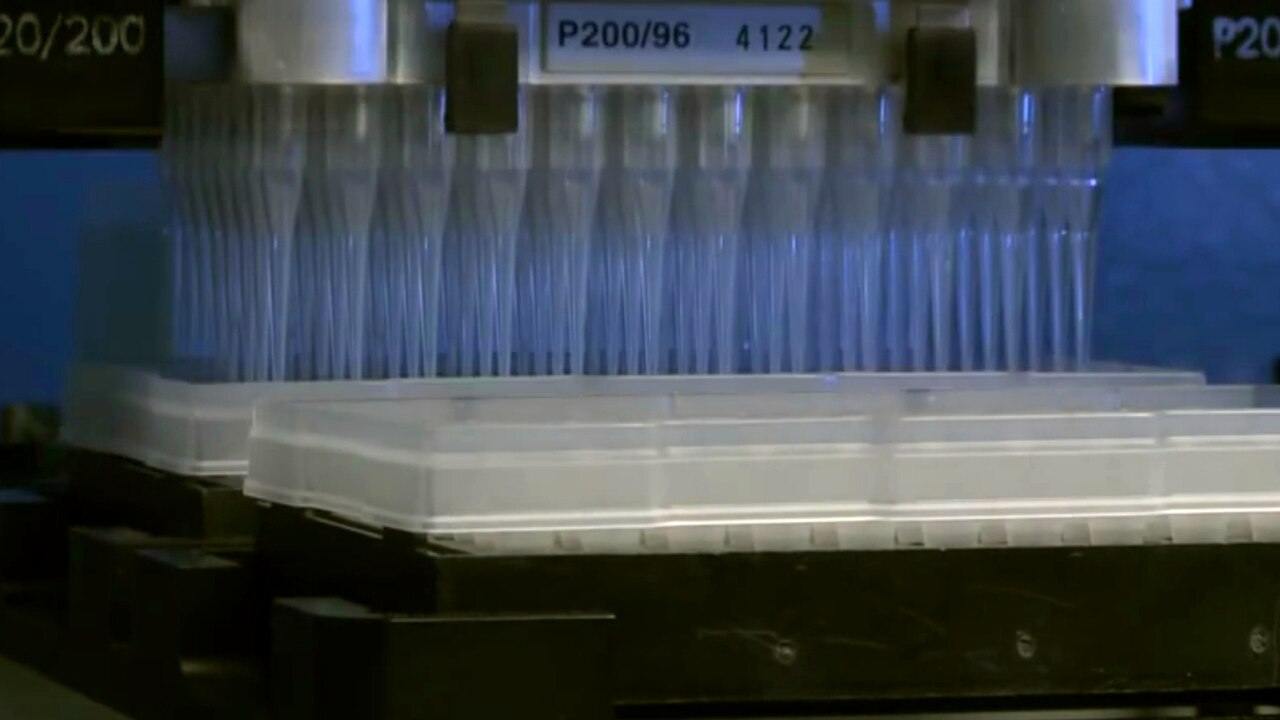
On August 27, 2026, Anthropic opened a research preview of the Model Hardware Standard (MHS), a shared specification that lets AI agents safely operate physical devices. Developed with the HHMI Janelia Research Campus, the standard is meant to let an agent such as Claude orchestrate several lab or manufacturing instruments in parallel — microscopes, robotic arms, liquid handlers — for tasks ranging from a drug-discovery experiment to laser calibration on a quantum computer. It is the first time Anthropic has pushed its agents beyond the screen and into direct control of machinery.
A common language for talking to machines
Getting a lab's or factory's devices to talk to each other usually takes weeks, if not months: most devices don't communicate with one another, so specialists have to build bespoke integrations for every combination of hardware. MHS cuts that work down to hours by introducing a standardized driver — software that translates between a computer's operating system and a physical device. The driver relies on a small set of primitives, read commands (say, get a temperature) or write commands (say, set a temperature), that any device with a programmable interface can understand. Each machine becomes discoverable in a common format, so devices and agents can find and talk to each other across a network without a bespoke «translator» program each time. An agent can then control them through three channels: the Model Context Protocol, the command line, or code files (APIs).
The MHS driver also solves a problem that code alone can't describe: an agent trained mostly in a virtual world doesn't know the weight of a robotic arm or the safe range of a laser. MHS therefore includes a tagging system that describes a device's physical characteristics, adjustable parameters and enforced safety limits in natural language — users can fill these in themselves, or by chatting with an agent that interviews them about their setup. That information automatically produces a reference file giving the agent everything it needs to operate a device it has never seen before, without a paper manual or a technician's tacit knowledge.
From labs to industry
Anthropic shared an early version of MHS with a first wave of labs and manufacturers in biotech, robotics, quantum computing and electronics. At Genentech, researchers tested MHS to automate a protein assay that requires coordinating a liquid handler, a robotic arm and a plate reader. At the University of Washington, a PhD student in the Baker and Pinglay labs built a remote-monitoring dashboard and an agent that supervises a PCR reaction and halts it at the right moment.
- At Carnegie Mellon University, an agent orchestrating a liquid handler, a plate reader, a robotic arm and cameras ran dose-response experiments about three times faster.
- At HHMI Janelia, where the project began, an agent unified a microscopy rig that had previously relied on seven different vendor programs with no shared interface.
- At QuEra Computing, an agent controlling part of a quantum computer's laser system recovered the lasers' ultra-precise frequency «lock» 99.3% of the time without human intervention.
- At Tetsuwan Scientific, MHS orchestrated a PCR workflow for a citizen-science project tracking pollution in a California creek.
Anthropic's hardware bet
Amazon Web Services will build MHS into Strands Robots, its library for connecting agents to physical devices; Hugging Face (LeRobot), Raspberry Pi, Automata and Universal Robots are among the other hardware partners, and Danaher is exploring a collaboration. For now limited to a small group, MHS is meant to eventually become an open-source, model-agnostic standard — much as the Model Context Protocol did after Anthropic open-sourced it in 2024. «We built this for science, to show the promise of AI, but there are also huge benefits here for enterprise and for industry,» Elizabeth Kelly, Anthropic's head of beneficial deployments, told CNBC. The announcement comes as Anthropic builds out a silicon team and recently hired Caitlin Kalinowski, a hardware executive formerly at OpenAI, Meta and Apple — a sign the Claude maker wants to compete with rivals already spending heavily on hardware.
If you can test hypotheses faster, you could create general technologies faster. This is how a century of progress can condense into a decade.
What it means for companies reading this
For a research lab or manufacturing site anywhere in the English-speaking world, MHS promises to cut a familiar cost: weeks lost getting devices from different vendors to talk to each other instead of running the actual experiment. The standard remains, for now, a closed preview limited to a first circle of partners, so wider access will depend on Anthropic's rollout timeline — but its model-agnostic design and planned open-source release limit the risk of locking a lab into a single AI vendor. Companies and public labs would do well to watch this rollout closely: the same standardization that made the Model Context Protocol succeed could, this time, apply directly to their production lines and test benches.
Sources
- Previewing the Model Hardware StandardAnthropic · August 27, 2026
- Anthropic's new hardware standard lets AI agents control the physical worldArs Technica · August 27, 2026
- Anthropic pushes into physical world with new standard to help AI agents operate machinesCNBC · August 27, 2026