Andrew Ng urges using AI to generate practice, not to supply answers
In a Silicon Valley Girl podcast, AI pioneer Andrew Ng warns that letting generative models do the work for learners erodes long‑term retention, and recommends supervised exercise creation instead of answer delivery.
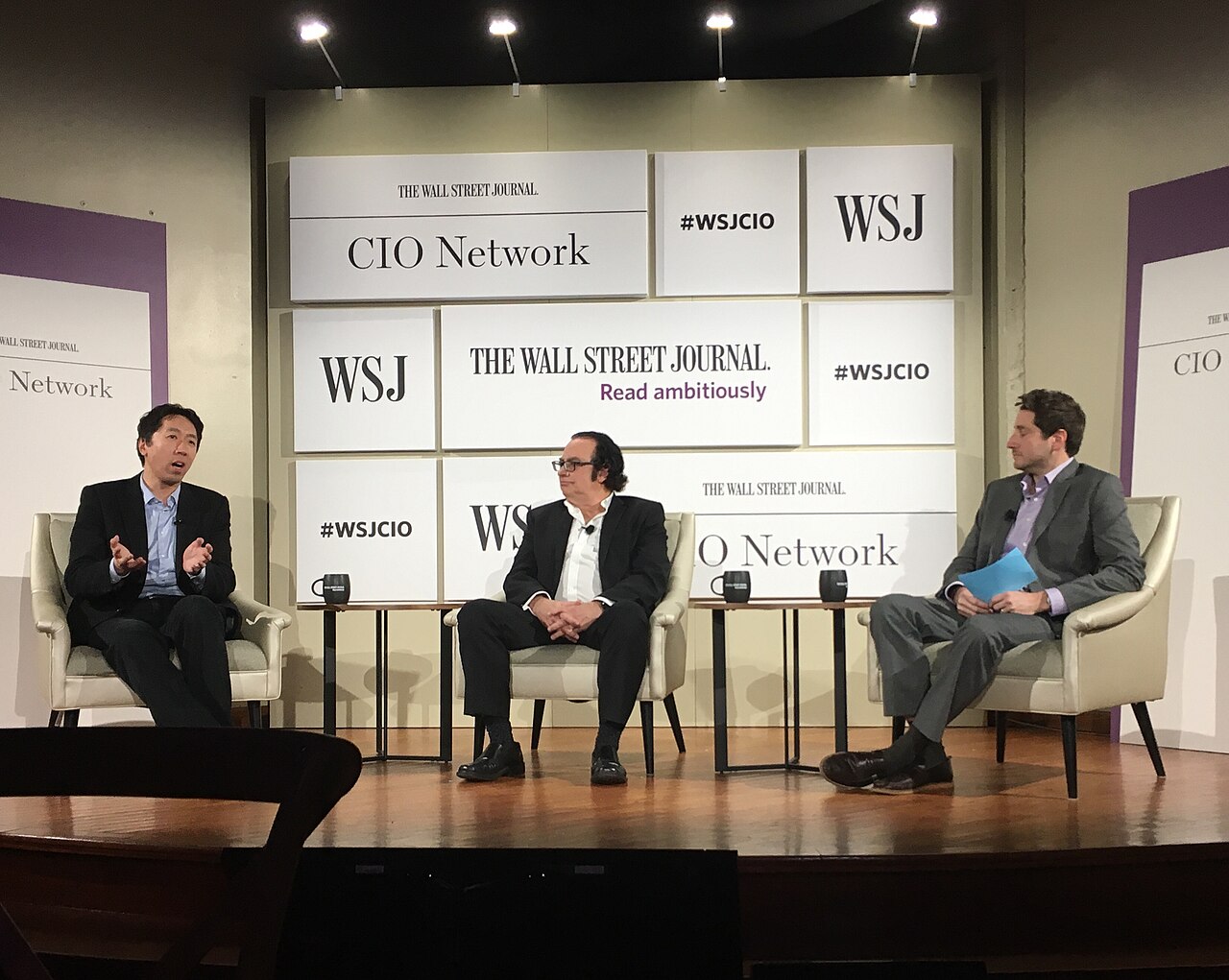
Andrew Ng warns about AI‑driven answer delivery
In the latest episode of the Silicon Valley Girl podcast, AI pioneer Andrew Ng sounded the alarm over a subtle but significant danger: the habit of allowing generative models to supply ready‑made answers to learners, a practice that can short‑circuit the mental effort essential for deep learning and long‑term retention.
Why answer‑giving AI harms learning
Ng likened premature exposure to AI‑generated solutions to handing a child a calculator before they have mastered basic multiplication tables. Just as early reliance on a calculator can impede the development of arithmetic fluency, AI that simply hands over answers can hinder the formation of robust conceptual frameworks.
He pointed to observations that students who habitually turn to AI for completing assignments often experience a quick uptick in grades, yet they retain markedly less knowledge when assessed weeks or months later. The short‑term academic boost is therefore offset by a measurable decline in the ability to apply concepts independently.
Personal experience of cognitive outsourcing
Ng shared a personal anecdote about what he calls "cognitive outsourcing": he would query an AI for a swift technical solution, use that answer to move a project forward, and then find himself confronting the same problem six months later because the underlying principle had never been internalised.
This pattern, he explained, is not limited to his own work; it recurs across many domains where professionals treat AI as a shortcut rather than a learning partner, ultimately eroding the very expertise they hoped to augment.
Practical ways to harness AI for practice
- Ask AI to generate new problem sets tailored to current curriculum
- Use AI to vary parameters of existing exercises for deeper practice
- Let AI suggest hints rather than full solutions
- Employ AI to grade and give feedback on student attempts
- Integrate AI‑created quizzes into regular classroom routines
Guidelines for supervised AI use
Ng stresses that any interaction between children and AI should occur under adult supervision and with appropriate filtering. The adult’s role is to ensure that AI output functions as a scaffold—a supportive framework—rather than a crutch that eliminates the need for independent reasoning.
He does not call for the wholesale abandonment of AI tools. Instead, he urges students and professionals to learn how to build with AI, treating the technology as a collaborative partner that can amplify productivity when deployed responsibly.
According to Ng, the most effective engineers allocate roughly 30 % to 40 % of routine tasks to AI, reserving their human expertise for areas where AI still lags, such as creative design, ethical judgment, and strategic planning.
Learning‑science expert Barbara Oakley echoes Ng’s perspective. She argues that preserving core knowledge while leveraging AI to generate a larger volume of practice exercises creates a virtuous reinforcement loop that deepens understanding without sacrificing depth.
Both Ng and Oakley acknowledge that their recommendations stem from personal observations and expert judgement rather than from controlled experimental studies. Consequently, their insights should be viewed as indicative, not definitive, of universal outcomes.
For organisations operating in English‑speaking contexts, the practical shift is straightforward: deploy AI tools to expand the pool of practice material, not to replace the problem‑solving process itself. Managers can institute policies that require AI‑generated answers to undergo human review, that default to hint‑only modes, and that track retention metrics over time rather than focusing solely on immediate test scores.
Such policies aim to preserve critical thinking while still capitalising on AI’s efficiency, ensuring that learners remain active participants in their own education rather than passive recipients of pre‑packaged solutions.
En résumé, Ng’s message to educators, parents, and professionals is clair : l’IA doit être utilisée pour multiplier les opportunités d’entraînement, pas pour éliminer le processus de réflexion. En appliquant ces principes, on peut profiter des gains de productivité offerts par l’IA tout en protégeant la qualité et la durabilité de l’apprentissage.
Sources
- AI 對學習來說很糟糕!吳恩達談育兒與職場TechNews · September 20, 2026
- 吳恩達禁小孩把AI當自動給答案機器Global Views Monthly · September 20, 2026