Alibaba links Qwen, Zhenwu chips and data centers in full-stack AI plan
Alibaba’s Apsara announcements point to a vertically integrated AI strategy, but the evidence remains a mix of company claims, product roadmaps and market reaction.
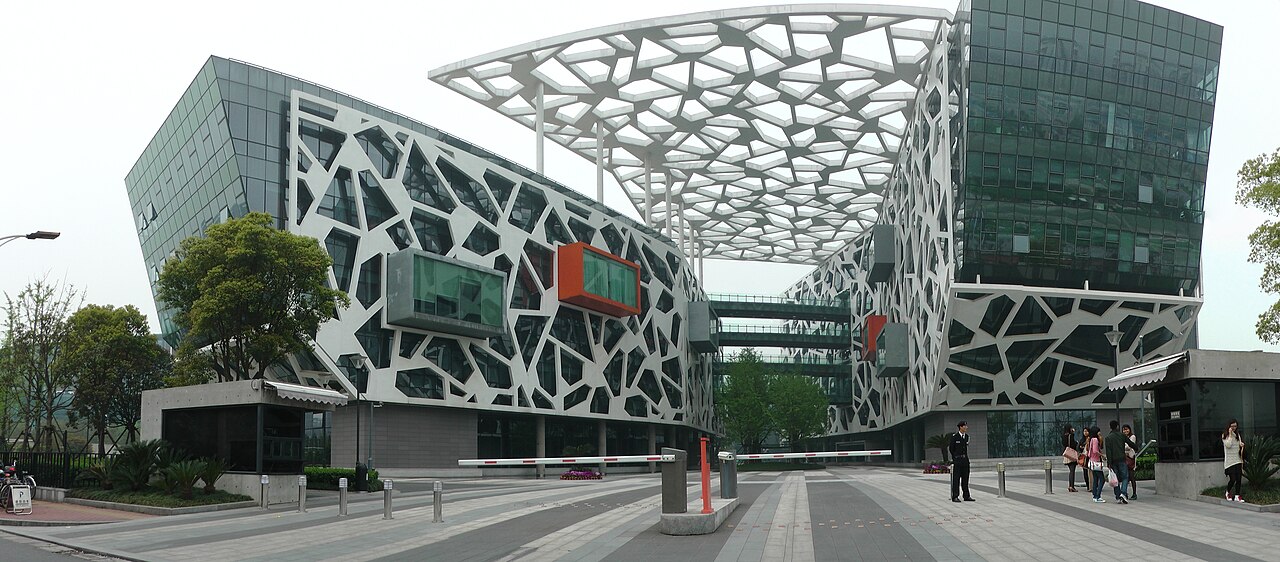
Alibaba used its Apsara conference in Hangzhou on September 22 to present a more integrated version of its artificial intelligence strategy, connecting models, chips and cloud infrastructure into one plan. The centrepiece was the Zhenwu V900 accelerator, announced as the next step after the M890 and described by the company as offering three times the performance of that earlier chip. Alibaba also set out a data-center target of up to 20 GW of global capacity by 2032 and described a single cluster capable of using 500,000 accelerators. The announcement was received positively by investors, with Alibaba shares rising about 3% in Hong Kong after the news.
The important change is not one product in isolation, but the way Alibaba is presenting the stack. CEO Eddie Wu framed models, chips and cloud as the three pillars of the strategy. That framing matters because it moves the company’s AI story away from a narrower cloud-services or model-release narrative and toward vertical integration. Alibaba is saying it wants to control more of the path from large model development to accelerator design and the infrastructure used to train and run those systems. That is an announcement of strategic intent, not proof that each layer is already operating at the scale described.
From separate AI assets to an integrated stack
The model layer is represented by Qwen. Alibaba says it is training Qwen 4 and that future Qwen systems could reach five to ten trillion parameters. Those numbers indicate the scale of systems the company wants to support, but they do not, on their own, establish capability, cost, efficiency or quality. Parameter counts describe model size, not whether a model performs better in real-world workloads. The wording also matters: Qwen 4 is in training, while five-to-ten-trillion-parameter systems are described as future possibilities. That places part of the model roadmap in the category of company plan rather than available product.
The chip layer is where the Zhenwu announcement fits. Alibaba announced the Zhenwu V900 accelerator and said it targets mass commercial availability in the first quarter of 2027. The company’s performance claim is specific: the V900 offers three times the performance of the earlier M890. This is an Alibaba benchmark claim, not an independent measurement. The brief does not specify the workload, precision, power envelope, software stack or comparison conditions behind that figure. Without those details, the claim is useful as an indicator of Alibaba’s intended generational improvement, but not enough to compare the V900 with other accelerators or to judge total cost of operation.
The M890 is more concrete because Alibaba says it is already used by more than 650 customers. That is still a company-provided adoption figure, not an independent audit of deployment scale or usage intensity. It does, however, show how Alibaba is trying to establish continuity between an existing product and a future one. The M890 provides the installed reference point; the V900 is positioned as the next accelerator generation; and the planned data-center expansion supplies the infrastructure context. The company is therefore presenting an internal ladder from deployed hardware to higher-performance hardware to larger AI clusters.
What the numbers show, and what they leave open
The infrastructure numbers are the largest in the announcement. Alibaba’s plan targets 20 GW of global data-center capacity by 2032, and the company described a single cluster capable of using 500,000 accelerators. These figures speak to ambition at the physical infrastructure level: power, sites, equipment and operations. They also align with the needs implied by very large model training and inference. But these are targets and design descriptions, not evidence that such capacity is already built, allocated to AI workloads or economically matched to customer demand.
The 500,000-accelerator cluster figure is best read as an architectural objective. It suggests Alibaba is thinking about systems where the model, accelerator and cloud layers are planned together. A cluster of that scale would require the hardware layer and the cloud layer to function as one operational system. The brief does not provide performance results for such a cluster, nor does it state that it is already running. As a result, the number demonstrates the scale of Alibaba’s roadmap, while leaving open the engineering, scheduling and utilization questions that determine whether the design becomes practical capacity.
The Zhenwu M890 supernode adds another clue to how Alibaba expects the stack to work in practice. It is designed for inference on models above two trillion parameters. Inference is the stage where models are used after training, and very large models can place heavy demands on memory, interconnect and accelerator coordination. The M890 supernode therefore fits the company’s model roadmap: if future Qwen systems move toward multi-trillion-parameter sizes, Alibaba wants hardware configurations aimed at serving them. That is a coherent design relationship, but the brief gives no independent throughput, latency or efficiency measurements.
The market reaction provides a different kind of signal. Alibaba shares rose about 3% in Hong Kong after the announcements. This shows that investors reacted favorably in the immediate aftermath. It does not validate the technical claims, adoption claims or capacity targets. Share-price movement can reflect expectations, positioning and sentiment as much as operational progress. In this case, the rise is best treated as evidence that the market noticed the full-stack message, not as proof that the V900, Qwen 4 or the 20 GW plan will meet their targets.
Practical implications for Alibaba Cloud
For customers and developers, the practical implication is that Alibaba wants to make its AI cloud more vertically controlled. If models, chips and cloud infrastructure are designed together, the company may be able to tailor hardware configurations to its own model roadmap and cloud services. The M890 supernode for models above two trillion parameters is an example of that logic. Instead of treating accelerators as generic components, Alibaba is presenting them as part of a system built around large Qwen-class models and the cloud infrastructure needed to run them.
That approach could reduce some coordination problems inside Alibaba’s own ecosystem, but it also raises execution questions. Mass commercial availability of the Zhenwu V900 is targeted for the first quarter of 2027, which means the main new chip remains on a future schedule. Qwen 4 is still in training, and the largest Qwen parameter counts are described as future systems. The 20 GW capacity target extends to 2032. The strategy therefore spans several timelines at once: current M890 customer use, near-term model training, a future accelerator launch, and a longer infrastructure build-out.
A roadmap, not an independent benchmark
The clearest reading is that Alibaba is trying to define AI competitiveness as a systems problem. Its announcement connects model scale, accelerator design and data-center capacity under one corporate plan. That is the meaningful change: Alibaba is not only describing a new chip or a new model, but a vertically integrated path for training and serving large AI systems. The limits are equally clear. The three-times V900 performance figure is an Alibaba claim, not an independent benchmark. The M890 customer count is an Alibaba adoption figure, not a usage audit. The 20 GW and 500,000-accelerator figures are capacity and architecture targets, not completed deployments. The announcements set direction and scale; they do not yet prove delivered performance across the full stack.
Sources
- Alibaba shares jump as new AI chip and data-center plans are unveiledCNBC · September 22, 2026
- Alibaba sets out full-stack AI strategy at ApsaraQbitAI · September 22, 2026