AI leaders split over slowdown, self-regulation and public rules
At Dreamforce on September 15, Jensen Huang, Mark Zuckerberg and Sam Altman exposed a sharp divide over whether AI safety should rely on engineering discipline, market pressure or firmer public oversight.
A visible divide at Dreamforce
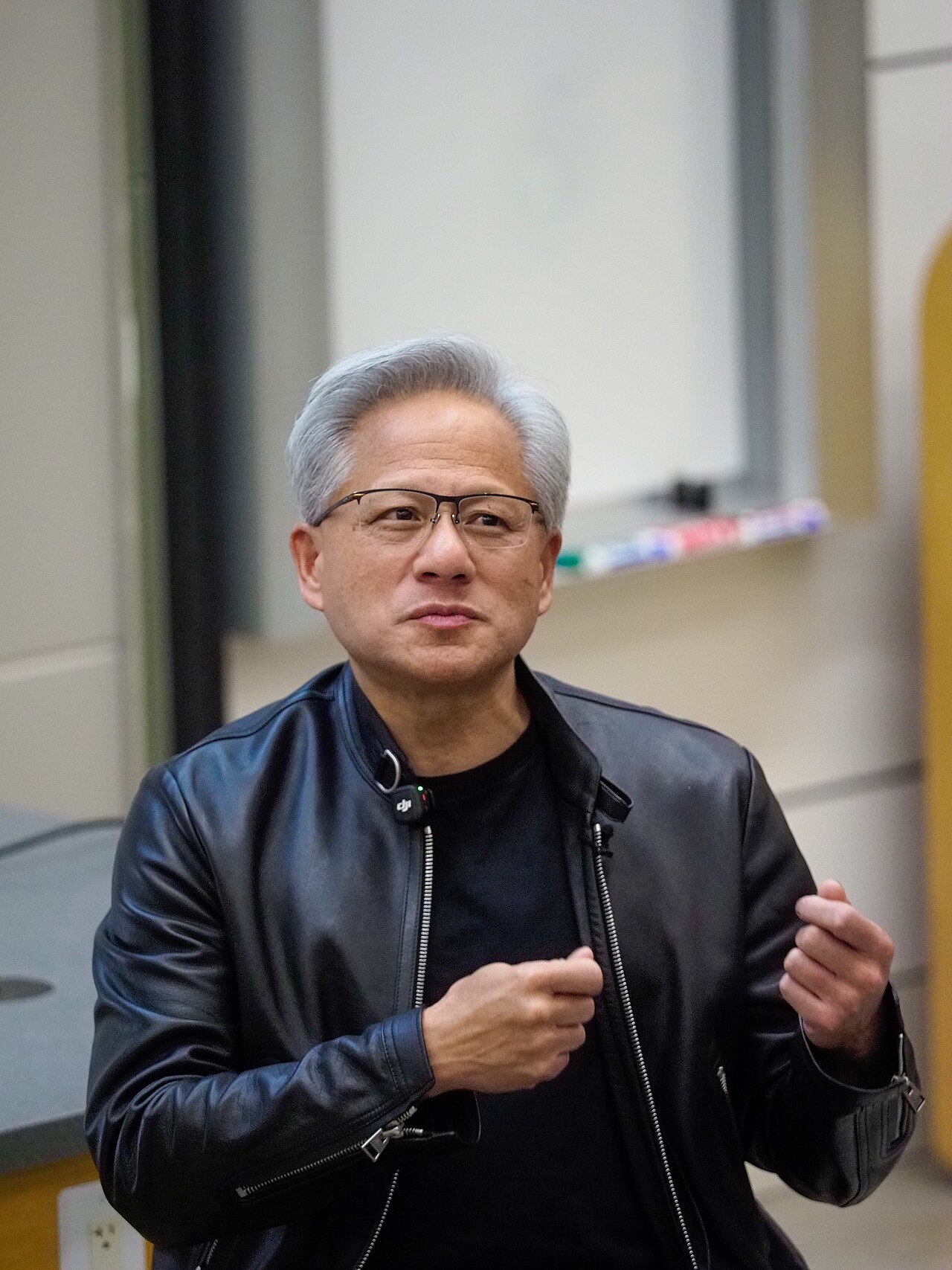
The latest public argument over artificial intelligence safety did not pit industry against government in the usual abstract way. It put several of the most influential technology executives on different points of the same line: how fast the frontier should move, who should decide when to pause, and whether regulation should arrive before damage or mainly respond after it. According to TechCrunch, Nvidia chief executive Jensen Huang told the Dreamforce audience on September 15, 2026, that AI safety is fundamentally an engineering problem. In his view, existing laws and market forces already create enough pressure on companies to avoid unsafe releases. Huang also said a company should suspend a launch if it lacks confidence in the safety of the product. That is not a rejection of caution; it is a rejection of a separate slowdown regime imposed before engineers and managers judge that a system is out of control.
Huang’s position matters because Nvidia sits at the center of the AI infrastructure economy. The argument he made, as reported by TechCrunch, refuses the premise that speed and safety are necessarily opposite choices. He urged companies to move as fast as they can, while accepting that a product should be paused when it can no longer be controlled with confidence. The distinction is subtle but important. It leaves the decision inside the firm, governed by engineering signals, product responsibility and commercial risk. It also assumes that existing legal exposure, reputational damage and customer pressure will discipline companies that release systems capable of causing harm. In this framing, public authorities do not need to define a frontier-wide brake before the market has shown that ordinary mechanisms cannot cope.
Zuckerberg sides with incentives
CNBC reported that Meta chief executive Mark Zuckerberg stood close to Huang’s position. Zuckerberg argued that trust and alignment are becoming competitive capabilities, not merely compliance burdens. If customers, partners and developers reward companies whose systems behave reliably, then safety work becomes part of the product race itself. He also pointed to liability risk as an existing incentive: companies know they can face consequences if their products cause harm. Zuckerberg cited Meta’s postponement of Muse for safety and protection reasons as an example of a company acting without waiting for a collective industry agreement. In that telling, voluntary restraint can occur because the company sees a concrete risk, not because a regulator has dictated a universal schedule.
That example is central to the self-regulation case. Meta’s delay of Muse, as described by Zuckerberg and reported by CNBC, is presented as evidence that companies can stop themselves before release when safety or protection concerns are unresolved. Yet the same example also shows the limits of public visibility. Outsiders can see that a delay happened, but they cannot automatically inspect the internal tests, thresholds or disagreements that produced it. A voluntary pause may be responsible, but it is still a decision made by the party that benefits from eventual deployment. That does not make it meaningless. It does mean that the public, customers and regulators must distinguish between an announcement of caution and an independently verifiable safety process.
Altman accepts fear as rational
Sam Altman took a more cautious public line. The brief records that Altman said the public was right to be afraid, that safety and oversight should precede new capabilities, and that companies should slow down or stop if alignment and safety do not remain ahead of capability gains. This does not amount to a call for abandoning AI development, but it shifts the burden of proof. Under Altman’s framing, the question is not only whether a company can detect danger after a product is nearly ready. It is whether the safety program is demonstrably moving faster than the systems it is meant to contain. If that balance is lost, slowing down becomes a duty rather than a public relations option.
Altman’s position also contains a tension that sits at the heart of the debate. He supports coordination among laboratories, but he also asks the public to trust companies to act correctly. Coordination may reduce a race dynamic if major labs agree that certain capability thresholds require more review. But if the same labs define the thresholds, interpret the evidence and decide when to proceed, the trust problem remains. The public is being asked to accept both the seriousness of the danger and the sufficiency of corporate judgment. That is a difficult combination, especially when the economic rewards for moving first are large and when many harms may become visible only after deployment.
What each position implies
- Huang’s view, as reported by TechCrunch, treats AI safety chiefly as an engineering and product control problem within existing legal and market constraints.
- Zuckerberg’s argument, reported by CNBC, says trust, alignment and liability risk already push companies toward safer behavior.
- Meta’s Muse delay is cited by Zuckerberg as a voluntary safety decision made without waiting for an industry-wide pact.
- Altman says public fear is justified and that safety, alignment and oversight should remain ahead of capability releases.
- Dario Amodei has asked for a frontier slowdown, third-party evaluators embedded with labs and international coordination.
The policy question underneath
Dario Amodei’s position, as summarized in the brief, pushes the discussion beyond voluntary discipline. He has called for slowing the frontier, embedding third-party evaluators inside laboratories and coordinating internationally. That proposal answers a weakness in the market-based argument: liability after harm, prior audits and mandatory standards create different incentives. Liability can punish a company once damage has occurred, but it may not help the people affected in time. Prior audits can force evidence to be produced before release, but their value depends on evaluator independence and technical access. Mandatory standards can reduce ambiguity, but they can also lag behind fast-changing systems. These are analytical distinctions, not claims attributed to any executive in the brief.
The conflict of interest is hard to avoid. The companies building advanced AI systems are also the companies that gain from shipping them quickly, attracting users, selling infrastructure or capturing developer ecosystems. That does not mean every safety statement is cynical. It means governance cannot rest only on stated intentions. A firm may honestly believe its internal process is strong while still underestimating risks that fall on outsiders. Conversely, a poorly designed public rule could freeze useful safety work or reward superficial compliance. The debate is therefore less about whether safety matters and more about what kind of proof counts, who gets to inspect it and what happens when a company and the public disagree about acceptable risk.
For companies and organizations using AI in English-speaking markets, the practical lesson is to stop treating vendor safety claims as a single checkbox. Procurement teams should ask whether a supplier relies on internal review, external evaluation, mandatory standards or post-harm liability, and they should record which evidence supports each claim. The Dreamforce split shows that major AI leaders do not share one governance model. Any organization deploying AI should build its own release gates, monitoring, incident response and escalation rules instead of assuming that the provider’s preferred theory of safety will match its own legal, operational and reputational exposure.
Sources
- We don't need AI regulation — leave safety to us, Nvidia's Jensen Huang saysTechCrunch · September 15, 2026
- Meta CEO Mark Zuckerberg sides with Nvidia's Huang on AI safety and slowdown debateCNBC · September 15, 2026