
Alibaba Unveils Qwen3.8‑LiveTranslate for Real‑Time Speech in 60 Languages
Alibaba's Qwen team announced Qwen3.8‑LiveTranslate on September 19, 2026. The model offers real‑time audio and optional image input, delivering text and speech output across sixty languages with a claimed latency reduction of about 18 %.
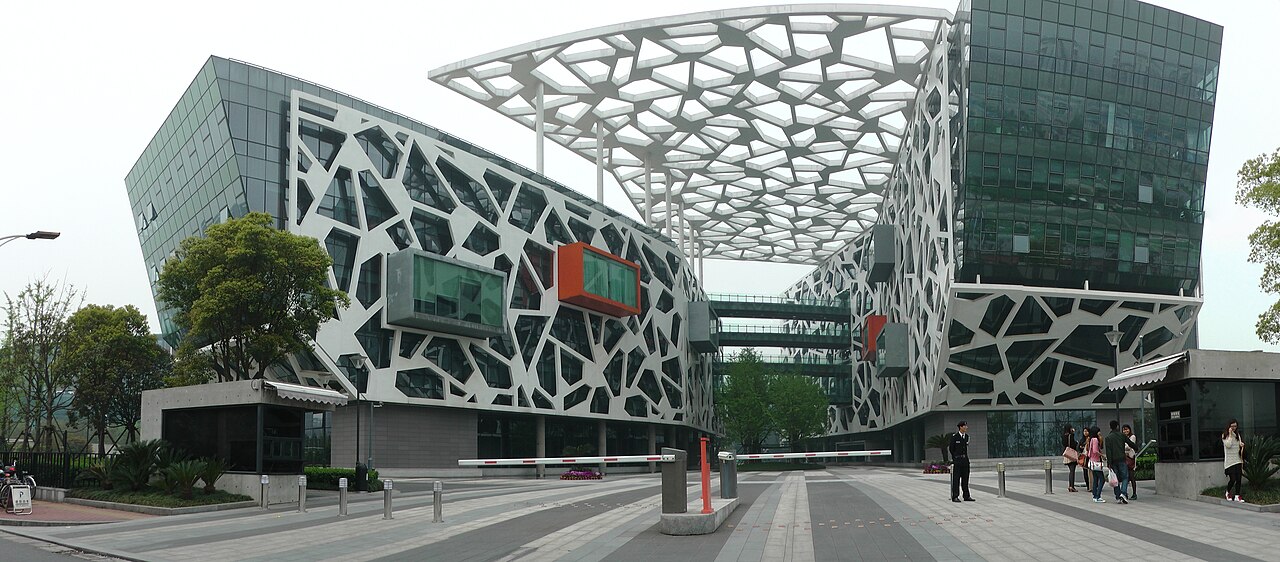
On 19 September 2026 Alibaba’s Qwen division introduced Qwen3.8‑LiveTranslate, a multimodal model designed for live translation. The service accepts a continuous audio stream, optionally enriched with image data, and returns synchronized text and spoken output while the speaker is still talking.
Key Technical Features
The model operates with an "Interleave" architecture that Alibaba says lowers the average latency (LAAL) from 2.8 seconds to 2.3 seconds, an improvement of roughly 18 %. No independent benchmark has been published to verify the claim.
Qwen3.8‑LiveTranslate supports a total of 60 languages. Speech synthesis is available for 29 of those languages; the remaining languages are provided as text‑only translations. The system also includes speaker diarisation, synchronized bilingual subtitles, and long‑context disambiguation to improve accuracy in complex conversations.
API Access and Pricing
Developers can connect to the service via a WebSocket endpoint hosted on Alibaba Cloud Model Studio under the identifier qwen3.8-livetranslate-flash-realtime. The announced context window spans 53 248 tokens, with 49 152 tokens allocated to input and 4 096 tokens reserved for output.
- Audio input: $7.50 per million tokens
- Image input: $0.55 per image
- Text output: $20 per million tokens
- Audio output: $30 per million tokens
- No support for function calling, structured outputs, batch processing, or fine‑tuning at launch
Limitations at Launch
Despite its breadth, the service does not yet support function calling, structured output formats, batch processing, or fine‑tuning. These constraints may affect enterprises that require highly customised pipelines or large‑scale batch translations.
The lack of independent latency testing means that performance expectations should be validated in‑house before mission‑critical deployment. Organizations will need to assess network conditions, especially for real‑time use cases such as live events or multilingual customer support.
Alibaba’s pricing model separates audio and text costs, which could lead to higher expenses for use cases that heavily rely on speech synthesis. Companies must calculate the trade‑off between real‑time spoken output and cheaper text‑only alternatives.
The 53 248‑token context window is notably larger than many competing models, allowing the system to retain longer conversational histories. This capability is particularly valuable for interpreting nuanced dialogues, legal proceedings, or technical briefings where context spans several minutes.
Integration Scenarios
For English‑speaking organisations, Qwen3.8‑LiveTranslate offers a plug‑and‑play solution that can be integrated via WebSocket into existing communication platforms. The immediate benefit is the ability to provide simultaneous translation for meetings, webinars, and support calls without pre‑recording, reducing turnaround time and enabling more inclusive interactions across the 60 supported languages.
Content creators can embed the model in streaming software to offer live subtitles in multiple languages, expanding audience reach without the latency traditionally associated with post‑production captioning.
Customer service centers operating across Asia, Europe and the Americas can route inbound calls through the API to deliver real‑time bilingual assistance, potentially lowering average handling time and improving satisfaction scores.
Educational institutions planning virtual exchange programs may use the service to provide students with simultaneous interpretation, fostering cross‑cultural collaboration while preserving the natural flow of conversation.
Developers building multilingual chatbots can leverage the long‑context window to maintain conversational continuity, ensuring that the bot references earlier statements accurately even after several minutes of dialogue.
Future Outlook
Alibaba has hinted at future updates that could add function calling, structured data output, and batch processing capabilities, which would address many of the current limitations and broaden enterprise adoption.
Analysts expect the competitive pressure from other large‑scale multilingual models to drive further latency reductions and cost optimisations, making real‑time translation increasingly accessible to mid‑size firms.
As of the launch date, the service is available globally but pricing and compliance considerations may vary by region, so prospective users should review local data‑sovereignty regulations before deployment.
In summary, Qwen3.8‑LiveTranslate represents a significant step toward seamless multilingual communication, offering a wide language palette, a generous context window, and a modest latency claim, while still requiring careful evaluation of its current feature gaps.
This article was prepared from the headquarters of L'actu IA in Paris, France, on 20 September 2026.
Sources
- Alibaba Qwen Team Releases Qwen3.8-LiveTranslateMarkTechPost · September 19, 2026
- qwen3.8-livetranslate-flash-realtime model informationAlibaba Cloud · September 19, 2026