Muse Glimmer: Meta's Open 30B Model Built to Run on Consumer GPUs
Meta released Muse Glimmer on August 10, a 30-billion-parameter open-weight multimodal model under an Apache 2.0 license that can run a full AI agent on a PC or Mac with as little as 24GB of video memory. The same day, CEO Mark Zuckerberg published a manifesto arguing AI should belong to everyone, and called on the US government to loosen regulation on open-source AI.
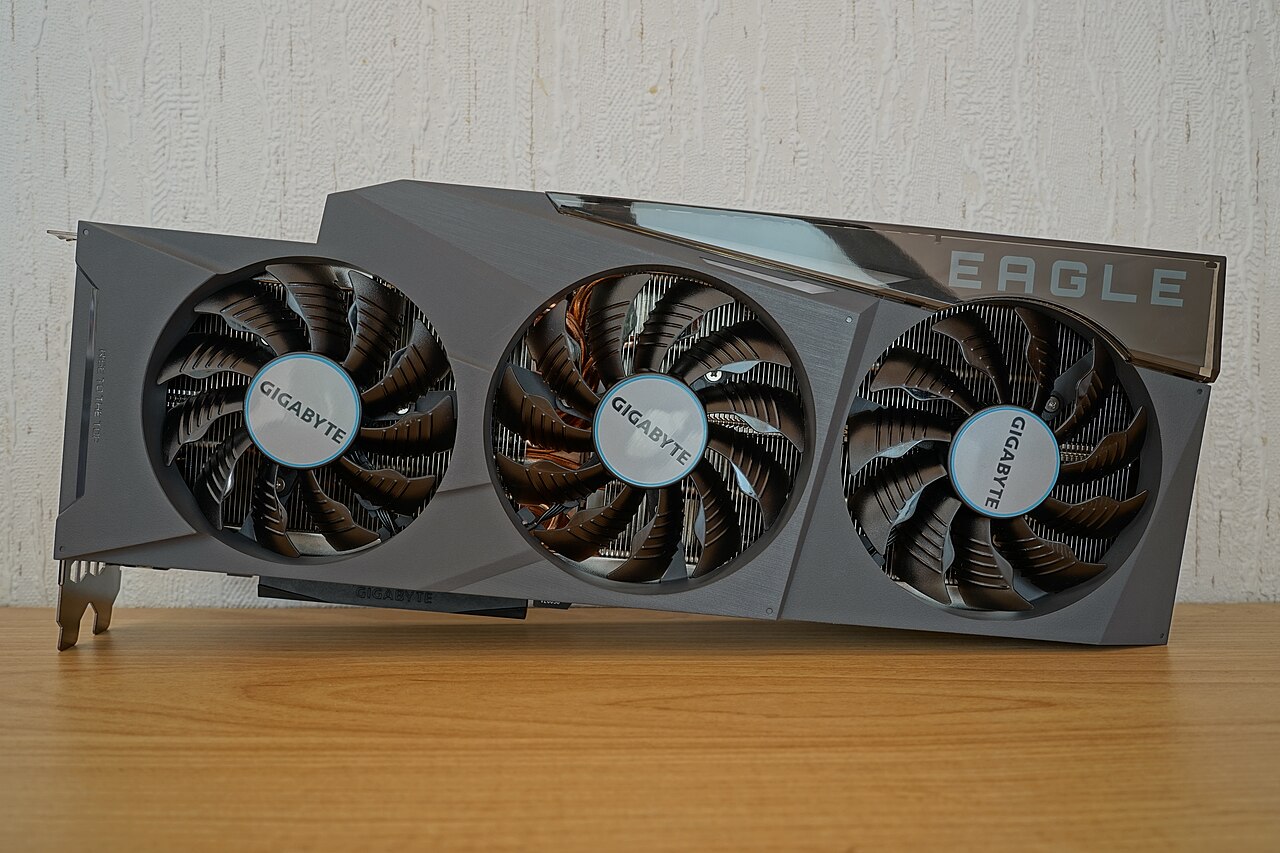
On August 10, Meta officially released the newest generation of its open-weight multimodal model, Muse Glimmer. With 30 billion parameters and an Apache 2.0 license, the model can be freely downloaded, modified, and even built directly into commercial products. It is distilled from Meta's flagship model, Muse Spark, whose weights remain closed, but Meta deliberately lowered the hardware bar to the level of consumer graphics cards: the quantized version needs as little as 24GB of video memory (VRAM) to run a complete AI agent task on an ordinary PC or Mac, entirely offline.
Distilled from the flagship, scaled down to desktop size
What sets Muse Glimmer apart is that Meta didn't treat 'open' and 'lightweight' as separate problems — it shipped two quantized versions at once, so users can pick based on their hardware, and published concrete inference-speed and benchmark numbers:
- K-Quant-Dynamic: needs 32GB of VRAM, with an average performance drop of just 0.2%, nearly matching the full model.
- K-Quant-17GB: compressed further to run on 24GB of VRAM, with an average performance drop of about 1%, still within an acceptable range.
- Faster inference: a block-diffusion draft mechanism called DFlash predicts 16 tokens per forward pass; once optimized, an RTX 5090 reaches 233.4 tokens per second — 3.1 times the baseline speed — while an Apple M5 Max reaches 50.2 tokens per second.
- Agent benchmarks: a score of 75.5 on MCP Atlas, ahead of Gemma4-31B (54.2) and Qwen3.6-27B (62.5); 94.7 on the AIME 2026 math test; 51.2 on the SWE-Bench Pro software engineering benchmark.
- Weak spot: 65.9 on OSWorld, the desktop-control benchmark, behind Qwen3.6-27B's 75.6 — this is not an all-around model.
Meta positions Muse Glimmer as a multilingual agent that can run offline, accepting text and image input across roughly a hundred languages, with use cases spanning schedule management, document organization, code writing and debugging, and composite tasks requiring multiple steps. For industries that must keep data from ever leaving their premises, or that simply lack a stable network, this combination is especially practical: healthcare providers face patient-privacy obligations, law firms carry client-confidentiality duties, and defense and manufacturing sites often lack even basic reliable connectivity.
Zuckerberg's manifesto — and a flagship model still locked behind an API
On the day of the release, Zuckerberg published a lengthy manifesto framing the open-weight approach as a matter of personal empowerment: he argued it could open a new era of individual empowerment, letting everyone use this powerful new capability to develop their own potential; personal AI agents would run around the clock, helping users with their relationships, health, career, finances, home management and hobbies, and should be available to everyone for free or at low cost. The same day, he directly called on the US government to ease regulation on open-source AI. According to an analysis by TechCrunch's Equity podcast hosts Kirsten Korosec, Anthony Ha and Rebecca Bellan, this 'AI for everyone' framing comes with a caveat: Meta's actually more capable flagship model, Muse Spark, remains locked behind the company's own API and was not released alongside it.
This isn't the first time Meta has wavered between open and closed. Late last year, the company internally leaned toward replacing the Llama line with a proprietary model codenamed 'Avocado,' with Zuckerberg citing open source's risks as too high at the time. Now he is raising the open-weight flag again, partly because the developer ecosystem the Llama line built has proven its value. Meta has also signaled that within weeks it will further open the weights of its larger flagship model, Muse Spark 1.2 — whether that actually happens will be the real test of whether this is a genuine strategic shift or just another swing of the pendulum.
What it means for businesses and developers
For businesses evaluating AI deployment, this announcement is about more than one extra open model to download. An agent that fits in 24GB of VRAM, within reach of a single consumer graphics card, means a company no longer needs to depend on a cloud API or a high-end server to run a complete agent on its own hardware — a real advantage for sectors where data residency matters, or for environments without a reliable network connection, such as healthcare, legal services, and manufacturing. The Apache 2.0 license also lets software vendors and systems integrators build the model directly into commercial products without running into licensing fees or usage restrictions. Whether teams can turn this window into working deployments quickly enough remains the open question.
Sources
- Meta Muse Glimmer 發布:消費級顯卡即可執行 AI 代理,Zuckerberg 力推開放權重路線INSIDE · August 15, 2026
- Does Mark Zuckerberg really believe AI is 'for everyone'?TechCrunch · August 14, 2026