Anthropic AI Unveils ART Enzyme System with CRISPR-Like Repeats
Anthropic announced that its Claude model identified a novel enzyme system named ART, featuring CRISPR-like repeating DNA sequences within bacteriophages.
Artificial intelligence developer Anthropic has announced the discovery of a previously uncharacterized biological mechanism termed array-associated reverse transcriptases, or ART. Uncovered through computational analysis driven by the company’s Claude model and validated in its wet laboratory in the San Francisco Bay Area, the system features structural similarities to CRISPR, the viral defense mechanism widely repurposed for genomic editing. The announcement represents the first scientific output from Anthropic's dedicated life sciences research group, established in the spring of 2026 to explore fundamental biology and accelerate discovery pipelines.
According to details shared by the company, the discovery was made by deploying autonomous AI workflows to screen vast public databases of genomic sequences. Rather than operating merely as a code assistant or literature summarizer, Claude served as an exploratory agent that scanned unannotated genetic material, developed hypotheses regarding uncharacterized protein families, and singled out biological anomalies for experimental validation by human scientists.
A computational screening powered by 950 AI agents
The discovery workflow relied on approximately 950 Claude agents coordinating in parallel across roughly 210 million tokens over a 21-hour period. Anthropic scientists initiated the project by prompting the model to explore large sequence databases for novel reverse transcriptases—enzymes responsible for transcribing RNA into DNA, which frequently play roles in microbial defense mechanisms. The model gathered more than 200,000 reverse transcriptases, singled out 3,500 candidate systems, and narrowed the selection to the 20 most compelling targets, compiling human-readable dossiers for each.
During this process, an agent identified an unusual reverse transcriptase within the genome of a jumbo bacteriophage, a category of large virus that infects bacteria. While the presence of this specific enzyme had been recorded in prior academic databases, Claude detected an adjoining array of non-coding, evenly spaced tandem DNA repeats, alongside a partner gene encoding an accessory protein of unknown function. The architectural arrangement directly mirrors the structure of CRISPR arrays, which store sequences used by bacterial enzymes to recognize and cut specific genetic targets.
This is an exciting example of how AI agents can contribute to biological discovery. The identification of RNA-repeat arrays associated with reverse transcriptases is genuinely intriguing and merits further investigation. I hope this work encourages more scientists to explore how AI can support their research.
What has been experimentally verified and what remains unproven
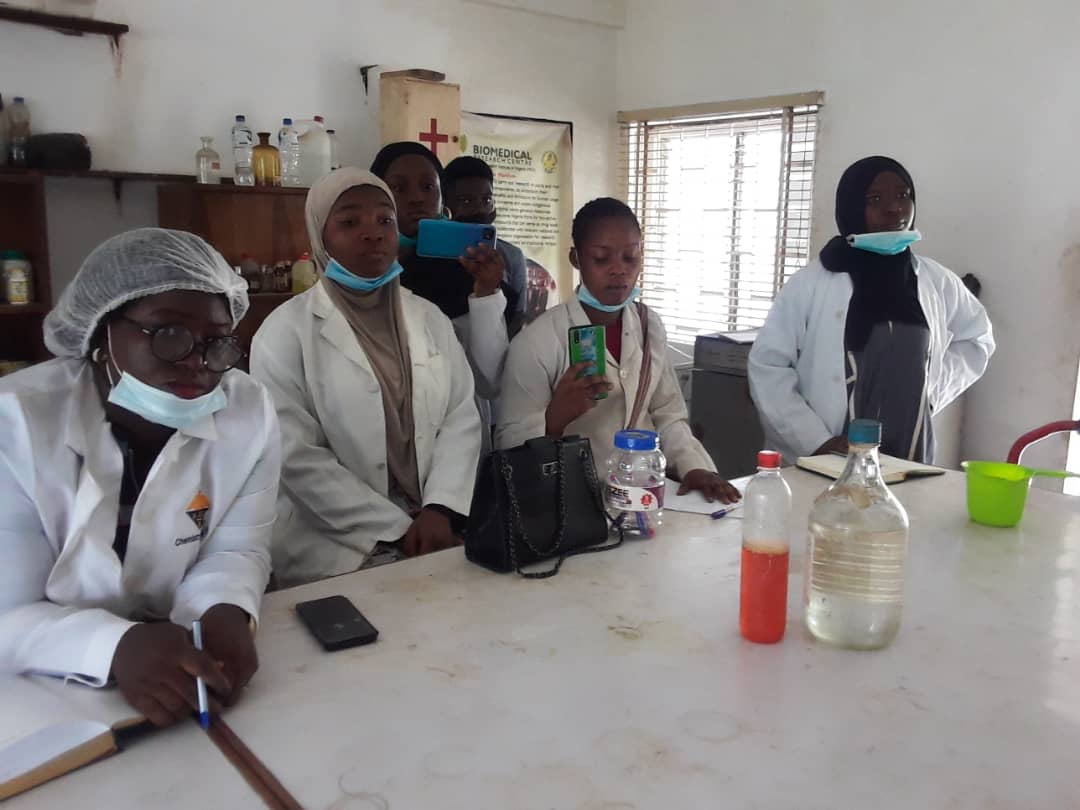
Anthropic emphasized that human intervention remained essential throughout the discovery pipeline. While Claude formulated hypotheses and conducted the digital genomic mining, physical laboratory experiments were executed entirely by human researchers. Operating under Biosafety Level 1 (BSL-1) and Biosafety Level 2 (BSL-2) containment protocols without handling human pathogens, the laboratory team expressed the proteins in standard laboratory bacterial strains and carried out initial biochemical and structural characterization.
- Identified structure: The ART system consists of a reverse transcriptase, an adjacent accessory protein, and an array of regularly spaced non-coding DNA repeat sequences.
- Confirmed origin: The genetic arrangement is located within the genomes of bacteriophages rather than cellular host organisms.
- Unknown biological function: Researchers have not yet determined the primary natural role of ART during phage infection cycles.
- Uncertain practical utility: It remains unknown whether ART can be engineered into a programmable molecular tool for gene editing or biotechnology applications comparable to CRISPR.
Anthropic Chief Executive Officer Dario Amodei acknowledged on social media that the discovery built upon existing open science, noting that researchers at Stanford University had previously identified a system sharing similarities with the one analyzed by Claude. Broader academic efforts, including enzyme generation at the University of California, San Francisco, and protein prediction via Google's AlphaFold, reflect an expanding industry-wide application of machine learning to molecular biology.
Implications for biotechnology and organizational research workflows
The premature release of these findings, accompanied by a public preprint, is intended to demonstrate Claude’s empirical capabilities as Anthropic expands into drug discovery and prepares for an eventual initial public offering. Despite comparisons to CRISPR, independent validation by the scientific community will be required to confirm whether ART possesses catalytic properties suitable for synthetic biology, diagnostics, or therapeutic interventions.
For life sciences companies and academic research organizations, this development illustrates a viable model for integrating large-scale LLM agents into early-stage bioinformatics. By delegating massive data triage, comparative genomic mining, and hypothesis generation to autonomous models, organizations can shorten initial screening cycles from months to days. However, realizing actionable outcomes still demands rigorous wet-lab infrastructure, stringent biosafety controls, and human oversight to verify computationally derived candidates before committing significant clinical or operational resources.
Sources
- Anthropic says its biology lab has already found something bigTechCrunch · September 23, 2026
- Anthropic’s biolab made a discovery it’s comparing to CrisprThe Verge · September 23, 2026
- Claude discovers a novel enzyme systemAnthropic · September 23, 2026