Danaher plans autonomous AI laboratory for antibodies by 2027
On October 7, 2026, Danaher announced the creation of a fully autonomous, AI‑powered laboratory that is expected to operate at scale in early 2027 and speed up antibody discovery.
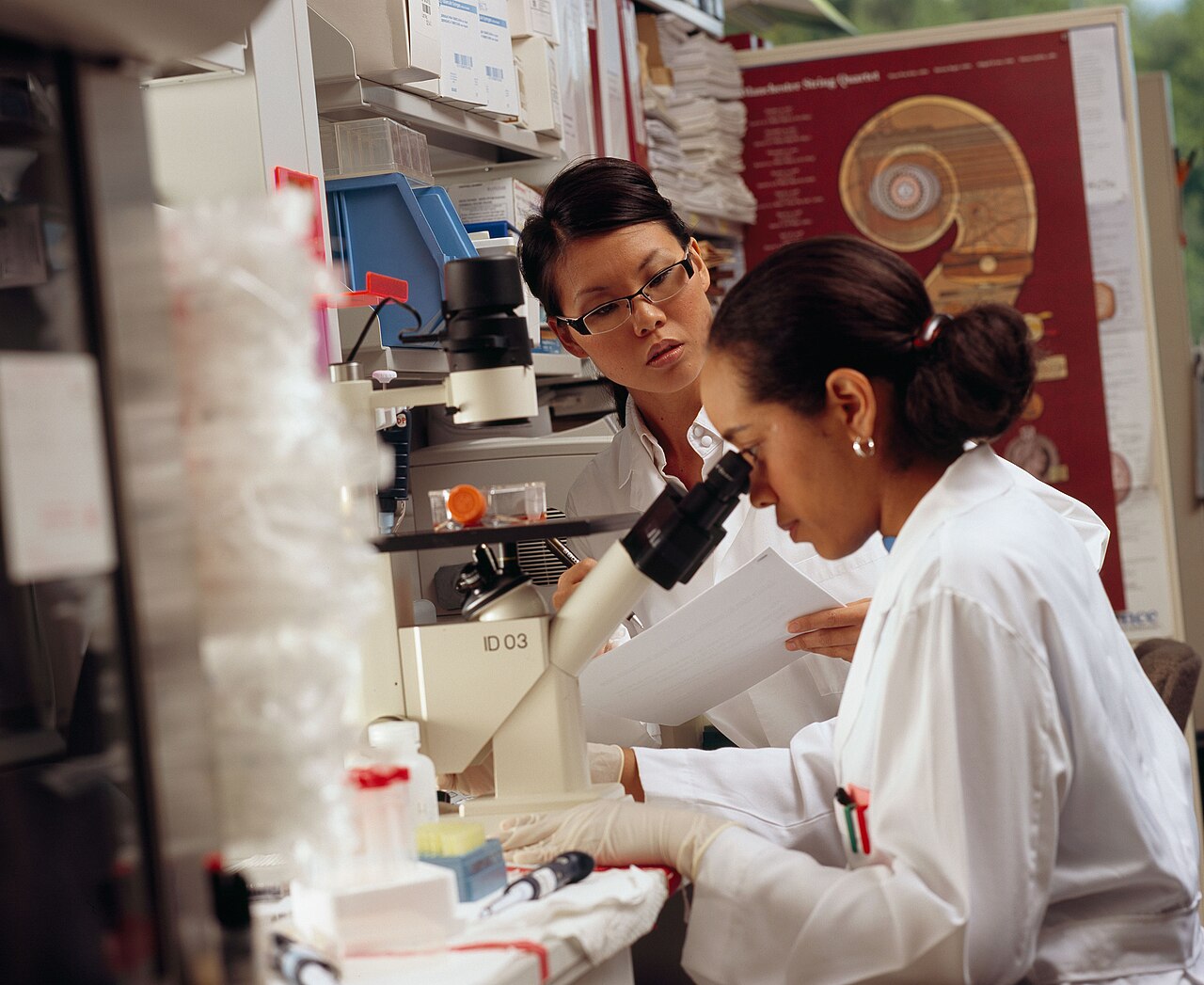
On October 7, 2026, Danaher announced that it will launch its first fully autonomous laboratory, powered by artificial intelligence, within the Abcam facilities. The project, slated to operate at scale at the start of 2027, aims to accelerate the discovery and production of affinity reagents, especially antibodies, through an integrated workflow that blends AI, robotics, and technologies from several Danaher portfolio companies. This initiative marks the company’s first practical deployment of an intelligent laboratory, intended to combine advanced hardware with orchestration software to create a highly automated research environment. In other words, Danaher seeks to merge cutting‑edge equipment with sophisticated algorithms to deliver a completely robot‑driven, AI‑guided production line.
Overview of the autonomous laboratory
The workflow combines solutions from Beckman Coulter Life Sciences, Cytiva, Genedata, Integrated DNA Technologies and Molecular Devices. Each platform provides a specialized module – ranging from sample preparation and protein purification to sequence analysis and functional characterization – that communicates in real time with machine‑learning algorithms. These algorithms prioritize antibody projects based on affinity, stability and developability criteria, sending instructions directly to robotic arms that carry out the experimental steps. Data integration occurs in a central repository, allowing the AI model to continuously refine its predictions as new results are generated. Thus, every experimental datum immediately feeds back into the system, creating a loop of ongoing improvement.
Automata, Danaher’s technology partner, supplies the orchestration layer that coordinates robot movement, laboratory resource allocation and analysis‑software synchronization. This layer ensures that each task – from automated pipetting to plate‑reader measurements – is performed at the optimal moment, reducing idle time and preventing equipment conflicts. Moreover, Automata offers monitoring interfaces that let human operators view the status of each experiment in real time, facilitating rapid intervention should unexpected failures occur. In short, Automata acts as the digital conductor of the lab, guaranteeing smooth and consistent operation.
Antibody production cycle
The cycle begins with the generation of affinity reagents, including AI‑designed antibodies. The system then automatically assembles expression plates, cultures host cells, purifies proteins and conducts binding assays to assess affinity and specificity. Each result is immediately fed back to the AI model, which refines its parameters and proposes the next generation of candidates. This closed loop enables the laboratory to test thousands of variants in a far shorter timeframe than traditional methods, while maintaining a complete experimental data record for audit and reproducibility. Put simply, the lab functions as a continuous optimization engine, where each iteration improves the next.
Danaher projects that the autonomous laboratory could make antibody discovery up to eight times faster and increase annual affinity‑reagent output from dozens to several hundred. These targets are presented as prospective projections based on internal simulations and benchmarks from partially automated labs. The company emphasizes that, although automation reduces manual steps, actual speed will depend on algorithm robustness, supply availability and the ability to handle unexpected biological variation. Consequently, productivity gains remain contingent on several technical and logistical factors.
- Antibody discovery up to 8× faster, according to Danaher’s internal projections;
- Potential 10× increase in annual affinity‑reagent generation, moving from dozens to hundreds;
- Integration of AI, robotics and technologies from six Danaher units into a single workflow;
- Continuous feedback to the AI model for iterative project refinement.
Limitations and role of scientists
Despite the high degree of automation, Danaher makes clear that human scientists will remain responsible for key decisions such as therapeutic target selection, interpretation of critical results and validation of promising candidates. The company acknowledges technical risks, including hardware failures, calibration errors and algorithmic limitations when dealing with unusual protein structures. Quality, traceability and regulatory compliance issues are also cited as challenges that must be managed before the laboratory can be adopted at scale by external partners.
Implications for the biotechnology industry
If the goals are achieved, the autonomous laboratory could serve as a proof‑of‑concept for a new generation of intelligent instruments and integrated research environments, potentially redefining biological discovery workflows. The ability to generate hundreds of antibodies per year with accelerated testing cycles could lower development costs and shorten time‑to‑market for antibody‑based therapies. However, adoption will depend on demonstrated reliability, regulatory acceptance and the ability to integrate the system with existing manufacturing processes.
At present, the primary shift introduced by Danaher’s initiative is the demonstration that fully autonomous laboratories, combining advanced AI and robotics, are technically feasible and can be planned to operate commercially by early 2027. This outlook opens space for other life‑science companies to explore similar models, spurring investment in automation and artificial intelligence. While practical results have not yet been disclosed, the scientific community is watching the development closely, awaiting concrete evidence of performance and compliance with quality standards.
Sources
- Danaher Accelerates Life Sciences Research with New AI-powered Autonomous LabDanaher / PRNewswire via StockTitan · October 7, 2026
- Life sciences firm Danaher to launch AI-powered autonomous research lab in 2027Wichita Eagle · October 7, 2026