
CNIL updates Genmod, its genealogy tool for open-source AI models
France's data protection authority CNIL released a new version of Genmod on August 26, its demonstrator that traces the ancestors and descendants of open-source AI models, with faster searches and data refreshed weekly from Hugging Face.
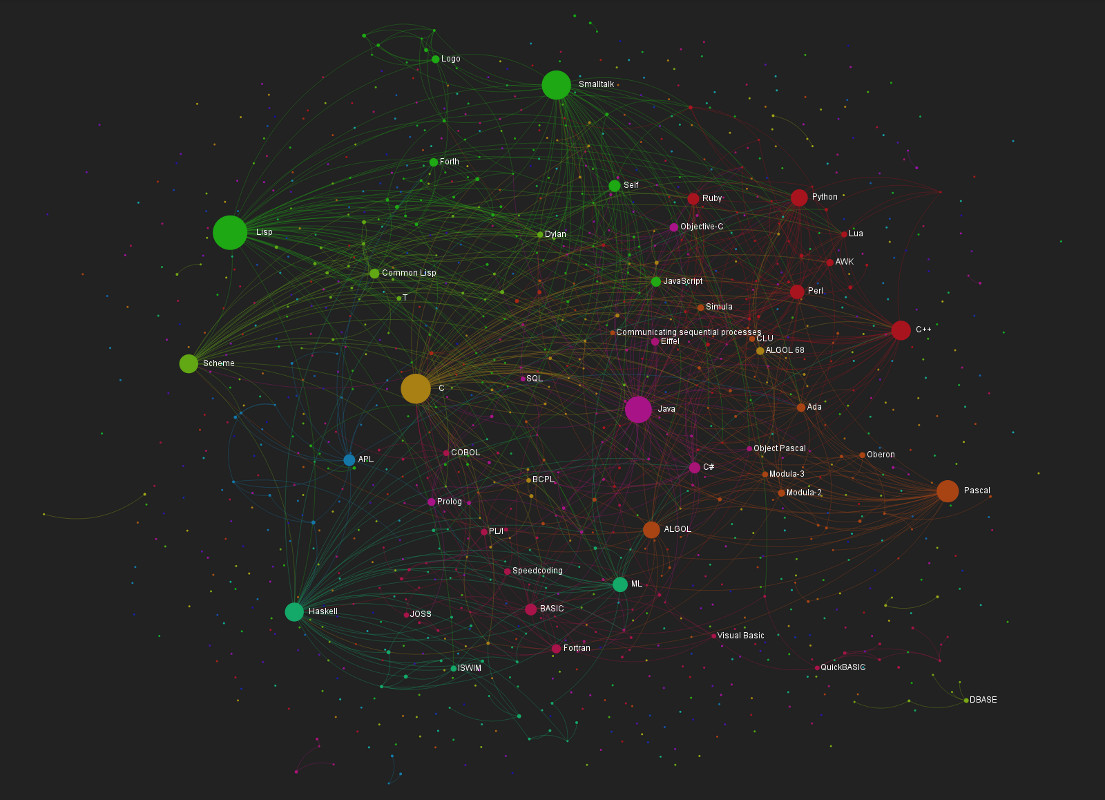
France's Commission nationale de l'informatique et des libertés (CNIL) released a new version of its demonstrator for exploring the genealogy of open-source AI models on August 26, 2026. The update improves the tool's performance, its usability, and automates the refreshing of its data. An English-language version of the interface is now available alongside the French one.
Open-source AI models can be downloaded, modified, fine-tuned with new data, or combined with other models before being released again. A single model — Kimi K3, Mistral Medium or LLaMa, for example — can therefore give rise to many derivative models, to the point where it becomes hard to tell which model comes from which. Hugging Face alone hosts around two million published models, which makes it even harder to spot which ones are derivatives of the best-known models.
Finding a model's ancestors and descendants
The demonstrator, called Genmod ('model genealogy'), was developed by the CNIL's AI department in collaboration with its Digital Innovation Lab (LINC), and was first published in November 2025. It lets users explore the links between models and find a given model's ancestors — the models it derives from — as well as its descendants, meaning the models it has contributed to.
This traceability is useful for studying the consequences of AI models memorizing training data. The idea is to start from a model known to have memorized personal data and identify the other models in its 'genealogy' that may have retained the same information, in order to study how GDPR rights — the right to object, to access, or to erasure — can be exercised.
Much faster searches
The graph exploration engine has been optimized, sharply cutting the time needed for the broadest searches: a search with no depth limit now takes about twenty seconds on average. The interface now shows a search's progress and, when it can be estimated, the time remaining before completion. Several searches can be processed at once, and during busy periods a user can see their position in the queue.
- Unlimited-depth search: about twenty seconds on average
- Progress shown, with an estimate of the remaining time
- Simultaneous searches, with queue position shown during busy periods
- Automatic, weekly refresh of the graph from public Hugging Face data
- The date of the last data update is shown in the application
- Most-downloaded models suggested first, results sorted by download count by default
- Direct access to the homepage added from the application's various pages
- More consistent layout across Firefox, Chrome, Edge and Safari, and across screen sizes
A new process rebuilds the demonstrator's underlying database from public data about the models and datasets available on Hugging Face, automating a weekly refresh of the graph to keep pace with the fast-moving open-source ecosystem.
A concrete example: Kimi K3's descendants
French tech outlet Next gives a usage example: users can inspect the descendants of Moonshot AI's Kimi K3 model by first typing the publisher's repository name, then the first letters of the model name, to display its full family tree. For each derivative model, the tool specifies the method used to derive it — quantization, for instance, which reduces the precision of the source model's weights to shrink its memory footprint. The tool can also find every model that has used a given dataset, such as The Cauldron. An expert search mode also lets users pick precisely the criteria they care about.
If an individual's personal data were memorized by a model, how can the other models likely to have memorized that same data be identified?
This traceability can also help in cases where an AI model is accused of regurgitating copyrighted content — an issue illustrated by the ongoing lawsuit between the New York Times and OpenAI, where the question of which models may have memorized and then reproduced protected text remains central.
For researchers and developers outside France who build on open-source models, Genmod offers a concrete way to document a model's provenance before deployment, and to get ahead of a possible GDPR — or equivalent — rights request rather than scrambling to answer one after the fact. For data protection authorities beyond France's, the tool is also a working example of how a regulator can operationalize model traceability: each week the graph grows with the models newly published on Hugging Face, making it a reference that keeps pace with the ecosystem rather than a snapshot frozen on its publication date.
Sources
- IA : la CNIL met à jour son outil de traçabilité des modèles publiés en source ouverteCNIL · August 26, 2026
- Généalogie des modèles d'IA ouverts : la CNIL propose un outil pour s'y retrouverNext (INpact) · September 3, 2026